
Wrist Fracture — Symptoms, Causes & Treatment
Also known as Wrist Fracture. Causes, symptoms and how physiotherapy treats Wrist Fracture — without surgery or medicines.
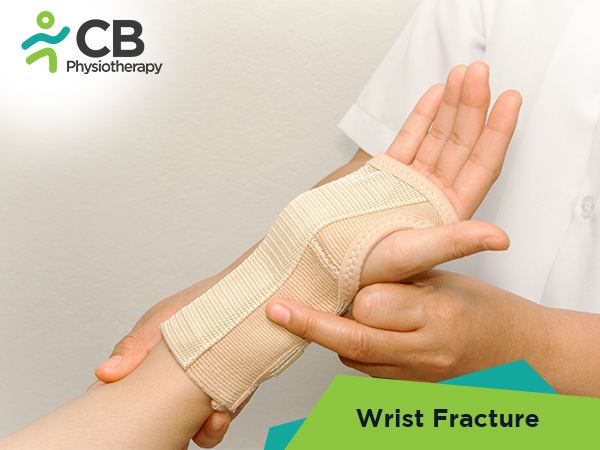
Understanding Wrist Fracture
Wrist Fracture is one of the conditions our physiotherapists treat most often — and one of the most treatable when the actual driver is found. Two people with Wrist Fracture rarely share the same underlying cause, which is why one-size-fits-all treatment so often disappoints.
What matters clinically is the pattern: how it started, what makes it better or worse, and how it behaves through the day. That pattern — mapped in a structured assessment — tells us which structures are involved and which treatment will actually move the needle.
Causes & risk factors of Wrist Fracture
What commonly drives it — your assessment pins down which of these apply to you.
Posture and long static hours
Desks, driving and screens keep the same structures loaded for hours at a stretch — comfortable at first, aching later.
Joint stiffness and age-related change
Joints that move less start to hurt more; age-related wear is normal, but painful stiffness is not something to simply accept.
Weakness and deconditioning
When supporting muscles lose strength, load shifts to structures that were never meant to carry it.
Old injuries and compensations
A previous injury that never fully rehabilitated often leaves a movement pattern that overloads something else.
Sudden spikes in activity
A new sport, a new gym program, a long trek — tissue adapts to gradual change and protests when change is sudden.
When physiotherapy is the right call
If any of these sound like you, an assessment is the right first step.
- ✓ Pain or stiffness that limits work, sleep or daily activities
- ✓ You want to avoid long-term painkillers — or surgery has been mentioned
- ✓ You've been diagnosed with Wrist Fracture and told to "rest and see"
- ✓ Movement feels restricted, weak or guarded compared to before
- ✓ You want to return to sport or work with a plan, not by trial and error
Your treatment journey
Step by step — from your first assessment to a tracked recovery plan.
A detailed first assessment
History, movement testing and strength checks — a focused session to find what is actually driving your Wrist Fracture.
A diagnosis you understand
Your physiotherapist explains the findings in plain language — what is affected, why it happened and what that means for you.
Active, tracked treatment
Hands-on therapy, the right modalities and graded exercise — progressed session by session and tracked on Fizo IQ™.
Prevention, built in
The final phase rebuilds strength and habits so the same problem does not come back — with a home plan you keep.
What recovery looks like
- ✓ Lower chance of recurrence, with a prevention plan
- ✓ Care without long-term medicines — at a clinic near you or at home
- ✓ Relief that comes from treating the cause, not masking it
- ✓ A clear diagnosis and a timeline you can plan around
- ✓ Strength and movement rebuilt, not just pain reduced
When to see a doctor — red flags
How CB Physiotherapy treats Wrist Fracture
At CB Physiotherapy, treatment for Wrist Fracture starts with finding its cause: a structured, physiotherapist-led assessment before anything is prescribed. Your plan then combines hands-on therapy, targeted exercise and the right modalities — delivered at a clinic near you or at home, and coordinated with your doctor where medical care is involved.
Every case runs on Fizo IQ™, our recovery engine: diagnosis, root cause, plan, milestones and goals, tracked session by session. You always know where you are in your recovery — and what comes next.
Exercises that help with Wrist Fracture
Make these exercises yours — a CB physio personalizes, doses and tracks your plan week by week.
Get my personalized planGeneral guidance only — stop if an exercise increases your pain, and check with your physio before starting a new routine.
Get Wrist Fracture treatment near you
Certified physiotherapists at a clinic near you or at home — same-day slots, assessment-led care.
Request received!
We'll call you within 10 minutes to confirm your home visit.We'll call you within 10 minutes to confirm your slot.
Chat with us on WhatsAppWrist Fracture, answered
The wrist is made up of 8 small bones connected with 2 long forearm bones, radius, and ulna. A wrist fracture or broken wrist occurs when a bone is broken or cracked in one or more of these 10 bones.
Types of wrist fractures
Non-displaced: These fractures are stable fractures with breaks, in which the radius or ulna bones do not move out of place. Treated by reduction or bone-setting
Displaced: These fractures are unstable fractures with breaks and also the bones (radius or ulna) are moved out of the place. These fractures can be treated by a splint or a cast.
Unstable fractures: in these fractures, the bone pieces tend to move or shift into a bad position before they heal even after being put in a splint or a cast.
Comminuted fractures: These fractures are more severe, the bone pieces may be shattered and forced out through the skin or may affect the joint surfaces These fractures require surgery to restore and align them. These fractures have an increased risk of infection in the bone and can be stabilized by screws, plates, and external fixations.
Open fractures: When a fractured bone breaks the skin, it is called an open fracture. These fractures have an increased risk of infection in the bone.
Intra-articular fractures: These fractures extend into the wrist joint.
Extra-articular fracture: Fractures that do not extend into the joint are called extra-articular fractures.
Colles fracture: This fracture occurs due to direct impact to the palm shape of a fork facing down. The broken end of the radius tilts upward and the shape looks like a fork facing down.
Smith fracture: It occurs due to a trauma to the back of the wrist, such as falling on a bent wrist. The end of the distal radius shifts downwards toward the palm the shape looks like a wrist drop.
Wrist fracture commonly occurs due to a fall on the outstretched hand, other causes can be:
- Older than 60 years of age
- Falls from a ladder.
- Land hard on an outstretched hand.
- Motorcycle or car accidents or a fall off a bike. Falls from a ladder.
- Weak bones in the case of osteoporosis tend to get fractures more easily.
- Football, Hockey, Rugby, horseback riding.
The common symptoms of wrist fracture or broken wrist are:
- Pain and swelling.
- Tenderness
- Numbness
- Bruising
- Loss of movement
X-rays
X-rays help to see the broken bone and whether the broken bone is displaced or not. It also shows if there are any pieces of a broken bone.
Computed tomography scan (CT scan)
CT scans show injuries to soft tissues and blood vessels
Magnetic resonance imaging (MRI)
MRI shows detailed images of bone and soft tissues and also identify very small fracture, nerve, tendon, and ligament injuries when the wrist is broken
Medication: Ibuprofen, Acetaminophen, Opioid such as Codeine.
Note: Medication should be taken under the prescription of the doctor.
Treatment depends on the type of fracture, age, and activity level.
Immobilization
Immobilization is done to restrict the movement of a broken bone for proper healing. Splinting is done to support the wrist to provide relief from the initial pain and to align the bones in a proper position. In case of unstable fractures, a cast may be used to hold the fracture in proper alignment. For other fractures, surgery may be done to put the broken bones back together and hold them in the correct place. Pins, screws, plates, rods, or external fixation can all be used for fixing the fracture.
Treatment depends on the type of fracture, age, and activity level. After the splint or cast is removed, rehabilitation exercises or physiotherapy is started to reduce stiffness and restore movement in the wrist. Rehabilitation can help, but it can take several months or longer for complete healing. Early treatment helps minimize pain and stiffness.
The physiotherapist uses cryotherapy to help control pain or swelling in the wrist, hand, or arm.
Thermotherapy can also be used to help control pain or swelling in the wrist, hand, or arm.
Transcutaneous electrical stimulation (TENS) provides pain relief by exciting sensory nerves, it delivers small electrical impulses through electrodes that have adhesive pads to attach them to a person's skin.
Ultrasound Therapy helps to increase the blood flow to the area to reduce swelling and inflammation. It also enhances the healing of the fractured bone.
Range of motion exercises
The physiotherapist uses manual therapy to enable the joints and muscles to move more freely. Physiotherapists prescribe exercises during recovery from a wrist fracture. The physiotherapist gently moves the elbow, by passive range-of-motion" exercises. As the arm gets stronger, active range-of-motion exercises are started.
Strengthening exercises
Once the bone is healed, resistance exercises are performed using weights and also retrain the muscles to prevent re-injury.
Daily Activities
Daily activities are taught to independently perform the activities eg, dressing, cooking, buttoning a shirt, writing or working on a computer.
Demanding Activities.
Depending on the requirements of the job or the type of sports, physiotherapist designs a tailored program to meet specific demands and address the unique needs and goals.
Prevent Long-Term Disability
The physiotherapist helps to prevent long-term disability by increasing the level of fitness of the wrist and restoring full range of motion and strength safely to return safely to previous home and work activities. The therapist also recommends protective equipment, such as wrist guards while playing sports.
Recovery
After the cast is taken off or after the surgery stiffness generally lessens in the month or two and continues to improve for at least 2 years. Most patients can resume light activities, such as swimming or lower body gyming within a month or two. Vigorous activities, such as playing football and skiing, may be resumed between 3 and 6 months after the injury.
Don't let Wrist Fracture decide your day.
Get assessed today — find the cause, get a plan, and know when you'll feel better.