Open today · 8 AM–8 PM · Same-day slots
CB Physiotherapy
Same-day appointments

Radiofrequency Ablation (rfa) in Delhi

Certified Radiofrequency Ablation (rfa) experts in Delhi — at a clinic near you or at home, with a recovery plan matched to your case.

Precision Care, Proven Recovery
ACCURATE DIAGNOSIS
ROOT CAUSE ASSESSMENT
COMPREHENSIVE RECOVERY PLAN
MILESTONE TRACKING
GOALS ACHIEVED
STAYING ACTIVE
See how it works ↓
Move pain-free Avoid drugs & surgery
5.0 / 5 · 102 Google reviews Verified on Google

Request received!

We'll call you within 10 minutes to confirm your home visit.We'll call you within 10 minutes to confirm your slot.

Chat with us on WhatsApp

Book in 30 seconds

Visit your nearest CB clinic. Tell us your concern and a preferred time — we'll confirm your slot by call within 10 minutes.

A certified physio visits your home. Tell us what you need and a preferred time — we'll confirm your slot by call within 10 minutes.

Same-day booking by default. We'll confirm your exact slot by call.
+91
No spam · Your number is safe with us
Prefer to talk now? Call +09821966696
Your physiotherapist, with Fizo IQ™

Every recovery, planned and proven

One patient record, stage by stage: your physiotherapist pinpoints the diagnosis, finds the root cause and builds your in-clinic plan — while Fizo IQ™, our AI decision-support engine, tracks every milestone until your goals are met and you leave with an exercise plan to stay active.

Physio Expert @CB with Fizo IQ™ — recovery engine
TRACKING
ACCURATE DIAGNOSIS
L4–L5 disc bulge · nerve-root irritation, pinpointed at the first movement assessment
ROOT CAUSE ASSESSMENT
Poor sitting posture, weak core–hip chain · quietly loading that disc
COMPREHENSIVE RECOVERY PLAN
24 clinic sessions · manual therapy + spinal decompression · guided exercise therapy, reviewed weekly
MILESTONE TRACKING
Sitting pain-free ✓ · stairs ✓ · next: the morning 5 km walk
GOALS ACHIEVED
Pain 7 → 3 in six weeks · back to daily life, moving freely
STAYING ACTIVE
A personalized exercise plan, yours to keep · so the pain doesn't come back
Example recovery journey · every plan is built around you
How we treat

Radiofrequency Ablation (rfa) and the modalities behind it

Every plan combines hands-on care, advanced modalities and guided exercise — matched to your assessment.

🖐 Hands-on & manual therapy

Joint mobilisation, soft-tissue release and targeted manual techniques.

⚡ Advanced modalities

TECAR & laser therapy, cryo-compression, dry needling and therapeutic taping.

🤖 Robotic spinal decompression

Non-surgical, computer-controlled decompression for disc and nerve-root pressure.

🏋 Targeted exercise therapy

Stability and strengthening programs matched to your assessment.

🪑 Ergonomics coaching

Desk, posture and lifting corrections that stop pain from coming back.

📱 Guided home program

Simple daily exercises with adherence tracking through Activ PT.

Start here

Conditions we treat with Radiofrequency Ablation (rfa)

Pick the condition that sounds like yours, or type it below — we'll match you to the right specialist and book you in.

Meet your care team

Licensed experts who treat hundreds like you every month

Every CB physio is a qualified BPT/MPT clinician. You don't need to choose one — our lead physiotherapist reviews your case and assigns the specialist best suited to treat it.

Dr. Rahul Dogra, physiotherapist in Vasant Kunj

Dr. Rahul Dogra

Head Of The Clinic

5.0 (18)
Vasant Kunj
cb physiotherapy vasant kunj
4 yrs experience
Ortho Spine Sports Physiotherapy Center

Dr. Nayima Tassaduq, physiotherapist in Safdarjung Enclave

Dr. Nayima Tassaduq

Head Of The Clinic · BPT, MPT

5.0 (18)
Safdarjung Enclave
CB Physiotherapy Safdarjung Enclave
6 yrs experience
Ortho Spine Sports Physiotherapy Center

Dr. Anjali Pandey

Sr. Consultant Physiotherapist · BPT, MPT

5.0 (16)
Safdarjung Enclave
CB Physiotherapy Safdarjung Enclave
4 yrs experience
Ortho Spine Sports Physiotherapy Center

Dr. Monika Bhardwaj, physiotherapist in Greater Kailash 2 (gk2)

Dr. Monika Bhardwaj

Head Of The Clinic · BPTh, MPTh

5.0 (13)
Greater Kailash 2 (gk2)
cb physiotherapy greater kailash
5 yrs experience
Ortho Spine Sports Physiotherapy Center
Dr. Meghna Kirar, physiotherapist in Saket

Dr. Meghna Kirar

Sr. Consultant Physiotherapist · BPTh

5.0 (1)
Saket
cb physiotherapy clinic saket
4 yrs experience
Ortho Spine Sports Physiotherapy Center
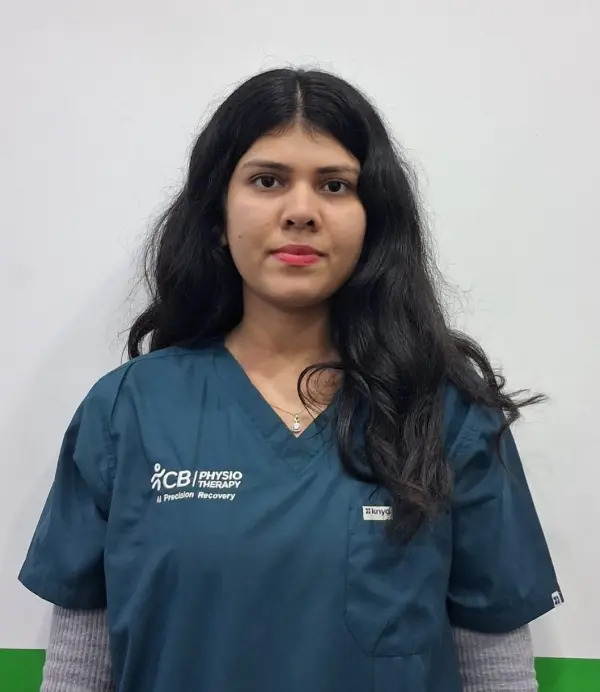
Not sure who to see? You don't have to decide. Our lead physiotherapist reviews every case and assigns the physio best suited to it — based on your condition and availability.
Transparent pricing

Clear charges, no surprises

The same prices you'll see at the clinic — published before you book. Sessions run 30–45 minutes.

Physical Therapy Per session
₹1,000
Book
Advanced Physiotherapy Per session
₹1,500
Book
Sports Physiotherapy Per session
₹3,500
Book
10%

off every package

Booking a course of sessions? Save 10% when you take a treatment package — and recover with a plan built around your goals.

Ask about packages →
Transparent pricing

Clear charges, no surprises

Radiofrequency Ablation (rfa) pricing depends on your assessment — we publish our session charges and confirm your exact quote before you commit. No hidden fees, ever.

Patient stories

Radiofrequency Ablation (rfa) recoveries, verified on Google

Rated 5.0 / 5 across 102 verified patient reviews in Delhi.

Verified

“I visited CB Physiotherapy because I pulled my hamstring. I consulted Dr. Meghna here who gave me a one week treatment plan and suffice to say I started to see results after the first session itself. I was unable to sit and had a lot of pain while walking. After my first session, I was able to walk better and sit better. By the end of the week, I had no pain. They have good infrastructure here and offer various treatments from cupping therapy to laser treatment. I would definitely recommend Dr. Meghna over any other physiotherapist in Saket if not Delhi.”

YD
Yash Dagar Verified patient · Treated at CB · 4 months ago
Verified

“I went for consultation for my knee pain and there I met Dr Rahul He took my consultation and sessions for 9 days and he was supr throughout the sessions and now it's so easy for me to be back in daily routine.”

SS
Sristi Suman Verified patient · Treated at CB · 5 months ago
Verified

“I had an amazing experience with Dr. Rahul also he took care of everything regarding my lower back strain also they have all the equipment which can help them to cure from the pain or injury. It was a great overall experience with the clinic staff too”

HJ
Harshit Jaiswal Verified patient · Treated at CB · 5 months ago
Verified

“Hello, I had 15 sessions with them. Overall all sessions were good. Their staff are very knowledgeable and helpful. A special thanks to Mr. Rahul and Ms. Mehak. Both them really helped with my pain on right shoulder and explained about basic and various exercises which i should do on regular basis. Would definitely recommend others.”

JB
Jeevesh Bajaj Verified patient · Treated at CB · 6 months ago
Verified

“Dr. Deepanshu is an exceptional physiotherapist! His personalized treatment plan and hands-on techniques helped me recover from chronic back pain effectively. He’s patient, knowledgeable, and takes the time to explain everything clearly. His positive attitude and encouragement made the entire process motivating and stress-free. I highly recommend him to anyone seeking top-notch physiotherapy care!”

SS
Sunita Singh Verified patient · Treated at CB · 6 months ago
Verified

“Dr. Rahul is an amazing physiotherapist! He genuinely cares about his patients and tailors treatments to fit your needs. Thanks to him, I’ve seen great progress and feel so much better. Highly recommend.”

SB
Sudhir Bhan Verified patient · Treated at CB · 6 months ago
Good to know

Radiofrequency Ablation (rfa), answered

Radiofrequency Ablation (RFA) is a minimally invasive medical procedure that uses controlled radiofrequency energy (heat) to target specific pain-transmitting nerves. By reducing the nerve’s ability to send pain signals, RFA can provide meaningful relief and improve functional activity—often without the need for major surgery.

RFA is typically performed under fluoroscopy (C-Arm) or ultrasound guidance for precision and safety.

RFA is classified based on how energy is delivered and the effect on nerve/tissue:

1) Continuous RFA (Conventional)
  • Continuous high-frequency current

  • Controlled thermal lesioning (typically 60–90°C)

  • Used for longer-lasting pain relief (e.g., facet joint pain)
    Goal: Neurodestruction to stop pain signals

2) Pulsed Radiofrequency (PRF)
  • Energy delivered in short bursts

  • Temperature kept below ~42°C

  • Does not destroy the nerve; modifies signaling
    Goal: Neuromodulation (pain control without nerve damage)

3) Cooled Radiofrequency Ablation
  • Internally cooled probe tip

  • Creates a larger lesion zone for broader pain generators
    Goal: Treat larger pain-generating areas with precision

4) Bipolar Radiofrequency Ablation
  • Uses two active electrodes

  • Produces focused lesions between electrodes
    Goal: Higher precision in selected cases

The technique is chosen based on the diagnosis, target anatomy, and clinical goals.

RFA is used when pain arises from a clearly identifiable source and is often considered after diagnostic blocks confirm the pain generator.


Spine & Joint Pain Nerve-Related Pain
  • Trigeminal neuralgia (selected cases)

  • Occipital neuralgia

  • Intercostal neuralgia

  • Post-surgical nerve pain

Selected Pelvic & Plexus Pain

  • Hypogastric plexus pain syndromes (selected cases)

During the procedure:

  1. The skin is numbed using local anesthetic

  2. A thin needle/probe is placed near the target nerve under imaging guidance

  3. Sensory/motor testing may be performed to confirm safe positioning

  4. Controlled radiofrequency energy is delivered to reduce pain signaling

Procedure time: typically 30–60 minutes
Stay: usually day-care, go home the same day
Relief onset: often gradual over days to weeks

Primary Physiological Effect
  • Interrupts pain-carrying nerve signals

  • Protein denaturation

  • Neuromodulation (in pulsed RFA)

Clinical Effects (What patients feel)
  • Reduced chronic pain

  • Improved mobility and joint tolerance

  • Decreased muscle guarding/spasm

  • Better ability to move, exercise, and rehabilitate

  • Improved comfort in daily activities

Secondary Rehabilitation Benefits

Once pain reduces:

  • Movement confidence improves

  • Physiotherapy becomes easier and more effective

  • Strength and functional capacity improve

Expected Temporary Local Effects

  • Mild soreness at the procedure site

  • Local swelling

  • Temporary numbness/tingling (in some cases)

  • Radiofrequency Ablation (RFA) offers a targeted, minimally invasive approach to managing chronic pain, helping patients achieve meaningful relief with less disruption to their daily lives.

    • Non-surgical pain relief: RFA addresses pain at its source without requiring major incisions or open surgery.

    • Minimally invasive procedure: Only a thin probe is inserted through the skin, resulting in minimal tissue disruption.

    • Longer-lasting relief: Many patients experience sustained pain reduction for months, sometimes longer, depending on the condition treated.

    • Faster recovery: Most individuals return to routine activities within 24–72 hours after the procedure.

    • Reduced medication dependence: Effective pain control may decrease reliance on long-term pain medications.

    • Improved mobility and function: As pain decreases, movement tolerance and participation in rehabilitation improve.

    • Repeatable when necessary: If nerves regenerate and pain returns, the procedure can often be safely repeated.

    • High precision: Imaging guidance allows accurate targeting of pain-transmitting nerves, enhancing both safety and effectiveness.

  • When performed by trained specialists under strict sterile technique and image guidance, RFA is considered a safe and well-established procedure for chronic pain.

    Common short-term effects:

    • Mild soreness

    • Local swelling

    • Temporary numbness/tingling

    Serious complications are uncommon in properly selected patients.

    Relief can last 6–18 months, sometimes longer, depending on:

    • The condition treated

    • The nerve targeted

    • Individual healing and nerve regeneration

    Since nerves can regenerate, RFA may be repeated if pain returns and it’s clinically appropriate.

    You may be suitable if:

    • Pain has persisted > 3–6 months

    • Conservative treatment (physiotherapy/medications) has not helped enough

    • The pain source is confirmed—often via diagnostic nerve blocks

    • Surgery is not indicated or you prefer a non-surgical route

    A detailed clinical evaluation is essential before recommending RFA.

    Absolute Contraindications
    • Active local or systemic infection

    • Uncontrolled bleeding disorder

    • Unclear/uncertain pain diagnosis without confirmed pain source

    • Inability to safely position or cooperate during the procedure

    Relative Contraindications (Require Caution/Optimization)

    • Blood thinners (anticoagulants)

    • Pregnancy (depends on target region and imaging needs)

    • Uncontrolled diabetes or hypertension

    • Implanted electrical devices (special precautions required)

    In most cases:

    • 1 session per target nerve/region is sufficient

    Additional sessions may be needed if:

    • Multiple pain areas are treated (often staged)

    • Pain returns after months/years due to nerve regeneration

    • Partial response after the first session (selected cases)

    Most patients report it is more comfortable than expected:

    During preparation

    • Small pinch/sting from local anesthetic

    During the procedure

    • Mild pressure

    • Brief warmth/buzzing sensation

    • Occasional dull ache or twitching

    After the procedure

    • Mild soreness like a bruise

    • Temporary stiffness

    • Usually settles in a few days

    Most people return to routine activity within 24–72 hours (as advised).

    RFA and physiotherapy are not competing treatments—they are complementary.

    • RFA reduces the pain barrier

    • Physiotherapy restores movement, strength, and biomechanics

    With structured physiotherapy after RFA:

    • Strength improves

    • Movement patterns normalize

    • Recurrence risk reduces

    • Long-term functional outcomes improve

    This integration is often what turns pain relief into sustainable recovery.

    Ready when you are

    Ready to start your recovery?

    Get assessed today — find the cause, get a plan, and know when you'll feel better.

    📞 Call 💬 WhatsApp Book now