Open today · 8 AM–8 PM · Same-day slots
CB Physiotherapy
Same-day appointments

Rheumatoid Arthritis Treatment Doctors in Delhi

Whether it's a dull ache, a sharp catch, or pain that keeps coming back — we find the root cause of your Rheumatoid Arthritis and fix it, at a clinic near you or at home.

Precision Care, Proven Recovery
ACCURATE DIAGNOSIS
ROOT CAUSE ASSESSMENT
COMPREHENSIVE RECOVERY PLAN
MILESTONE TRACKING
GOALS ACHIEVED
STAYING ACTIVE
See how it works ↓
Move pain-free Avoid drugs & surgery
5.0 / 5 · 102 Google reviews Verified on Google

Request received!

We'll call you within 10 minutes to confirm your home visit.We'll call you within 10 minutes to confirm your slot.

Chat with us on WhatsApp

Book in 30 seconds

Visit your nearest CB clinic. Tell us your concern and a preferred time — we'll confirm your slot by call within 10 minutes.

A certified physio visits your home. Tell us what you need and a preferred time — we'll confirm your slot by call within 10 minutes.

Same-day booking by default. We'll confirm your exact slot by call.
+91
No spam · Your number is safe with us
Prefer to talk now? Call +09821966696
Understanding your rheumatoid arthritis

Does this sound like you?

Common triggers include muscle strain, joint stiffness, poor posture and long desk hours. If two or more of these fit, a physiotherapy assessment can identify exactly what's driving it.

  • A dull ache or sharp, burning rheumatoid arthritis that keeps returning
  • Discomfort that worsens with movement, lifting or long sitting hours
  • Morning stiffness that eases as you move
  • Pain that limits work, sport or everyday activities
  • Recurring episodes that keep coming back

Most rheumatoid arthritis improves without surgery or long-term medication — the key is finding the cause first.

⚠ When to seek urgent medical care

Rheumatoid Arthritis rarely signals something serious, but see a doctor immediately if it comes with:

  • Fever, unexplained weight loss, or a history of cancer
  • Numbness or weakness that keeps getting worse
  • Loss of bladder or bowel control
  • Pain after a major fall or accident

Our physios screen for these red flags at every first assessment and refer you to the right doctor if needed.

Assessment-led treatment

How we treat rheumatoid arthritis

We start with an AI-based assessment to find the root cause — then follow a clear, four-phase plan.

Phase 1

Ease the pain

Hands-on therapy and advanced modalities to calm pain and inflammation fast.

Phase 2

Restore movement

Mobility work and posture correction so everyday movement feels normal again.

Phase 3

Build strength

Targeted strengthening that protects you — in-clinic or in our physio gym.

Phase 4

Return to activity

Back to work, sport and life — with a home program that prevents relapse.

Your physiotherapist, with Fizo IQ™

Every recovery, planned and proven

One patient record, stage by stage: your physiotherapist pinpoints the diagnosis, finds the root cause and builds your in-clinic plan — while Fizo IQ™, our AI decision-support engine, tracks every milestone until your goals are met and you leave with an exercise plan to stay active.

Physio Expert @CB with Fizo IQ™ — recovery engine
TRACKING
ACCURATE DIAGNOSIS
L4–L5 disc bulge · nerve-root irritation, pinpointed at the first movement assessment
ROOT CAUSE ASSESSMENT
Poor sitting posture, weak core–hip chain · quietly loading that disc
COMPREHENSIVE RECOVERY PLAN
24 clinic sessions · manual therapy + spinal decompression · guided exercise therapy, reviewed weekly
MILESTONE TRACKING
Sitting pain-free ✓ · stairs ✓ · next: the morning 5 km walk
GOALS ACHIEVED
Pain 7 → 3 in six weeks · back to daily life, moving freely
STAYING ACTIVE
A personalized exercise plan, yours to keep · so the pain doesn't come back
Example recovery journey · every plan is built around you
Feeling something?

Symptoms Rheumatoid Arthritis addresses

These symptoms respond well to Rheumatoid Arthritis — tap one to see how we treat it near you.

Move better

Exercises that help with Rheumatoid Arthritis

More exercises →

Make these exercises yours

Get my personalized plan

General guidance only — stop if an exercise increases your pain, and check with your physio before starting a new routine.

Meet your care team

Licensed experts who treat hundreds like you every month

Every CB physio is a qualified BPT/MPT clinician. You don't need to choose one — our lead physiotherapist reviews your case and assigns the specialist best suited to treat it.

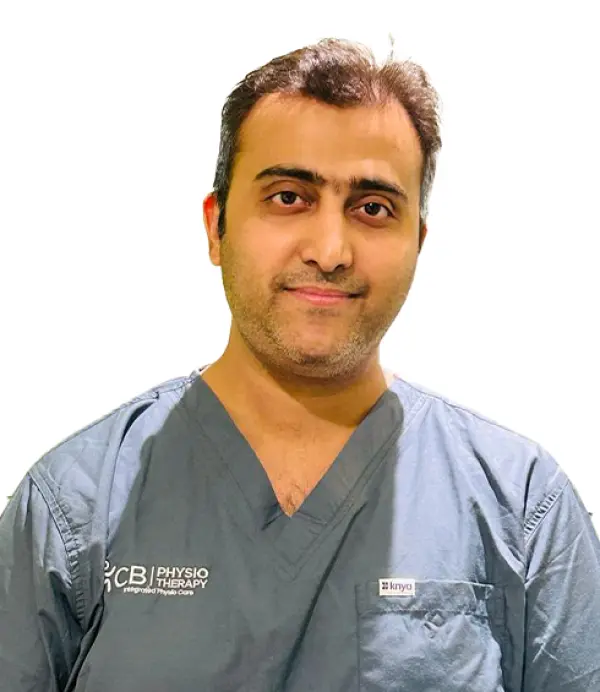
Dr. Rahul Dogra, physiotherapist in Vasant Kunj

Dr. Rahul Dogra

Head Of The Clinic

5.0 (18)
Vasant Kunj
cb physiotherapy vasant kunj
4 yrs experience
Ortho Spine Sports Physiotherapy Center
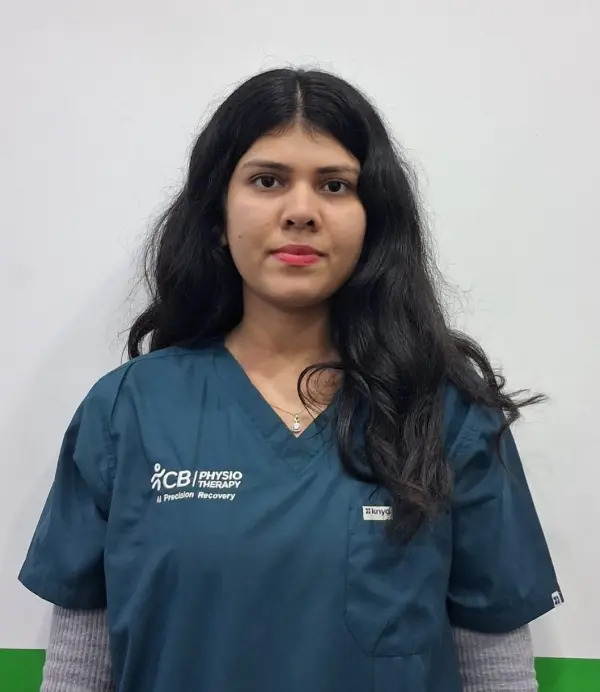
Dr. Nayima Tassaduq, physiotherapist in Safdarjung Enclave

Dr. Nayima Tassaduq

Head Of The Clinic · BPT, MPT

5.0 (18)
Safdarjung Enclave
CB Physiotherapy Safdarjung Enclave
6 yrs experience
Ortho Spine Sports Physiotherapy Center

Dr. Anjali Pandey

Sr. Consultant Physiotherapist · BPT, MPT

5.0 (16)
Safdarjung Enclave
CB Physiotherapy Safdarjung Enclave
4 yrs experience
Ortho Spine Sports Physiotherapy Center
Dr. Monika Bhardwaj, physiotherapist in Greater Kailash 2 (gk2)

Dr. Monika Bhardwaj

Head Of The Clinic · BPTh, MPTh

5.0 (13)
Greater Kailash 2 (gk2)
cb physiotherapy greater kailash
5 yrs experience
Ortho Spine Sports Physiotherapy Center
Dr. Meghna Kirar, physiotherapist in Saket

Dr. Meghna Kirar

Sr. Consultant Physiotherapist · BPTh

5.0 (1)
Saket
cb physiotherapy clinic saket
4 yrs experience
Ortho Spine Sports Physiotherapy Center
Not sure who to see? You don't have to decide. Our lead physiotherapist reviews every case and assigns the physio best suited to it — based on your condition and availability.
Transparent pricing

Clear charges, no surprises

The same prices you'll see at the clinic — published before you book. Sessions run 30–45 minutes.

Physical Therapy Per session
₹1,000
Book
Advanced Physiotherapy Per session
₹1,500
Book
Sports Physiotherapy Per session
₹3,500
Book
10%

off every package

Booking a course of sessions? Save 10% when you take a treatment package — and recover with a plan built around your goals.

Ask about packages →
Patient stories

Rheumatoid Arthritis recoveries, verified on Google

Rated 5.0 / 5 across 102 verified patient reviews in Delhi.

Verified

“I visited CB Physiotherapy because I pulled my hamstring. I consulted Dr. Meghna here who gave me a one week treatment plan and suffice to say I started to see results after the first session itself. I was unable to sit and had a lot of pain while walking. After my first session, I was able to walk better and sit better. By the end of the week, I had no pain. They have good infrastructure here and offer various treatments from cupping therapy to laser treatment. I would definitely recommend Dr. Meghna over any other physiotherapist in Saket if not Delhi.”

YD
Yash Dagar Verified patient · Treated at CB · 4 months ago
Verified

“I went for consultation for my knee pain and there I met Dr Rahul He took my consultation and sessions for 9 days and he was supr throughout the sessions and now it's so easy for me to be back in daily routine.”

SS
Sristi Suman Verified patient · Treated at CB · 5 months ago
Verified

“I had an amazing experience with Dr. Rahul also he took care of everything regarding my lower back strain also they have all the equipment which can help them to cure from the pain or injury. It was a great overall experience with the clinic staff too”

HJ
Harshit Jaiswal Verified patient · Treated at CB · 5 months ago
Verified

“Hello, I had 15 sessions with them. Overall all sessions were good. Their staff are very knowledgeable and helpful. A special thanks to Mr. Rahul and Ms. Mehak. Both them really helped with my pain on right shoulder and explained about basic and various exercises which i should do on regular basis. Would definitely recommend others.”

JB
Jeevesh Bajaj Verified patient · Treated at CB · 6 months ago
Verified

“Dr. Deepanshu is an exceptional physiotherapist! His personalized treatment plan and hands-on techniques helped me recover from chronic back pain effectively. He’s patient, knowledgeable, and takes the time to explain everything clearly. His positive attitude and encouragement made the entire process motivating and stress-free. I highly recommend him to anyone seeking top-notch physiotherapy care!”

SS
Sunita Singh Verified patient · Treated at CB · 6 months ago
Verified

“Dr. Rahul is an amazing physiotherapist! He genuinely cares about his patients and tailors treatments to fit your needs. Thanks to him, I’ve seen great progress and feel so much better. Highly recommend.”

SB
Sudhir Bhan Verified patient · Treated at CB · 6 months ago
Good to know

Rheumatoid Arthritis, answered

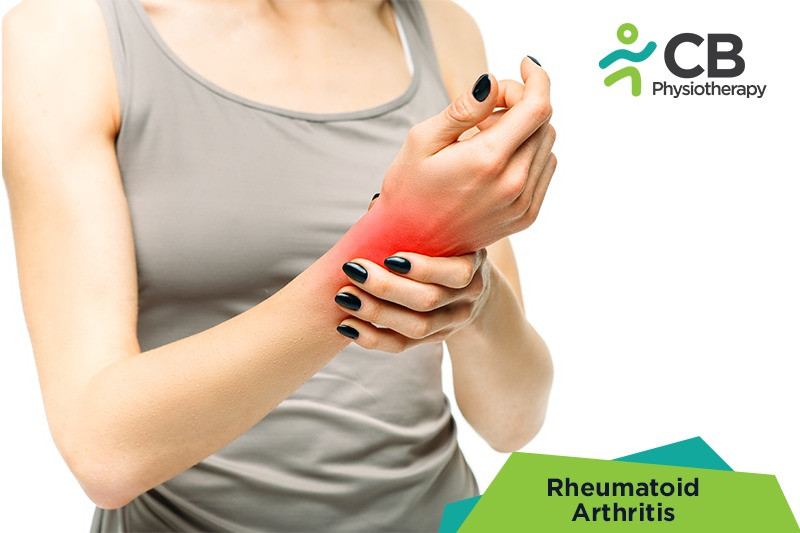
Rheumatoid arthritis is a chronic inflammatory condition that affects a wide variety of systems of the body, including the joints, skin, eyes, lungs, heart, and blood vessels. It is an autoimmune disorder that occurs when the immune system attacks its own body's tissues. Rheumatoid arthritis affects the lining of the joints, causing bone erosion, and wear-and-tear and joint deformity. Initially, the hands and feet are affected then it progresses to the other parts, but it can occur in any joint. Rheumatoid arthritis is a chronic inflammatory condition that affects a wide variety of systems of the body, including the joints, skin, eyes, lungs, heart, and blood vessels. It is an autoimmune disorder that occurs when the immune system attacks its own body's tissues. Rheumatoid arthritis affects the lining of the joints, causing bone erosion, and wear-and-tear and joint deformity. Initially, the hands and feet are affected then it progresses to the other parts, but it can occur in any joint.

Inflammation and pain in the joints symptoms are known as flares or exacerbations and the times when the symptoms disappear completely are known as periods of remission. The symptoms of RA include:

  • Joint pain
  • Swollen joints
  • Fever
  • Limping
  • Loss of range of motion
  • Tender joints
  • Loss of joint function
  • Stiff joints
  • Fatigue
  • Joint redness
  • Rheumatoid nodules
  • Anemia
  • Joint warmth

Certain factors increase the risk of developing RA or triggering its onset, though its causes are not known. Rheumatoid arthritis may occur due to:

  • Being a woman
  • Family history of Rheumatoid arthritis
  • Exposure to bacteria, such as those associated with periodontal disease
  • History of viral infections, such as Epstein-Barr virus.
  • Trauma or injury, such as bone breakage or fracture, dislocation of a joint, and ligament damage.
  • Smoking cigarettes
  • Obesity

Pathology

Rheumatoid arthritis occurs when the immune system attacks the lining of the membranes that surround the joints. Inflammation destroys the cartilage and bone within the joint. The tendons and ligaments that hold the joint together weaken and stretch, resulting in loss of joint shape and alignment.

Blood tests:

Erythrocyte sedimentation rate (ESR rate) or C-reactive protein (CRP) are elevated and presence of rheumatoid factor.

X-rays:

X-rays help to check the progression of this condition in the joints.

Magnetic resonance imaging (MRI):

Magneto resonance imaging (MRI) can help to judge the severity of the disease in the body.

Medication

NSAIDs, Corticosteroid medications, Disease-modifying antirheumatic drugs (DMARDs).

Note: Medications should be taken after recommendation by the doctor.

Surgery:

Surgery is done if medications fail to prevent slow joint damage. Surgery can help restore mobility, reduce pain, and improve function. Rheumatoid arthritis surgery may involve one of the following procedures:

Synovectomy: Synovectomy is done to remove the inflamed lining of the joint.

Tendon repair: Inflammation and joint damage may cause tendons around the joint to loosen or rupture. Surgery is done to repair the tendons around the joint.

Joint fusion: Joint fusion is done to stabilize or realign the joint and also for pain relief.

Total joint replacement: During joint replacement, the damaged part of the joint is removed and a prosthesis is made of metal and plastic.

The physiotherapist uses modalities and recommends exercises to help keep the joints flexible. The physiotherapist suggests new ways to do daily tasks such as picking up an object using the forearms.

Transcutaneous electrical nerve stimulation (TENS):

Transcutaneous electrical nerve stimulation (TENS) blocks pain signals from reaching the spinal cord. It helps to decrease muscle spasms, synovial fluid, and inflammation.

Ultrasound:

Ultrasound uses sound waves to create warmth, decreasing joint pain, inflammation, and stiffness.

Cryotherapy:

Cryotherapy decreases swelling and inflammation. Cryotherapy can be used as ice packs, cold compresses on the painful area, mostly used in acute stages. Cold therapy is used in active joints where intra-articular heat increase is undesired.

Thermotherapy:

Thermotherapy is used in chronic stages of rheumatoid arthritis. Heat therapy reduces muscle spasms. Heat therapy can be used for 10–20 minutes once or twice a day before exercise in the form of a hot-pack, hot water bottle, infrared radiation, paraffin, hot water bath, hydrotherapy, etc.

Rest and Splinting:

The joints are put to rest during the acute stage of the disease, if required. It relieves the pain in case of critical joint movement. Orthosis and splinting diminishes inflammation, joint stress, stiffness, and prevents deformities.

Hydrotherapy:

Hydrotherapy reduces pain and other symptoms with water. The part is submerged in warm water to relieve symptoms.

Compression Gloves:

Patients use compression gloves to reduce joint swelling and pain and increasees grip strength or hand functions from using gloves.

Massage:

Massage can help promote blood circulation and reduce muscle spasms. Massage is found to be effective for depression, elevate mood, and decrease pain.

Flexibility and strengthening exercises:

These exercises improve range of motion and help to build muscle strength. Pilates are donr as flexibility and strengthening exercises.

Aerobic exercise:

Aerobic exercises such as light walking are effective to manage chronic pain, joint inflammation, and other rheumatoid arthritis symptoms. Low-impact aerobic exercise a day and 30 minutes of strengthening exercises every other day can be incorporated as a routine.

Assistive Devices and Adaptive Equipment:

Assistive Devices and Adaptive Equipment improve functional ability and decrease pain, keeping the patient suffering from rheumatoid arthritis independent. Assistive devices and adaptive equipments have beneficial effects on energy conservation and joint protection in arthritic patients.
The patient is educated and given information about their condition and the various physical therapy and rehabilitative options that are available to improve their quality of life. They are educated about the importance of physiotherapy, the use of orthosis, and self-relaxation. Patients are also taught to perform exercises and protect the joints during their routine. Patients with active arthritis should avoid activities such as climbing stairs or weight lifting as they produce excessive stress over the tendons. In the chronic stage with inactive arthritis, conditioning exercises such as swimming, walking, and cycling with adequate resting periods are recommended.

Ready when you are

Don't let the pain decide your day.

Get assessed today — find the cause, get a plan, and know when you'll feel better.

📞 Call 💬 WhatsApp Book now