Open today · 8 AM–8 PM · Same-day slots
CB Physiotherapy
Same-day appointments

Traction Therapy in Delhi

Certified Traction Therapy experts in Delhi — at a clinic near you or at home, with a recovery plan matched to your case.

Precision Care, Proven Recovery
ACCURATE DIAGNOSIS
ROOT CAUSE ASSESSMENT
COMPREHENSIVE RECOVERY PLAN
MILESTONE TRACKING
GOALS ACHIEVED
STAYING ACTIVE
See how it works ↓
Move pain-free Avoid drugs & surgery
5.0 / 5 · 102 Google reviews Verified on Google

Request received!

We'll call you within 10 minutes to confirm your home visit.We'll call you within 10 minutes to confirm your slot.

Chat with us on WhatsApp

Book in 30 seconds

Visit your nearest CB clinic. Tell us your concern and a preferred time — we'll confirm your slot by call within 10 minutes.

A certified physio visits your home. Tell us what you need and a preferred time — we'll confirm your slot by call within 10 minutes.

Same-day booking by default. We'll confirm your exact slot by call.
+91
No spam · Your number is safe with us
Prefer to talk now? Call +09821966696
Your physiotherapist, with Fizo IQ™

Every recovery, planned and proven

One patient record, stage by stage: your physiotherapist pinpoints the diagnosis, finds the root cause and builds your in-clinic plan — while Fizo IQ™, our AI decision-support engine, tracks every milestone until your goals are met and you leave with an exercise plan to stay active.

Physio Expert @CB with Fizo IQ™ — recovery engine
TRACKING
ACCURATE DIAGNOSIS
L4–L5 disc bulge · nerve-root irritation, pinpointed at the first movement assessment
ROOT CAUSE ASSESSMENT
Poor sitting posture, weak core–hip chain · quietly loading that disc
COMPREHENSIVE RECOVERY PLAN
24 clinic sessions · manual therapy + spinal decompression · guided exercise therapy, reviewed weekly
MILESTONE TRACKING
Sitting pain-free ✓ · stairs ✓ · next: the morning 5 km walk
GOALS ACHIEVED
Pain 7 → 3 in six weeks · back to daily life, moving freely
STAYING ACTIVE
A personalized exercise plan, yours to keep · so the pain doesn't come back
Example recovery journey · every plan is built around you
How we treat

Traction Therapy and the modalities behind it

Every plan combines hands-on care, advanced modalities and guided exercise — matched to your assessment.

🖐 Hands-on & manual therapy

Joint mobilisation, soft-tissue release and targeted manual techniques.

⚡ Advanced modalities

TECAR & laser therapy, cryo-compression, dry needling and therapeutic taping.

🤖 Robotic spinal decompression

Non-surgical, computer-controlled decompression for disc and nerve-root pressure.

🏋 Targeted exercise therapy

Stability and strengthening programs matched to your assessment.

🪑 Ergonomics coaching

Desk, posture and lifting corrections that stop pain from coming back.

📱 Guided home program

Simple daily exercises with adherence tracking through Activ PT.

Start here

Conditions we treat with Traction Therapy

Pick the condition that sounds like yours, or type it below — we'll match you to the right specialist and book you in.

Meet your care team

Licensed experts who treat hundreds like you every month

Every CB physio is a qualified BPT/MPT clinician. You don't need to choose one — our lead physiotherapist reviews your case and assigns the specialist best suited to treat it.

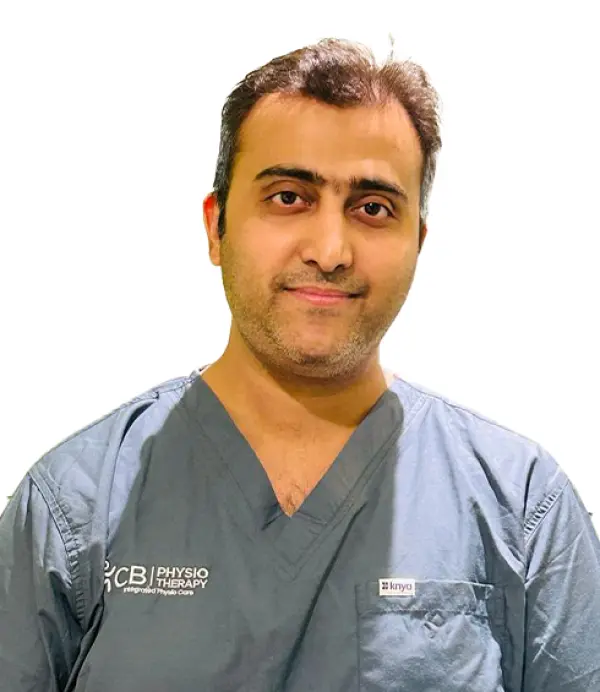
Dr. Rahul Dogra, physiotherapist in Vasant Kunj

Dr. Rahul Dogra

Head Of The Clinic

5.0 (18)
Vasant Kunj
cb physiotherapy vasant kunj
4 yrs experience
Ortho Spine Sports Physiotherapy Center
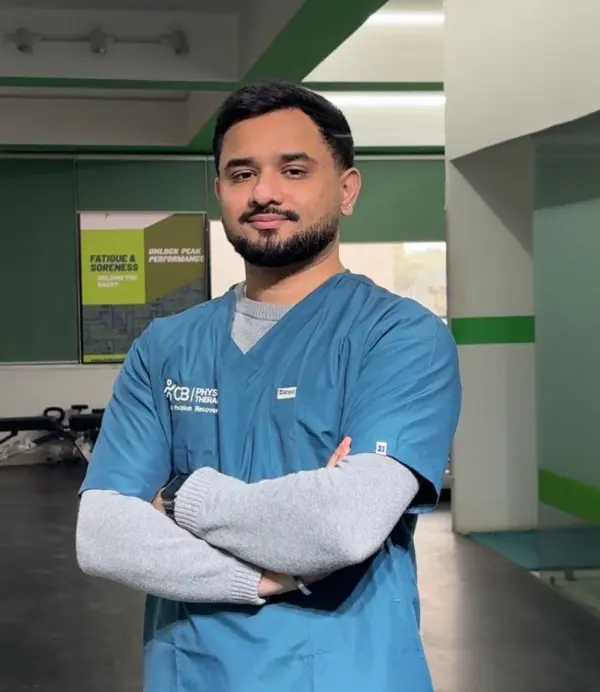
Dr. Nayima Tassaduq, physiotherapist in Safdarjung Enclave

Dr. Nayima Tassaduq

Head Of The Clinic · BPT, MPT

5.0 (18)
Safdarjung Enclave
CB Physiotherapy Safdarjung Enclave
6 yrs experience
Ortho Spine Sports Physiotherapy Center

Dr. Anjali Pandey

Sr. Consultant Physiotherapist · BPT, MPT

5.0 (16)
Safdarjung Enclave
CB Physiotherapy Safdarjung Enclave
4 yrs experience
Ortho Spine Sports Physiotherapy Center

Dr. Monika Bhardwaj, physiotherapist in Greater Kailash 2 (gk2)

Dr. Monika Bhardwaj

Head Of The Clinic · BPTh, MPTh

5.0 (13)
Greater Kailash 2 (gk2)
cb physiotherapy greater kailash
5 yrs experience
Ortho Spine Sports Physiotherapy Center
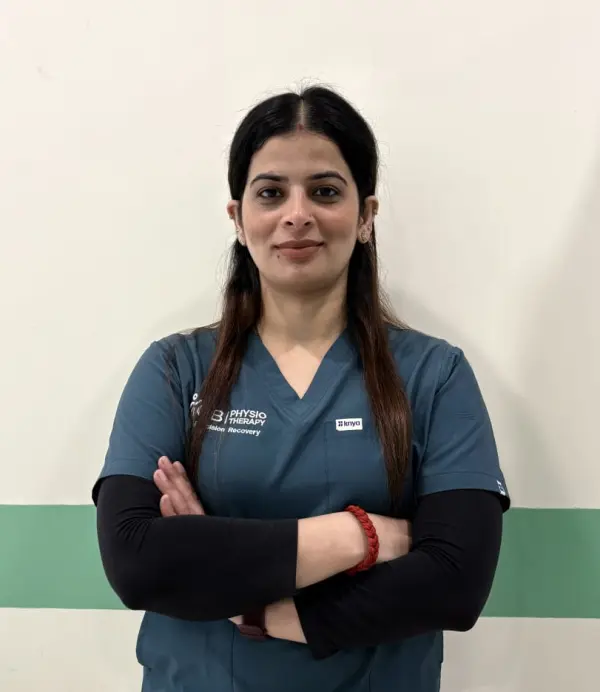
Dr. Meghna Kirar, physiotherapist in Saket

Dr. Meghna Kirar

Sr. Consultant Physiotherapist · BPTh

5.0 (1)
Saket
cb physiotherapy clinic saket
4 yrs experience
Ortho Spine Sports Physiotherapy Center
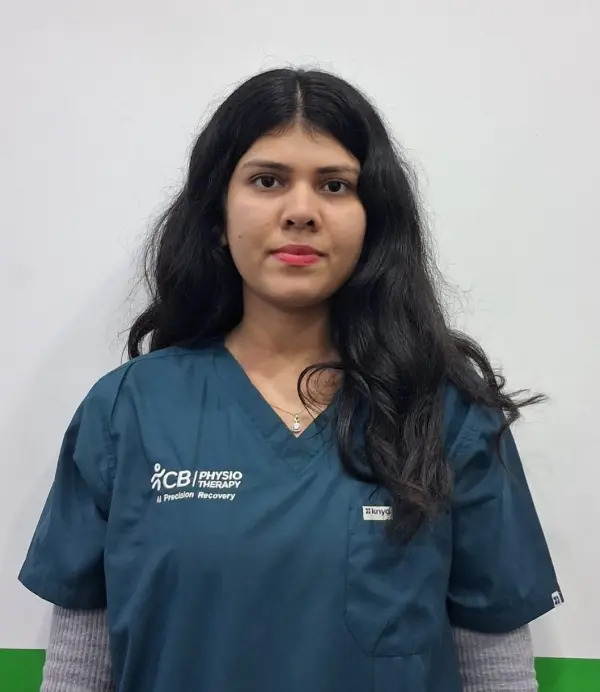
Not sure who to see? You don't have to decide. Our lead physiotherapist reviews every case and assigns the physio best suited to it — based on your condition and availability.
Transparent pricing

Clear charges, no surprises

The same prices you'll see at the clinic — published before you book. Sessions run 30–45 minutes.

Physical Therapy Per session
₹1,000
Book
Advanced Physiotherapy Per session
₹1,500
Book
Sports Physiotherapy Per session
₹3,500
Book
10%

off every package

Booking a course of sessions? Save 10% when you take a treatment package — and recover with a plan built around your goals.

Ask about packages →
Transparent pricing

Clear charges, no surprises

Traction Therapy pricing depends on your assessment — we publish our session charges and confirm your exact quote before you commit. No hidden fees, ever.

Patient stories

Traction Therapy recoveries, verified on Google

Rated 5.0 / 5 across 102 verified patient reviews in Delhi.

Verified

“I visited CB Physiotherapy because I pulled my hamstring. I consulted Dr. Meghna here who gave me a one week treatment plan and suffice to say I started to see results after the first session itself. I was unable to sit and had a lot of pain while walking. After my first session, I was able to walk better and sit better. By the end of the week, I had no pain. They have good infrastructure here and offer various treatments from cupping therapy to laser treatment. I would definitely recommend Dr. Meghna over any other physiotherapist in Saket if not Delhi.”

YD
Yash Dagar Verified patient · Treated at CB · 4 months ago
Verified

“I went for consultation for my knee pain and there I met Dr Rahul He took my consultation and sessions for 9 days and he was supr throughout the sessions and now it's so easy for me to be back in daily routine.”

SS
Sristi Suman Verified patient · Treated at CB · 5 months ago
Verified

“I had an amazing experience with Dr. Rahul also he took care of everything regarding my lower back strain also they have all the equipment which can help them to cure from the pain or injury. It was a great overall experience with the clinic staff too”

HJ
Harshit Jaiswal Verified patient · Treated at CB · 5 months ago
Verified

“Hello, I had 15 sessions with them. Overall all sessions were good. Their staff are very knowledgeable and helpful. A special thanks to Mr. Rahul and Ms. Mehak. Both them really helped with my pain on right shoulder and explained about basic and various exercises which i should do on regular basis. Would definitely recommend others.”

JB
Jeevesh Bajaj Verified patient · Treated at CB · 6 months ago
Verified

“Dr. Deepanshu is an exceptional physiotherapist! His personalized treatment plan and hands-on techniques helped me recover from chronic back pain effectively. He’s patient, knowledgeable, and takes the time to explain everything clearly. His positive attitude and encouragement made the entire process motivating and stress-free. I highly recommend him to anyone seeking top-notch physiotherapy care!”

SS
Sunita Singh Verified patient · Treated at CB · 6 months ago
Verified

“Dr. Rahul is an amazing physiotherapist! He genuinely cares about his patients and tailors treatments to fit your needs. Thanks to him, I’ve seen great progress and feel so much better. Highly recommend.”

SB
Sudhir Bhan Verified patient · Treated at CB · 6 months ago
Good to know

Traction Therapy, answered

A traction is a treatment option that is based on the application of a longitudinal force to the axis of the spinal column. In other words, parts of the spinal column are pulled in opposite directions to stabilize or change the position of damaged aspects of the spine. The force is usually applied to the skull through a series of weights or a fixation device and requires that the patient is either kept in bed or placed in a halo vest. Traction is a technique designed to reduce pressure on affected vertebral discs that are causing pain. Traction is ‘stretching’ of the spine which reduces pressure on the discs and therefore reduces the individual’s pain.

Cervical traction is commonly performed using manual, mechanical, or motorized methods (with a head or chin sling) or with the use of a supine posterior distraction unit. Mechanical cervical traction can be applied in the supine position, which reduces the weight of the head but increases frictional resistance. This position also allows for better control of the head by the patient and is typically more comfortable.

Lumbar traction requires a significantly greater force to create a distraction of the vertebral segments than cervical traction. Common traction systems include a thoracic or chest belt with a pelvic belt, inversion, a split traction table, or an auto traction table. Split traction tables have a mobile half and a stationary half. Auto traction tables allow both segments of the table to move and are controlled by the patient. The patient assumes the most pain-free position and performs active traction by pulling on an overhead bar. The patient then uses his or her feet to activate a bar, which alternates compressive and distracting forces.

Spinal traction therapy can be administered manually or mechanically, depending on your need.

1: Manual Traction:
In manual spinal traction, a physical therapist uses their hands to put people in a state of traction. Then they use manual force on the joints and muscles to widen the spaces between vertebrae. The period of traction generally doesn’t last very long. Manual traction sounds quite scary however it is a safe treatment option that can be effective for certain conditions.

2: Mechanical Traction:
The specialized treatment technique of mechanical traction uses devices that work by stretching the spinal vertebrae and muscle. Mechanical traction allows for continuous or intermittent stretching on a traction table while combining heat, vibration, and/or massage. These tables can use computer-based systems to apply exact amounts and/or variations of pressure. Mechanical traction is, however, not appropriate for patients with serious bone conditions such as osteoporosis, osteomyelitis, and bone cancer, or with heart disease and spinal cord diseases. It is also not appropriate for those with spinal fractures or arthritis. This type of treatment should only be considered following careful examination and diagnosis, and professionally supervised by a licensed physical therapist or doctor to ensure effectiveness and safety

A disc is a circular structure that sits between each vertebra in the spine. It has a tough outer layer surrounding soft inner tissue. When a disc is under pressure and damaged, the tough outer layer is damaged and the soft inside protrudes through the gap. This protrusion compresses nearby nerves causing pain. Traction pulls the vertebra away from the disc, releasing the pressure on the disc. This assists the soft part of the disc to return within the disc. This decompresses the nerve and reduces pain. This also helps to rehydrate the disc. Traction relieves pressure on the spine and alleviates pain. Cervical traction and lumbar traction are similar, but they have a couple of key differences: with cervical traction, a gentle force is used to stretch or pull the head away from the neck. With lumbar traction, a gentle force is used to gently gap the pelvis from the lower back. Both of these methods are useful in manipulating the spine and providing relief.

Traction is a technique used to stretch soft tissues and separate joint surfaces or bone fragments using a pulling force. The force applied must be of sufficient magnitude and duration in the proper direction while resisting movement of the body with an equal and opposite force. People with specific spinal conditions benefit from this therapy and is most commonly used to treat:
1: Slipped discs
2: Bone spurs
3: Degenerative disc disease
4: Herniated discs
5: Facet disease
6: Sciatica
7: Foramina stenosis
8: Pinched nerves
9: Cervical Spondylosis
10: Lumbar Spondylosis
Traction therapy is a treatment method used to relieve pressure on the spine or other parts of the musculoskeletal system. Here's a breakdown of what traction therapy feels like:

1: Stretching Sensation: Patients typically experience a gentle stretching sensation in the targeted area during traction therapy. This stretching helps to decompress the spine or joints, relieving pressure and promoting relaxation.

2: Relaxing: Many patients find traction therapy relaxing, as it can help alleviate muscle tension and promote blood flow to the affected area.

3: Mild Discomfort: While traction therapy is generally well-tolerated, some patients may experience mild discomfort or soreness during or after the treatment, particularly if the traction force is too strong or applied incorrectly.
The number of traction therapy sessions required varies depending on the patient's condition, severity of symptoms, and response to treatment. Typically, a course of traction therapy may involve several sessions spread out over weeks or months. Your physiotherapist will assess your progress and adjust the treatment plan accordingly.
While traction therapy is considered safe for most individuals, some potential side effects may include:

1: Muscle Spasms: In some cases, traction therapy may induce muscle spasms, especially if the traction force is too intense or applied improperly.
2: Soreness: Some patients may experience temporary soreness or discomfort in the treated area following traction therapy. This is usually mild and resolves on its own.
3: Nerve Irritation: Rarely, traction therapy may aggravate nerve symptoms in certain individuals, leading to increased pain or discomfort. Proper technique and monitoring can help minimize this risk.
4: Skin Irritation: There is a slight risk of skin irritation or redness at the contact points where the traction device is applied. Ensuring proper padding and adjustments can help prevent this.
Traction therapy may not be suitable for everyone. Contraindications may include:

1: Acute Injuries: Patients with acute spinal injuries, fractures, or severe musculoskeletal trauma may not be suitable candidates for traction therapy, as it could exacerbate their condition.
2: Pregnancy: Traction therapy is generally avoided during pregnancy, especially in the lumbar region, due to potential risks to the fetus.
3: Certain Medical Conditions: Patients with conditions such as osteoporosis, spinal cord compression, or severe osteoarthritis may not be suitable candidates for traction therapy. It's essential to consult with a healthcare provider to determine if traction therapy is appropriate for your specific condition.
4: Uncontrolled Hypertension: Traction therapy may temporarily increase blood pressure, so it's typically avoided in patients with uncontrolled hypertension or cardiovascular issues.

Before undergoing traction therapy or any other form of treatment, it's crucial to consult with a qualified physiotherapist to discuss your medical history, current symptoms, and treatment options. They can help determine if traction therapy is appropriate for you and develop a personalized treatment plan to address your needs.
Ready when you are

Ready to start your recovery?

Get assessed today — find the cause, get a plan, and know when you'll feel better.

📞 Call 💬 WhatsApp Book now