
Muscle Spasm — Causes & Treatment
Also known as Muscle Spasm. Causes, symptoms and how physiotherapy treats Muscle Spasm — without surgery or medicines.
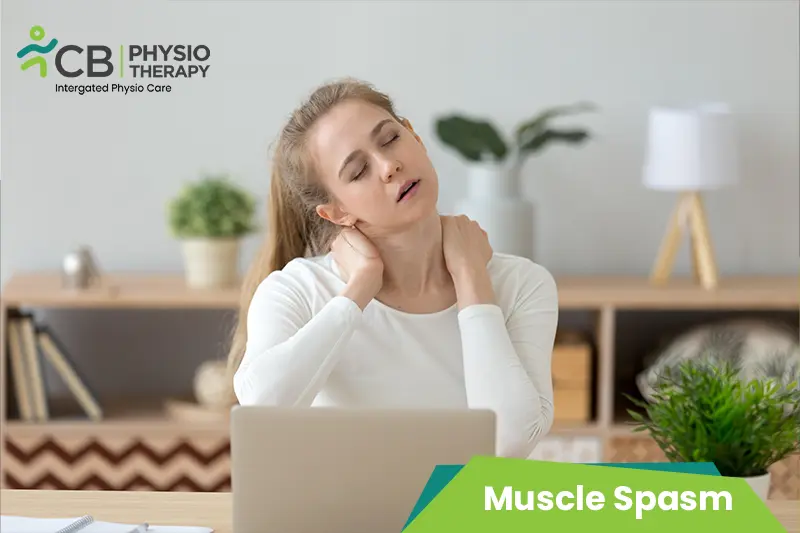
What Muscle Spasm feels like
Almost everyone experiences Muscle Spasm at some point; what matters is telling the episode that settles on its own from the one that needs attention. Duration, intensity and the company it keeps — stiffness, weakness, tingling — are the clues that separate them.
A physiotherapy assessment puts those clues together, screens out anything that needs a doctor first, and gives Muscle Spasm a named cause with a plan — not just something for the pain.
What could be behind Muscle Spasm
The usual suspects our physiotherapists screen for — finding the right one is what the assessment is for.
Cervical Spondylosis →
One of the conditions our physiotherapists screen for when Muscle Spasm persists — see how it's treated.
Frozen Shoulder →
One of the conditions our physiotherapists screen for when Muscle Spasm persists — see how it's treated.
Knee Bursitis →
One of the conditions our physiotherapists screen for when Muscle Spasm persists — see how it's treated.
Anterior Cruciate Ligament Tear(acl) →
One of the conditions our physiotherapists screen for when Muscle Spasm persists — see how it's treated.
Ankle Sprain →
One of the conditions our physiotherapists screen for when Muscle Spasm persists — see how it's treated.
Tennis Elbow →
One of the conditions our physiotherapists screen for when Muscle Spasm persists — see how it's treated.
Muscle and soft-tissue causes
Overload, strain or protective spasm — the most common source, and usually the fastest to settle with the right treatment.
Joint-related causes
A stiff, irritated or worn joint nearby can refer the symptom and often adds a "locked" morning feeling.
Nerve involvement
An irritated nerve makes symptoms travel, tingle or come with numbness — and needs a different plan from a muscle problem.
When it needs a doctor first
A small minority of cases have a medical cause — your first assessment screens for exactly that and refers on immediately.
When to take Muscle Spasm seriously
If any of these fit, don't wait it out — get it assessed.
- ✓ Muscle Spasm that has lasted more than two weeks or keeps returning
- ✓ It wakes you at night or is getting steadily worse
- ✓ It started after a fall, accident or injury
- ✓ It comes with numbness, tingling or weakness
- ✓ It is limiting work, sport or everyday tasks
How we assess Muscle Spasm
Step by step — from what you feel to a clear cause and plan.
We listen first
When it started, what triggers it, what eases it — the story of your Muscle Spasm carries half the diagnosis.
Movement and strength testing
Specific tests load different structures one by one to isolate where the Muscle Spasm is actually coming from.
Screening the serious out
Red-flag checks are built into every first assessment — anything that needs a doctor is referred on immediately.
Cause, plan, timeline
You leave with a named cause, a treatment plan and a realistic timeline — not just something for the pain.
Your path to relief
- ✓ Relief that holds, because the cause is treated
- ✓ A plan for work, sleep and activity while you recover
- ✓ Onward referral the moment anything needs a doctor
- ✓ Clinic or home sessions, tracked on Fizo IQ™
- ✓ The actual source identified — not just the symptom managed
When to seek urgent care
How CB Physiotherapy gets to the bottom of Muscle Spasm
Muscle Spasm is where CB Physiotherapy's assessment-first model earns its keep. Anyone can quiet a symptom for a day; lasting relief needs the cause. Your first session maps how your Muscle Spasm behaves, tests the structures that could produce it and screens out anything that needs a doctor first.
Treatment then targets the source — hands-on therapy, the right modalities and a graded exercise plan — tracked stage by stage on Fizo IQ™, at a clinic near you or at home.
Get Muscle Spasm treatment near you
Certified physiotherapists at a clinic near you or at home — same-day slots, assessment-led care.
Request received!
We'll call you within 10 minutes to confirm your home visit.We'll call you within 10 minutes to confirm your slot.
Chat with us on WhatsAppMuscle Spasm, answered
Muscle spasm is an involuntary contraction of the muscle group. It is a forcible uncontrollable contraction. When a muscle is in a continued state of contraction, local circulatory and metabolic changes occur in response causing prolonged contraction of a muscle. The most common sites for muscle contraction are the back, calves, thighs, feet, hands, abdomen, and arms. Altered circulatory and metabolic rate results in muscle- pain. Muscle contraction is self –perpetuating not depending on the presence or absence of irritability due to the primary cause .
Though the actual cause of muscle spasm is unknown one of the following can be the reasons for it:
. Deep pain Muscle fatigue . Muscle soreness/strains . Electrolyte imbalance . Dehydration . Viral infection e.g. cold . Prolonged period of immobilization . Emotional tension . Direct trauma to the muscle. . Sitting for a prolonged timeMuscle spasm makes daily life and activities uncomfortable, painful, and difficult. A frequent spasm can make the day to day life difficult because of limited mobility,
- Pain
- Swelling
- Decreased range of motion
- Palpable hard band
- Strong jerk while sleep (Sometimes extremely strong spasm may cause a jerk, while you are asleep)
- Clonus (If there are repeated jerks e.g. when floor taps repeatedly on the floor)
Magnetic resonance imaging (MRI): Magnetic resonance imaging (MRI) uses large magnet and radio waves, to diagnose a variety of conditions, torn ligaments, and muscles. MRI may be a valuable tool to complement the history and physical examination in diagnosing muscle spasms.
Electromyography (EMG): Electromyography (EMG) is used to assess the muscle activity, and if there is any abnormality in the muscle.
Computed Tomography Scan (CT): Computed tomography scan CT scan images are used to see the position, size, and shape of muscles and also show muscle damage.
Muscle biopsy: Muscle biopsy is a process in which a piece of involved muscle tissue is removed and examined microscopically. Muscle biopsy helps to assess the problems in the connective tissue.
Physiotherapy treatment: The physiotherapist uses different methods of treatment to treat the symptoms of muscle spasms.
Cryotherapy: Utilize cryotherapy by applying ice packs, cool baths, cooling garments, cold towels, etc. help to control spasms.
Thermotherapy: Thermotherapy application by hot packs, warm swimming, etc. relaxes the muscles.
Transcutaneous electrical stimulation (TENS): Transcutaneous electrical stimulation reduces muscle spasm and pain thus restoring muscle function.
Relaxation: Body relaxation combined with deep breathing enhances the effect of treatment techniques used. Relaxation and re-education about the breathing patterns help to decrease the tension in the muscle and provides pain relief.
Massage: Massaging the area with a massager or can also be done manually by using techniques like deep tissue massage, gently rubbing the muscle, and pinching or stroking massage produces relaxation, thus increasing the range of motion and also causes stretching effect. Massaging the affected muscle may decrease the spasm and thus reduces pain.
Stretching: Stretching helps to release the spasmed muscle stuck for long periods in a shortened state. Over some time these muscles can cause pain, daily stretching of these muscles can relieve pain.
Joint manipulation: Joint manipulation uses gentle movements to stimulate the joint movement by reducing the muscle spasm and pain.
Strengthening: Strengthening exercises play a major role in decreasing muscle spasms. Due to spasms, the muscle is not often used, thus making these muscles weaker over time. Strengthening exercises helps these muscles to regain strength and mobility.
Mild exercises: Mild exercises should be done to maintain strength and mobility. These may include
- Static cycling
- Mild staircase climbing
- Jogging
- Swimming.
Don't let Muscle Spasm decide your day.
Get assessed today — find the cause, get a plan, and know when you'll feel better.