
Anterior Cruciate Ligament Tear(acl) — Symptoms, Causes & Treatment
Also known as Anterior Cruciate Ligament Tear(acl). Causes, symptoms and how physiotherapy treats Anterior Cruciate Ligament Tear(acl) — without surgery or medicines.
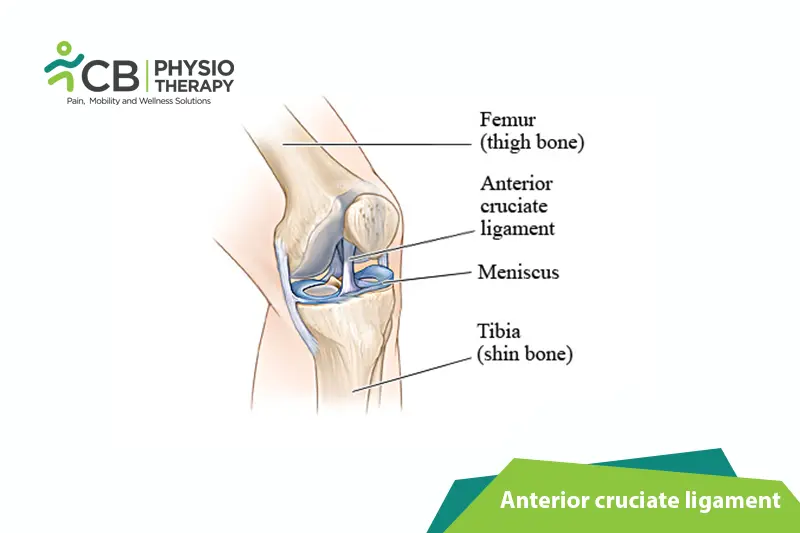
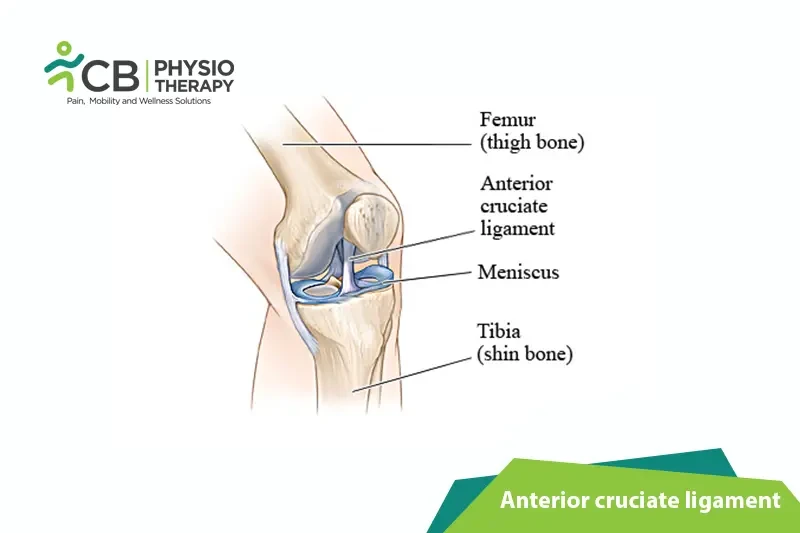
Understanding Anterior Cruciate Ligament Tear(acl)
Anterior Cruciate Ligament Tear(acl) can arrive suddenly or build over months, and how much it hurts is a poor guide to how serious it is — minor strains can hurt intensely, while slow-building problems stay quiet until they start limiting you.
Physiotherapy approaches Anterior Cruciate Ligament Tear(acl) by treating the cause rather than chasing the symptom: a detailed movement assessment first, then a plan combining hands-on treatment, targeted exercise and the habit changes that stop it returning.
Causes & risk factors of Anterior Cruciate Ligament Tear(acl)
What commonly drives it — your assessment pins down which of these apply to you.
Old injuries and compensations
A previous injury that never fully rehabilitated often leaves a movement pattern that overloads something else.
Sudden spikes in activity
A new sport, a new gym program, a long trek — tissue adapts to gradual change and protests when change is sudden.
Muscle strain and overload
A sudden lift, an awkward movement or simply more load than the tissues were prepared for — the most common trigger.
Posture and long static hours
Desks, driving and screens keep the same structures loaded for hours at a stretch — comfortable at first, aching later.
Joint stiffness and age-related change
Joints that move less start to hurt more; age-related wear is normal, but painful stiffness is not something to simply accept.
When physiotherapy is the right call
If any of these sound like you, an assessment is the right first step.
- ✓ You want to avoid long-term painkillers — or surgery has been mentioned
- ✓ You've been diagnosed with Anterior Cruciate Ligament Tear(acl) and told to "rest and see"
- ✓ Movement feels restricted, weak or guarded compared to before
- ✓ You want to return to sport or work with a plan, not by trial and error
- ✓ Anterior Cruciate Ligament Tear(acl) that keeps returning or hasn't settled within two weeks
Your treatment journey
Step by step — from your first assessment to a tracked recovery plan.
A detailed first assessment
History, movement testing and strength checks — a focused session to find what is actually driving your Anterior Cruciate Ligament Tear(acl).
A diagnosis you understand
Your physiotherapist explains the findings in plain language — what is affected, why it happened and what that means for you.
Active, tracked treatment
Hands-on therapy, the right modalities and graded exercise — progressed session by session and tracked on Fizo IQ™.
Prevention, built in
The final phase rebuilds strength and habits so the same problem does not come back — with a home plan you keep.
What recovery looks like
- ✓ Relief that comes from treating the cause, not masking it
- ✓ A clear diagnosis and a timeline you can plan around
- ✓ Strength and movement rebuilt, not just pain reduced
- ✓ Lower chance of recurrence, with a prevention plan
- ✓ Care without long-term medicines — at a clinic near you or at home
When to see a doctor — red flags
How CB Physiotherapy treats Anterior Cruciate Ligament Tear(acl)
We treat Anterior Cruciate Ligament Tear(acl) the way we treat everything: assessment first, plan second, treatment third. It sounds obvious, but it is the difference between sessions that fill a slot and sessions that move you towards a goal. Care is delivered by certified physiotherapists at a clinic near you or at home.
Your whole journey is tracked on Fizo IQ™ — the diagnosis, the root cause, the milestones and the goals — so progress is measured, not guessed, and the plan adapts the moment your response calls for it.
Exercises that help with Anterior Cruciate Ligament Tear(acl)
Make these exercises yours — a CB physio personalizes, doses and tracks your plan week by week.
Get my personalized planGeneral guidance only — stop if an exercise increases your pain, and check with your physio before starting a new routine.
Get Anterior Cruciate Ligament Tear(acl) treatment near you
Certified physiotherapists at a clinic near you or at home — same-day slots, assessment-led care.
Request received!
We'll call you within 10 minutes to confirm your home visit.We'll call you within 10 minutes to confirm your slot.
Chat with us on WhatsAppAnterior Cruciate Ligament Tear(acl), answered
The anterior cruciate ligament (ACL) is one of the two cruciate ligaments which help in the stabilization of the knee joint. It is a strong band made of connective tissue and collagenous fibers that originate from the anteromedial part of the intercondylar region of the tibial plateau and extends posteromedially to get attached to the lateral femoral condyle. During flexion and extension, both the anterior cruciate ligament (ACL) and posterior cruciate ligament (PCL) prevent excessive forward or backward motion of the tibia in relation to the femur.
Signs and symptoms of anterior cruciate ligament tear vary from patient to patient depending on the intensity of the tear. A few of the common symptoms are mentioned below:
- Torn ACL is extremely painful,
- Extensive swelling,
- Mild tenderness present at the medial side of the joint,
- Audible crack or pop at the time of injury,
- Feeling of initial instability,
- Giving way especially on pivoting or twisting movements
- Restricted movement,
- Inability to fully extend the knee.
Pathology:
ACL tears occur in the middle portion of the ligament and appear as discontinuity of the ligament or abnormal contour. The injury also leads to alteration in the mechanics of the knee. This mechanical deficit can lead to an increase in meniscal injury.
An ACL tear is usually sudden and can be seen in both contact and non-contact sports. It can also occur:
- In athletes, while placing a foot and suddenly shifting direction,
- Due to cutting or pivoting movements,
- While landing on one leg, such as when jumping in basketball or volleyball,
- Due to a direct hit on the knee, especially when the knee is hyper-extended or bent slightly inward,
- Sudden stopping or slowing from running can cause the ligament to hyper-extend,
- Repeated stress to the knee,
- When the knee is bent backward or twisted, during a fall or landing or jumping awkwardly.
Physical examination:
During the physical examination, the examiners check the knee for swelling and tenderness and compare the injured knee to the uninjured knee. The knee is also moved into a variety of positions to assess the range of motion and overall function of the joint.
Lachman test:
The patient is asked to lie in a supine position on the bed. The patient's knee is placed in about 20-30 degrees flexion. The leg should be in slight external rotation. The examiner places one hand behind the tibia and the other on the patient's thigh but the thumb should be on the tibial tuberosity while pulling the tibia anteriorly, usually ACL should prevent forward translational movement of the tibia on the femur. But if the test is positive then the anterior translation of the tibia is associated with a soft or a mushy end feel.
Anterior drawer test:
The patient is asked to lie supine on a plinth with hips flexed to 45 degrees, knees flexed to 90 degrees, and feet flat on the plinth. The examiner sits on the toes of the tested extremity to stabilize it. The examiner grasps the proximal lower leg, just below the tibial plateau or tibiofemoral joint line, and tries to translate the lower leg anteriorly. The test is positive if there is a lack of end feel or excessive anterior translation as compared to the contralateral side.
X-rays:
X-rays are done to rule out a bone fracture. Though it doesn't show soft tissues, such as ligaments and tendons.
Magnetic resonance imaging (MRI):
Magnetic resonance imaging (MRI) uses radio waves and a strong magnetic field and creates images of both hard and soft tissues in the body. Magnetic resonance imaging shows the extent of an injury and signs of damage to other tissues in the knee, including the cartilage.
Ultrasound:
Ultrasound uses sound waves to visualize internal structures. It is also used to check for injuries in the ligaments, tendons, and muscles of the knee.
Medications: Anti-inflammatory drugs, a steroid medication, etc.
Note: Medication should not be taken without the doctor's prescription.
Surgery:
Surgery is required if the ACL is torn badly, if the knee gives way while walking, or if the person is an athlete. During the surgery, the damaged ACL is removed and replaced with tissue to help a new ligament grow in its place.
Rest :
Rest and staying off the feet for a while is recommended to enhance the process of healing by decreasing the movement of the knee joint.
Knee brace:
A knee brace provides extra support for the patients having damaged ACL while running or playing sports.
Compression:
Bandaging can be done to decrease the swelling in or around the knee joint by wrapping an ace bandage around the knee.
Elevation:
Elevation of the affected limb also decreases swelling and edema. The patient is made to lie down with the knee propped up on pillows.
Ice packs may be used to decrease swelling. Ice is applied on the knee at least every two hours for 20 minutes at a time.
Transcutaneous electrical stimulations (TENS):
Transcutaneous electrical stimulations (TENS) help to decrease knee pain and knee swelling.
NMES:
NMES is given to improve the strength of quadriceps muscles and to regain normal quadriceps control.
This therapy uses red and infrared light for the relief of pain, accelerates the process of healing, and decreases inflammation. The light source is placed against the skin, then the photons penetrate several centimeters and get absorbed by the mitochondria, which is the energy-producing part of the cell.
Shockwave therapy is highly effective in ACL tear, it enhances the process of healing and results in early recovery.
.
Gait training:
Gait training is given with help of assistive devices like crutches, and progressed from walking with crutches to walking normally with no assistive device. Crutches can help to keep weight off the knee.
Pain and swelling in the knee can limit the knee's range of motion. Simple range of motion exercises can be done to help improve and normalize knee mobility like prone hang.
Strengthening exercises:
Strengthening exercises are used to strengthen the quadriceps, hamstrings, and hip muscles e.g like isometric, isotonic, and isokinetic exercises can be done to strengthen the muscles.
Balance exercises:
After an ACL tear, the patient has difficulty maintaining appropriate balance on the injured leg. For balance training wobble board or a BAPS board may be used to regain normal proprioception, or body awareness, after the injury.
Plyometrics:
Plyometrics helps to return to high-level sports. Plyometric training helps to learn to properly jump and land and regain the confidence needed to return to athletics.
The patient is educated to learn how to prevent re-injury of the ACL. The patient is advised to continue the physiotherapy strengthening exercises even after recovery to gain maximum strength.
Don't let Anterior Cruciate Ligament Tear(acl) decide your day.
Get assessed today — find the cause, get a plan, and know when you'll feel better.