
Posterior Cruciate Ligament(pcl) Injury — Symptoms, Causes & Treatment
Also known as Posterior Cruciate Ligament(pcl) Injury. Causes, symptoms and how physiotherapy treats Posterior Cruciate Ligament(pcl) Injury — without surgery or medicines.
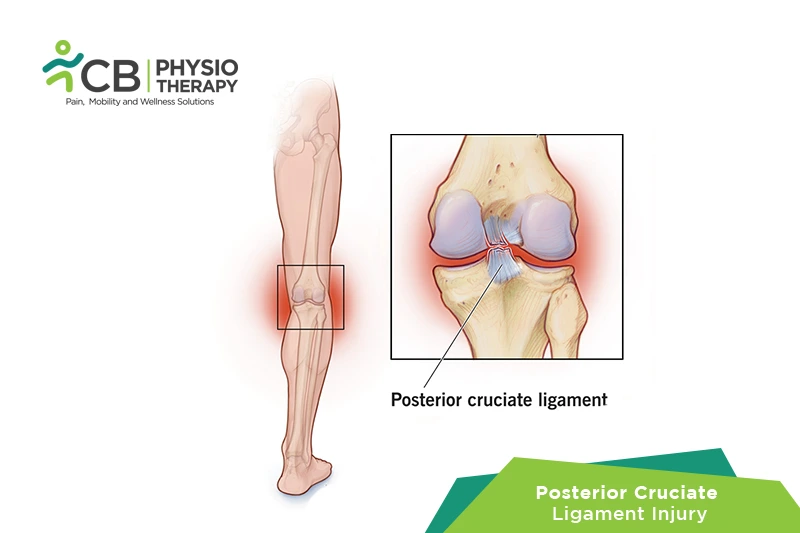
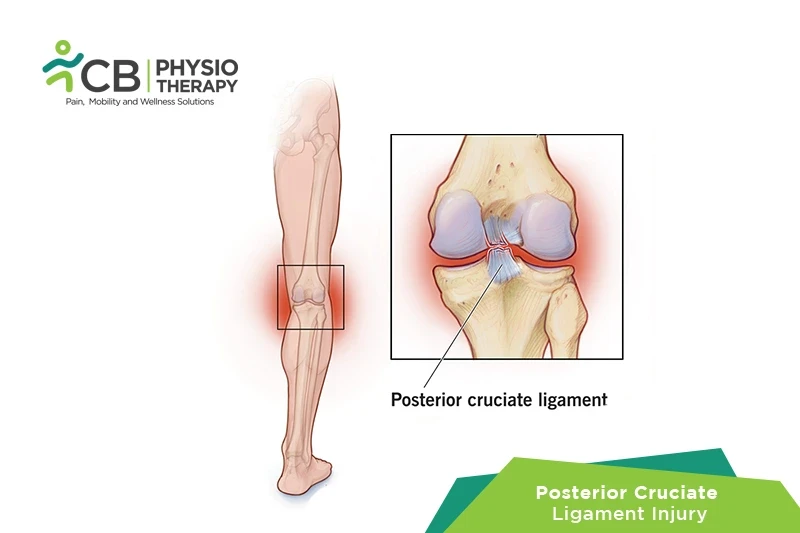
Understanding Posterior Cruciate Ligament(pcl) Injury
Living with Posterior Cruciate Ligament(pcl) Injury usually means negotiating with it daily — adjusting how you sit, move, sleep and work around it. It is common; that never makes it something you simply have to live with.
In most cases the problem behaves mechanically: particular movements or positions load the affected structures more than they can currently tolerate. A physiotherapy assessment identifies that mechanism, and treatment targets it directly — most mechanical cases respond well to conservative care, without medicines or surgery.
Causes & risk factors of Posterior Cruciate Ligament(pcl) Injury
What commonly drives it — your assessment pins down which of these apply to you.
Joint stiffness and age-related change
Joints that move less start to hurt more; age-related wear is normal, but painful stiffness is not something to simply accept.
Weakness and deconditioning
When supporting muscles lose strength, load shifts to structures that were never meant to carry it.
Old injuries and compensations
A previous injury that never fully rehabilitated often leaves a movement pattern that overloads something else.
Sudden spikes in activity
A new sport, a new gym program, a long trek — tissue adapts to gradual change and protests when change is sudden.
Muscle strain and overload
A sudden lift, an awkward movement or simply more load than the tissues were prepared for — the most common trigger.
When physiotherapy is the right call
If any of these sound like you, an assessment is the right first step.
- ✓ You want to avoid long-term painkillers — or surgery has been mentioned
- ✓ You've been diagnosed with Posterior Cruciate Ligament(pcl) Injury and told to "rest and see"
- ✓ Movement feels restricted, weak or guarded compared to before
- ✓ You want to return to sport or work with a plan, not by trial and error
- ✓ Posterior Cruciate Ligament(pcl) Injury that keeps returning or hasn't settled within two weeks
Your treatment journey
Step by step — from your first assessment to a tracked recovery plan.
A detailed first assessment
History, movement testing and strength checks — a focused session to find what is actually driving your Posterior Cruciate Ligament(pcl) Injury.
A diagnosis you understand
Your physiotherapist explains the findings in plain language — what is affected, why it happened and what that means for you.
Active, tracked treatment
Hands-on therapy, the right modalities and graded exercise — progressed session by session and tracked on Fizo IQ™.
Prevention, built in
The final phase rebuilds strength and habits so the same problem does not come back — with a home plan you keep.
What recovery looks like
- ✓ Strength and movement rebuilt, not just pain reduced
- ✓ Lower chance of recurrence, with a prevention plan
- ✓ Care without long-term medicines — at a clinic near you or at home
- ✓ Relief that comes from treating the cause, not masking it
- ✓ A clear diagnosis and a timeline you can plan around
When to see a doctor — red flags
How CB Physiotherapy treats Posterior Cruciate Ligament(pcl) Injury
At CB Physiotherapy, treatment for Posterior Cruciate Ligament(pcl) Injury starts with finding its cause: a structured, physiotherapist-led assessment before anything is prescribed. Your plan then combines hands-on therapy, targeted exercise and the right modalities — delivered at a clinic near you or at home, and coordinated with your doctor where medical care is involved.
Every case runs on Fizo IQ™, our recovery engine: diagnosis, root cause, plan, milestones and goals, tracked session by session. You always know where you are in your recovery — and what comes next.
Exercises that help with Posterior Cruciate Ligament(pcl) Injury
Make these exercises yours — a CB physio personalizes, doses and tracks your plan week by week.
Get my personalized planGeneral guidance only — stop if an exercise increases your pain, and check with your physio before starting a new routine.
Get Posterior Cruciate Ligament(pcl) Injury treatment near you
Certified physiotherapists at a clinic near you or at home — same-day slots, assessment-led care.
Request received!
We'll call you within 10 minutes to confirm your home visit.We'll call you within 10 minutes to confirm your slot.
Chat with us on WhatsAppPosterior Cruciate Ligament(pcl) Injury, answered
The posterior cruciate ligament (PCL) and the anterior cruciate ligament (ACL) connect the thighbone or femur to the shinbone i.e tibia. The anterior and posterior cruciate ligaments both form an "X" in the center of the knee. If one of these ligaments is torn, then it might cause pain, swelling, and a feeling of instability. Though posterior cruciate ligament (PCL) injury occurs far less often than the anterior cruciate ligament (ACL) if in case it is injured, it causes less pain, disability, and knee instability than an ACL tear, but still takes several weeks or months to recover.
PCL injuries are graded according to severity:
Grade 1: There is limited damage as a result of overstretching. Knee stability and function are not affected.
Grade 2: In this grade, the ligament is partially torn and the patient feels instability.
Grade 3: The patient has a complete ligament tear or rupture. This type of injury is usually accompanied by a sprain of the ACL or/ and collateral ligaments.
If only the posterior cruciate ligament is injured then the symptoms will be so mild they are not noticed, but after some time, the pain might worsen and the knee might feel more unstable. But if other parts of the knee have also been injured, then signs and symptoms are more severe. The patient feels:
- Mild to moderate pain in the knee,
- Slight limp or difficulty in walking,
- Rapid swelling in the knee occurs within hours of the injury,
- Instability,
- Pop like a sound heard while playing immediately after the injury,
- Feeling of giving way.
The posterior cruciate ligament can be torn alone, or along with the other ligament. This can be due to:
- Shinbone hit hard just below the knee,
- Bad landings from a jump, simple misstep or fast direction change,
- Fall on a bent knee,
- Motor vehicle accidents, dashboard injury,
- Hyper-extension and rotational stress,
- Contact sports like football and soccer,
- Athletes, with hyper-flexion movement.
Physical examination:
Physical examination is done by palpating, the looseness or fluid in the joint. The patient is asked to move the knee, leg, or foot in different directions also asked to stand and walk. The injured leg is compared with the healthy leg to look for sagging or abnormal movement in the knee or shinbone.
X-ray:
An X-ray cannot detect ligament damage but can show bone fractures. Posterior cruciate ligament injuries sometimes have breaks in which a small chunk of bone, is pulled away from the main bone. It can be done in different positions, like standing and weight-bearing with 45° knee flexion.
Magnetic resonance imaging (MRI) scan:
Magnetic resonance imaging (MRI) scan is a painless procedure that uses radio waves and a strong magnetic field to produce images of the soft tissues of the body. MRI scan can show a posterior cruciate ligament tear and also determines whether the other knee ligaments or cartilage are injured. It may appear normal in grade I and II injures.
Medications: Anti-inflammatory medications, analgesics, pain killers, etc.
Note: Medication should not be taken without the doctor's prescription.
Surgery
Treatment depends on the posterior cruciate ligament (PCL) injury on the extent of the injury, in most cases, surgery isn't required.
In severe cases, if the injury is combined with other torn knee ligaments, cartilage damage, or a broken bone, then surgery to reconstruct the ligament might be required. Surgery might also be considered if there are continuous episodes of knee instability despite appropriate rehabilitation.
Arthroscopy: It is a surgical technique, to look inside the knee joint. A tiny video camera is inserted into the knee joint through a small incision, to view the images of the inside of the joint on a computer monitor or TV screen.
Reconstruction: Posterior Cruciate Ligament reconstruction is done to restore normal knee mechanics and dynamic knee stability, and thus correct posterior tibial laxity.
Rest:
Stay off the injured knee, to protect it from further damage. For mobility, crutches are used.
Ice packs are applied to the knee for 20 to 30 minutes after every 3 to 4 hours for 2 to 3 days.
Compression:
For compression, an elastic bandage is wrapped around the knee.
Elevation:
To elevate lie down and place a pillow under the knee to help reduce swelling.
Ultrasound therapy is used to reduce pain and increase the range of motion.
Transcutaneous electrical stimulation (TENS):
Transcutaneous electrical stimulations are used to decrease pain and swelling.
Range of motion exercises is used to help decrease swelling and restore the range of motion of the knee.
Stretching exercises:
Stretching exercises are held for 30-seconds, followed by relaxation and repeated 5 times, these stretches can be given to hamstrings, iliotibial tract, gastrocsoleus, etc.
Strengthening exercises include isometrics, isotonic and isokinetic exercises. Quad sets, hams sets, hamstring curls, straight leg raises, heel raises, heel dig bridging, shallow standing knee bends are examples of strengthening exercises.
Progressive resistive exercises (PRE):
Progressive resistive exercises are self-resistive exercises that are progressed gradually to self-generated tension and resistance exercise with weight belts.
Balance exercises:
Balance exercises are used to enhance balance and equilibrium by using a bobath ball or a wobble board.
Plyometrics:
Plyometric exercises like high-intensity exercises are used to meet the high demands of strenuous and sports activities. These high-intensity exercises include squat jumps, clapping pushups, reverse lunge knee-ups, jumping, running, etc.
The patient is asked to avoid twisting or pivoting movement of the knee. Strengthening and stretching exercises should be continued to prevent reinjury. The patient should be careful while doing strenuous activities.
Don't let Posterior Cruciate Ligament(pcl) Injury decide your day.
Get assessed today — find the cause, get a plan, and know when you'll feel better.