Verified
Dr. Sidharth Sharma
Physiotherapist · BPT
See clinics, physiotherapists and prices for your city.
Whether it's a dull ache, a sharp catch, or pain that keeps coming back — we find the root cause of your Hip Osteoarthritis and fix it, at a clinic near you or at home.
Precision Care, Proven RecoveryWe'll call you within 10 minutes to confirm your home visit.We'll call you within 10 minutes to confirm your slot.
Chat with us on WhatsAppCommon triggers include muscle strain, joint stiffness, poor posture and long desk hours. If two or more of these fit, a physiotherapy assessment can identify exactly what's driving it.
Most hip osteoarthritis improves without surgery or long-term medication — the key is finding the cause first.
Hip Osteoarthritis rarely signals something serious, but see a doctor immediately if it comes with:
Our physios screen for these red flags at every first assessment and refer you to the right doctor if needed.
We start with an AI-based assessment to find the root cause — then follow a clear, four-phase plan.
Hands-on therapy and advanced modalities to calm pain and inflammation fast.
Mobility work and posture correction so everyday movement feels normal again.
Targeted strengthening that protects you — in-clinic or in our physio gym.
Back to work, sport and life — with a home program that prevents relapse.
One patient record, stage by stage: your physiotherapist pinpoints the diagnosis, finds the root cause and builds your in-clinic plan — while Fizo IQ™, our AI decision-support engine, tracks every milestone until your goals are met and you leave with an exercise plan to stay active.
Every plan combines hands-on care, advanced modalities and guided exercise — matched to your assessment.
Offered by our physiotherapists near you — see how Interferential Therapy (ift) fits your recovery plan.
Offered by our physiotherapists near you — see how Transcutaneous Electrical Nerve Stimulation(tens) Therapy fits your recovery plan.
Offered by our physiotherapists near you — see how Radiofrequency Ablation (rfa) fits your recovery plan.
Offered by our physiotherapists near you — see how Platelet-rich Plasma (prp) Injections fits your recovery plan.
These symptoms respond well to Hip Osteoarthritis — tap one to see how we treat it near you.
Make these exercises yours — a CB physio personalizes, doses and tracks your plan week by week.
Get my personalized planGeneral guidance only — stop if an exercise increases your pain, and check with your physio before starting a new routine.
Every CB physio is a qualified BPT/MPT clinician. You don't need to choose one — our lead physiotherapist reviews your case and assigns the specialist best suited to treat it.
Verified
Physiotherapist · BPT
Verified
Physiotherapist
Verified
Physiotherapist
Verified
Physiotherapist
Verified
Physiotherapist · BPT
Verified
Physiotherapist
Verified
Physiotherapist · BPT
Rated 5.0 / 5 across 18 verified patient reviews in Faridabad.
“Dr Rahul Kumar is very experienced. I was diagnosed with disc issues and initially I was not even able to move. His treatment helped me recover in a short duration of time.”
“Went for rehab post an elbow dislocation. The place has good facilities and the therapists there are really helpful Dr Rahul Kumar was overseeing me, she was extremely patient and explained things well. The variety of new exercises done helped with my recovery and made the sessions more interesting.”
“Excellent physiotherapist”
“Dr. Sidharth extensive knowledge of physiotherapy was evident. He conducted a thorough assessment of my condition, taking the time to understand my medical history and concerns. His ability to explain the underlying causes of my symptoms in a clear and concise manner helped me grasp the importance of the prescribed treatment plan. he empowered me to actively participate in my own recovery.”
“Much appreciated work in physio”
“Quality treatment!! I will give u 5-stars⭐⭐⭐⭐⭐ for your work...”
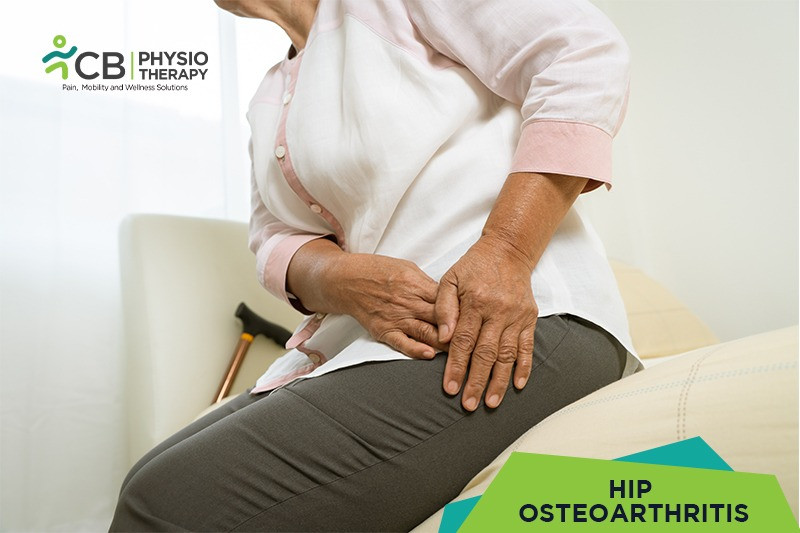
The hip joint is a ball and socket joint, made up of the femur i.e. thighbone, and pelvis i.e. hip bone. The end of the femur is a ball that fits into the pelvic bone, the socket.
Cartilage is a soft and shock-absorbing, that acts as a cushion at the ends of the bones where they meet to form joints, covers the femur and socket of the pelvic bone, making the hip movements smooth and painless. Hip osteoarthritis results when inflammation or injury in a joint causes the smooth, rubbery cartilage that lines and cushions the joint surfaces to break down. When the cartilage is damaged, the joint becomes painful and swollen. In more severe cases, painful bone spurs are formed known as osteophytes.
There is no specific cause of hip Osteoarthritis, but factors that are more likely to develop the disease, include:
The most common symptom of hip osteoarthritis is pain around the hip joint, other symptoms include:
Pathology:
Osteoarthritis is the degradation of the cartilage and the synovium becomes thick, the subchondral bone begins to remodel forming lytic lesion.
Physical examination:
Physical examination is done to evaluate the pain location, tenderness, range of motion, muscle strength, and balance, including medical history.
X-rays:
X-ray creates detailed pictures of bones. X-rays of an arthritic joint may show changes in the bone, narrowing of the joint space, and the formation of osteophytes.
Magnetic resonance imaging (MRI):
Magnetic resonance imaging (MRI) is used to detect any damage to the muscles, ligaments, and tendons.
Bone scan:
A bone scan helps to determine the condition of the bone and soft tissues of the hip.
Medications: Painkillers, Non-steroidal anti-inflammatory drugs (NSAIDs), corticosteroids.
Note: Medication should not be taken without the doctor's prescription.
Surgery: Surgery is done in case the conservative treatment does not relieve symptoms.
Osteotomy: The head of the femur or the socket (either of them) is cut first and then realigned to release the pressure from the hip joint.
Hip resurfacing:
Hip resurfacing provides relief, the arthritic hip joint surfaces are removed surgically and replaced with metal
Hip replacement surgery:
In severe cases, the hip joint degenerates causing rubbing of the bone. This condition requires hip joint replacement surgery.
Cryotherapy or Cold therapy causes numbness resulting in the constriction of blood vessels, thus reducing swelling.
Thermotherapy reaches the connective tissue and muscles, improves blood flow, removes toxic substances, and decreases pain. It also improves flexibility leading to improvement in range of motion.
Ultrasound therapy helps to decrease spasms and reduce joint stiffness.
Transcutaneous electrical stimulations (TENS):
Transcutaneous electrical stimulations (TENS) sends tiny electric shocks, through pads placed on the skin, to relieve pain.
Interferential current therapy (IFT):
Interferential current therapy (IFT), is another physiotherapy modality that can be used to decrease pain and increase mobility.
Hydrotherapy:
Hydrotherapy helps increase range of motion by immersing the body for 15 to 20 minutes in water and allowing weight-bearing muscles to relax and alternatively do simple flexion-extension exercises.
Manual therapy consists of several techniques and stretches to increase the quality and range of movement of the hip.
Range of motion exercises are started with passive movements of the leg and hip joint and progressed to active exercises.
Strengthening exercises are taught to restore strength and agility. These include the use of cuff weights, weight-lifting equipment, resistance bands, and cardio exercise equipment such as treadmills or stationary bicycles.
Stretching exercises:
Physiotherapists use stretching techniques to gently move the joint and the muscles around it. Regular stretching increases the range of motion and thus increases mobility.
Aerobic exercises like cardio or endurance exercises, like speed walking, vigorous swimming, stationary bike, etc can also be done without stressing the hip joint.

The patient is advised to do lower impact activities in daily life and minimize activities that put stress on the hip joint, such as walking instead of jogging, using assistive devices such as a cane, raised toilet seat, etc. The patient is advised to exercise regularly and protect the hip joint while daily activities.
Get assessed today — find the cause, get a plan, and know when you'll feel better.