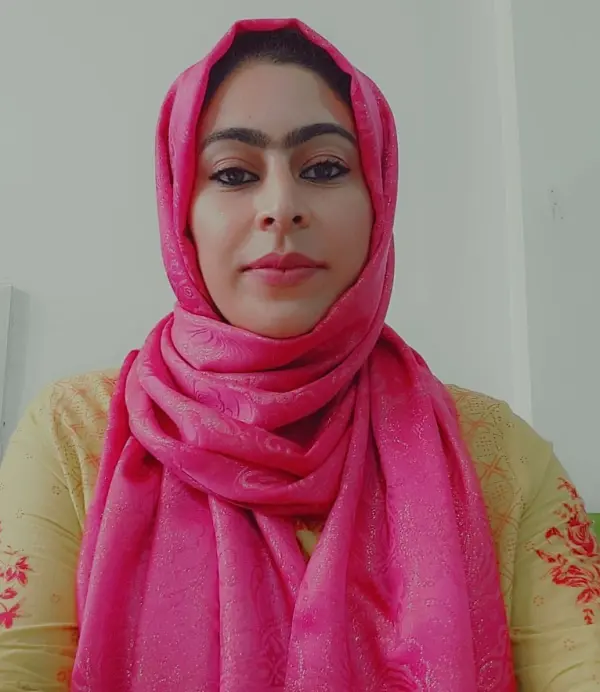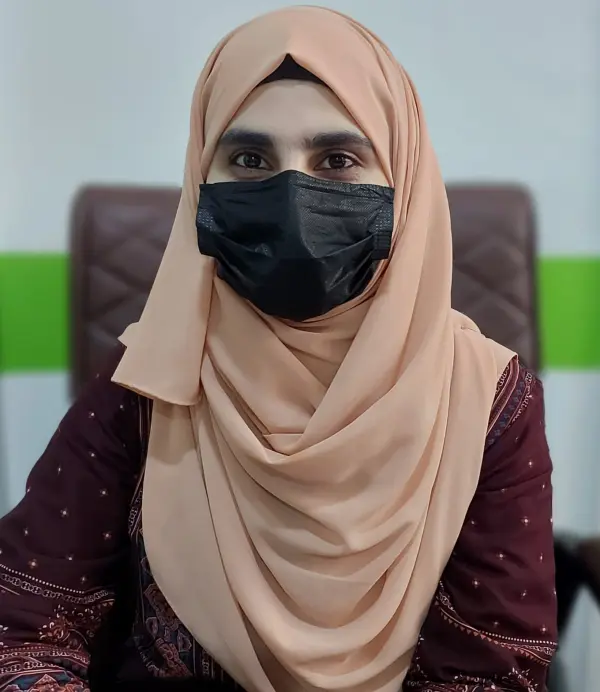
Dr. Shafiya
Physiotherapist
See clinics, physiotherapists and prices for your city.
Certified Traction Therapy experts in Jammu And Kashmir — at a clinic near you or at home, with a recovery plan matched to your case.
Precision Care, Proven RecoveryWe'll call you within 10 minutes to confirm your home visit.We'll call you within 10 minutes to confirm your slot.
Chat with us on WhatsAppOne patient record, stage by stage: your physiotherapist pinpoints the diagnosis, finds the root cause and builds your in-clinic plan — while Fizo IQ™, our AI decision-support engine, tracks every milestone until your goals are met and you leave with an exercise plan to stay active.
Every plan combines hands-on care, advanced modalities and guided exercise — matched to your assessment.
Joint mobilisation, soft-tissue release and targeted manual techniques.
TECAR & laser therapy, cryo-compression, dry needling and therapeutic taping.
Non-surgical, computer-controlled decompression for disc and nerve-root pressure.
Stability and strengthening programs matched to your assessment.
Desk, posture and lifting corrections that stop pain from coming back.
Simple daily exercises with adherence tracking through Activ PT.
Pick the condition that sounds like yours, or type it below — we'll match you to the right specialist and book you in.
Every CB physio is a qualified BPT/MPT clinician. You don't need to choose one — our lead physiotherapist reviews your case and assigns the specialist best suited to treat it.
Physiotherapist
Verified
Physiotherapist
Traction Therapy pricing depends on your assessment — we publish our session charges and confirm your exact quote before you commit. No hidden fees, ever.
Rated 5.0 / 5 across 23 verified patient reviews in Jammu And Kashmir.
“Received treatment at Cb Anantnag clinic where Dr. Athar treated me she was highly skilled and professional. Her treatment approach is effective, and I noticed significant improvement in my knee pain within a short time. I highly recommend her for quality physiotherapy care. in Anantnag”
“Excellent physiotherapist, Dr. Athar! Her expertise and customized care assisted me in recovering swiftly. from back issue, I strongly recommend her..”
“I had an excellent experience with Dr. Shafiya. My back pain recovery was made easier and less stressful thanks to her knowledge and kind attitude. Thank you for your incredible care. Doctor Shafiya.”
“Dr. Shafiya is an excellent physiotherapist! Her expertise, concern, and dedication enabled me to heal fast and painlessly. I definitely recommend her to anyone looking for efficient physiotherapy treatment.”
“Dr. Athar un Nisa is a wonderful physical therapist who honestly cares about her patients. She devised a treatment regimen that helped me restore mobility and strength following my injury. Her treatment sessions were quite successful and motivational. I am incredibly appreciative for her effort and support.”
Spinal traction therapy can be administered manually or mechanically, depending on your need.
1: Manual Traction:
In manual spinal traction, a physical therapist uses their hands to put people in a state of traction. Then they use manual force on the joints and muscles to widen the spaces between vertebrae. The period of traction generally doesn’t last very long. Manual traction sounds quite scary however it is a safe treatment option that can be effective for certain conditions.
2: Mechanical Traction:
The specialized treatment technique of mechanical traction uses devices that work by stretching the spinal vertebrae and muscle. Mechanical traction allows for continuous or intermittent stretching on a traction table while combining heat, vibration, and/or massage. These tables can use computer-based systems to apply exact amounts and/or variations of pressure. Mechanical traction is, however, not appropriate for patients with serious bone conditions such as osteoporosis, osteomyelitis, and bone cancer, or with heart disease and spinal cord diseases. It is also not appropriate for those with spinal fractures or arthritis. This type of treatment should only be considered following careful examination and diagnosis, and professionally supervised by a licensed physical therapist or doctor to ensure effectiveness and safety
A disc is a circular structure that sits between each vertebra in the spine. It has a tough outer layer surrounding soft inner tissue. When a disc is under pressure and damaged, the tough outer layer is damaged and the soft inside protrudes through the gap. This protrusion compresses nearby nerves causing pain. Traction pulls the vertebra away from the disc, releasing the pressure on the disc. This assists the soft part of the disc to return within the disc. This decompresses the nerve and reduces pain. This also helps to rehydrate the disc. Traction relieves pressure on the spine and alleviates pain. Cervical traction and lumbar traction are similar, but they have a couple of key differences: with cervical traction, a gentle force is used to stretch or pull the head away from the neck. With lumbar traction, a gentle force is used to gently gap the pelvis from the lower back. Both of these methods are useful in manipulating the spine and providing relief.
Get assessed today — find the cause, get a plan, and know when you'll feel better.