
Cervical Myelopathy — Symptoms, Causes & Treatment
Also known as Cervical Myelopathy. Causes, symptoms and how physiotherapy treats Cervical Myelopathy — without surgery or medicines.
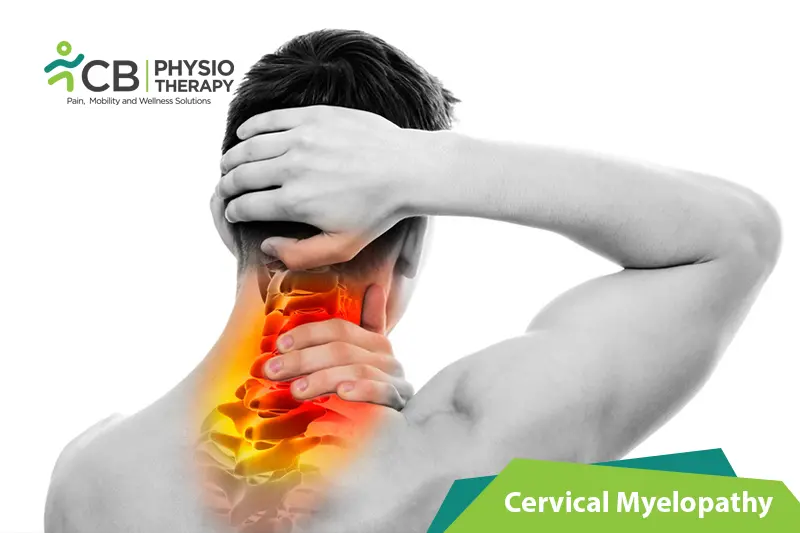
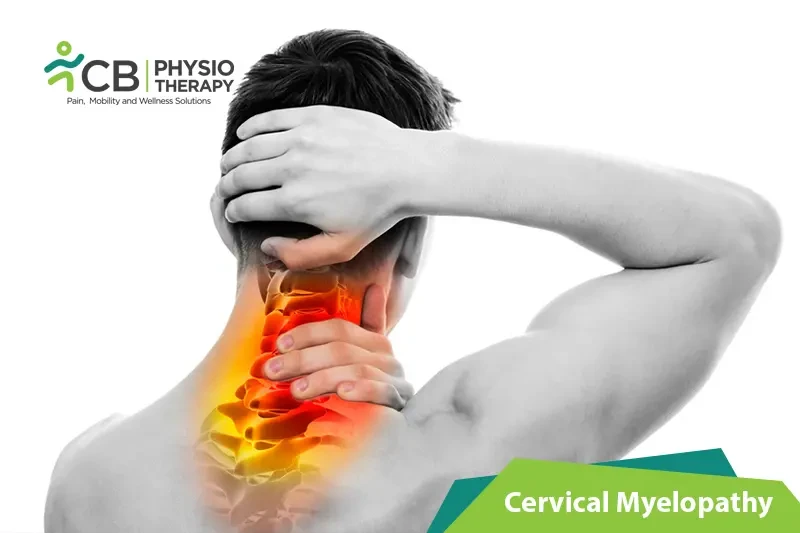
Understanding Cervical Myelopathy
Cervical Myelopathy affects the nervous system's control of movement — and while the diagnosis itself is made and managed by your doctor, physiotherapy shapes what daily life looks like with it. Strength, balance, walking and everyday tasks can all improve with the right rehabilitation, at almost any stage.
Neuro-rehabilitation works because of neuroplasticity: with repeated, task-specific practice the nervous system re-learns. A structured program targets what matters to you — transfers, walking, stairs, confidence — and measures progress milestone by milestone.
Causes & risk factors of Cervical Myelopathy
What commonly drives it — your assessment pins down which of these apply to you.
The underlying neurological event
Conditions like Cervical Myelopathy begin in the nervous system — diagnosis and medical management sit with your doctor and neurologist.
Reduced activity after diagnosis
Fear, fatigue and difficulty shrink movement — and inactivity then adds its own layer of weakness and stiffness.
Muscle weakness and tone changes
Altered signals change how muscles fire — some weaken, some tighten — reshaping movement patterns over time.
Balance and confidence
Balance changes raise fall risk, and fear of falling quietly cuts activity further — a loop rehabilitation is designed to break.
When physiotherapy is the right call
If any of these sound like you, an assessment is the right first step.
- ✓ A new diagnosis of Cervical Myelopathy and you want a clear rehabilitation start point
- ✓ Daily tasks, walking or stairs are getting harder than they used to be
- ✓ Strength, stamina or balance has visibly dropped
- ✓ You want a structured clinic + home program with measurable milestones
- ✓ Family members need guidance to support you safely
Your treatment journey
Step by step — from your first assessment to a tracked recovery plan.
A detailed first assessment
History, movement testing and strength checks — a focused session to find what is actually driving your Cervical Myelopathy.
A diagnosis you understand
Your physiotherapist explains the findings in plain language — what is affected, why it happened and what that means for you.
Active, tracked treatment
Hands-on therapy, the right modalities and graded exercise — progressed session by session and tracked on Fizo IQ™.
Prevention, built in
The final phase rebuilds strength and habits so the same problem does not come back — with a home plan you keep.
What recovery looks like
- ✓ More independence in daily tasks
- ✓ Better strength, balance and stamina
- ✓ Fewer setbacks, with red flags monitored
- ✓ A program your family understands and can support
- ✓ Progress measured milestone by milestone on Fizo IQ™
When to see a doctor — red flags
How CB Physiotherapy treats Cervical Myelopathy
At CB Physiotherapy, treatment for Cervical Myelopathy starts with finding its cause: a structured, physiotherapist-led assessment before anything is prescribed. Your plan then combines hands-on therapy, targeted exercise and the right modalities — delivered at a clinic near you or at home, and coordinated with your doctor where medical care is involved.
Every case runs on Fizo IQ™, our recovery engine: diagnosis, root cause, plan, milestones and goals, tracked session by session. You always know where you are in your recovery — and what comes next.
Exercises that help with Cervical Myelopathy
Make these exercises yours — a CB physio personalizes, doses and tracks your plan week by week.
Get my personalized planGeneral guidance only — stop if an exercise increases your pain, and check with your physio before starting a new routine.
Get Cervical Myelopathy treatment near you
Certified physiotherapists at a clinic near you or at home — same-day slots, assessment-led care.
Request received!
We'll call you within 10 minutes to confirm your home visit.We'll call you within 10 minutes to confirm your slot.
Chat with us on WhatsAppCervical Myelopathy, answered
Cervical Myelopathy is the compression of the spinal cord at the cervical level. Cervical myelopathy occurs because of pressure on the anterior spinal cord due to deformation of the cord by anterior herniated discs, spondylotic spurs, spinal stenosis, and an ossified posterior longitudinal ligament.
The symptoms of Cervical Myelopathy usually develop slowly. Early symptoms of this condition include:
- Numbness in one or both hands.
- Clumsiness.
- Painful hands.
- Disturbance in fine motor skills.
- Distal weakness.
- Decreased ROM in the cervical spine, especially during extension.
- Pain in the shoulder or arms.
- Unsteady or clumsy gait.
- Increased reflexes in the upper extremities below the level of the lesion and the lower extremities.
- Radiculopathy signs.
Cervical myelopathy arises when the spinal cord becomes compressed due to the wear-and-tear changes that occur in the spine. Common causes of cervical myelopathy are:
- Congenital narrowing combined with spondylitic degenerative changes in older patients.
- Degenerative cervical spondylosis.
- Compression due to osteophytes.
- Degenerative spondylolisthesis.
- Hypertrophy of ligamentum flavum.
- Congenital stenosis.
- Tumor.
- Trauma.
- Cervical kyphosis.
- Neurologic injury.
Pathology:
Cervical myelopathy arises when the spinal cord becomes compressed due to osteophyte or extruded disc material or wear-and-tear changes that occur in the spine. And encompasses a range of symptoms, including motor and sensory abnormalities related to dysfunction of the cervical spinal cord.
Physical examination:
The diagnosis of CSM is primarily based on a physical examination. Physical examination includes checking reflexes, muscle strength, or sensations, and range of motion of the neck.
Manual tests like the Distraction test, Spurling's test, +ve Clonus/Babinski/Hoffman's test can be done.
X- rays:
X- rays can be used to check for any bony problem like bone spurs, osteophytes, and other abnormalities.
CT scan:
CT scan helps to provide more detailed images of the cervical region.
Magnetic resonance imaging (MRI):
Magnetic resonance imaging (MRI) scan helps to locate the involvement of nerves, muscles, bones, tendons, and ligaments.
Myelogram:
Myelogram dye is used which gives a more detailed image and helps to make a proper diagnosis.
Nerve function tests:
A nerve conduction test is used to check the function of the nerves supplying the cervical area.
Electromyography:
Electromyography is used to check the function of the cervical muscles which is also helpful to make an appropriate diagnosis.
Medication: Muscle relaxants, Narcotics, Antiepileptic drugs, Steroid injections, non-steroid anti-inflammatory drugs (NSAIDs).
Note: Medication should not be taken without the doctor's prescription.
Surgery:
Surgery is required in patients with severe or disabling pain. Surgical techniques include:
- Discectomy.
- Corpectomy with or without instrumented fusion.
- Laminectomy with or without instrumented fusion.
- Laminoplasty.
- Surgical decompression
Heat therapy or thermotherapy provides symptomatic relief by increasing the blood flow and decreasing pain.
Cryotherapy or Cold therapy is used to provide relief for muscles spasm.
Ultrasound therapy uses sound waves to oscillate the tissues at a frequency that increases blood flow and decreases inflammation.
Transcutaneous electrical stimulation:
Transcutaneous electrical stimulations (TENS) help decrease pain and spasm.
Traction therapy creates an anti-gravity, negative pressure to the cervical spine on the spinal disc, joints, nerves, and muscles, and thus reduces pain and stiffness.
Advanced high-energy pulses are effective for chronic neck muscle stiffness.
Massage therapy includes soft tissue release, deep friction massage, myofascial release, and trigger points release. Massage therapy uses appropriate pressure, to increase blood flow, reduce swelling, and provide relief from pain.
Manual therapy includes passive cervical joint mobilization, manipulation, and manual traction. These techniques reduce pain, and improve function by increasing the range of motion.
Dynamic exercises for the upper limb and lower limb are recommended. Range of motion exercises like neck flexion, extension, etc.
Stabilization exercises:
Vertebral segment stabilization of the cervical spine can be performed with a pressure biofeedback unit in case of anteroposterior instability of the vertebral bodies of a degenerative nature.
Strengthening and stretching exercises:
Strengthening and stretching exercises are recommended to regain the lost strength and flexibility of the neck muscles.
Proper posture:
Good posture should be practiced especially while using a computer or while reading or talking on the phone. The head and neck should be kept upright.
Proprioceptive exercises:
Proprioceptive exercises for the upper limb and the lower limb are also done.
Balance training:
The patient is asked to stand on one leg with eyes open and then with eyes closed, standing on a stable platform and then on an unstable platform with a rocker board.
The patient is advised to improve posture, do lifestyle modifications, and maintain the alignment of the neck during prolonged activities.
Don't let Cervical Myelopathy decide your day.
Get assessed today — find the cause, get a plan, and know when you'll feel better.