
Golfer's Elbow — Symptoms, Causes & Treatment
Also known as Golfer's Elbow. Causes, symptoms and how physiotherapy treats Golfer's Elbow — without surgery or medicines.
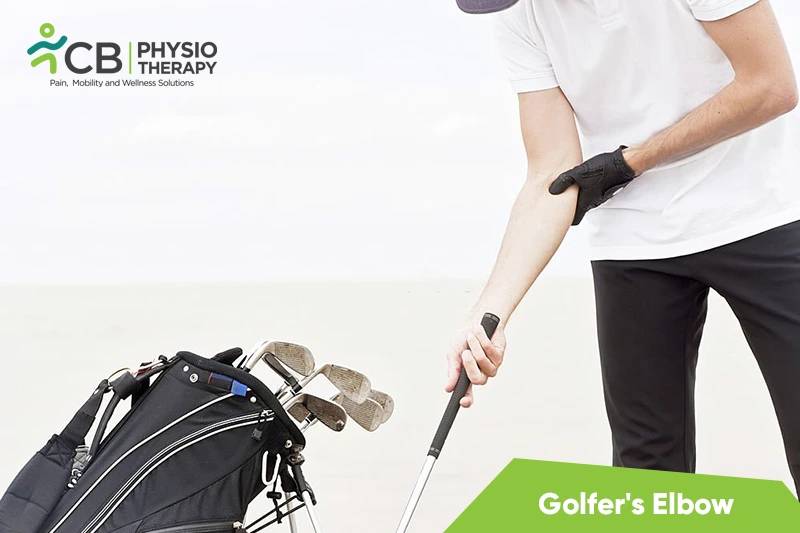
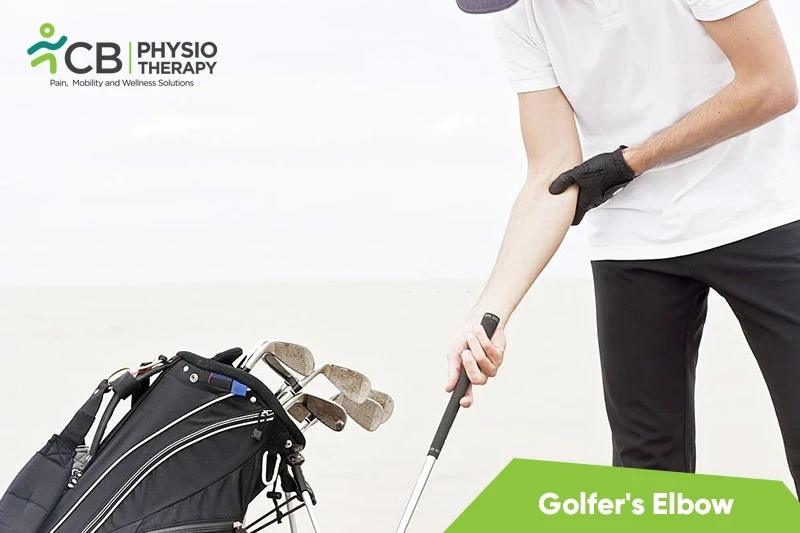
Understanding Golfer's Elbow
Golfer's Elbow is one of the conditions our physiotherapists treat most often — and one of the most treatable when the actual driver is found. Two people with Golfer's Elbow rarely share the same underlying cause, which is why one-size-fits-all treatment so often disappoints.
What matters clinically is the pattern: how it started, what makes it better or worse, and how it behaves through the day. That pattern — mapped in a structured assessment — tells us which structures are involved and which treatment will actually move the needle.
Causes & risk factors of Golfer's Elbow
What commonly drives it — your assessment pins down which of these apply to you.
Joint stiffness and age-related change
Joints that move less start to hurt more; age-related wear is normal, but painful stiffness is not something to simply accept.
Weakness and deconditioning
When supporting muscles lose strength, load shifts to structures that were never meant to carry it.
Old injuries and compensations
A previous injury that never fully rehabilitated often leaves a movement pattern that overloads something else.
Sudden spikes in activity
A new sport, a new gym program, a long trek — tissue adapts to gradual change and protests when change is sudden.
Muscle strain and overload
A sudden lift, an awkward movement or simply more load than the tissues were prepared for — the most common trigger.
When physiotherapy is the right call
If any of these sound like you, an assessment is the right first step.
- ✓ Golfer's Elbow that keeps returning or hasn't settled within two weeks
- ✓ Pain or stiffness that limits work, sleep or daily activities
- ✓ You want to avoid long-term painkillers — or surgery has been mentioned
- ✓ You've been diagnosed with Golfer's Elbow and told to "rest and see"
- ✓ Movement feels restricted, weak or guarded compared to before
Your treatment journey
Step by step — from your first assessment to a tracked recovery plan.
A detailed first assessment
History, movement testing and strength checks — a focused session to find what is actually driving your Golfer's Elbow.
A diagnosis you understand
Your physiotherapist explains the findings in plain language — what is affected, why it happened and what that means for you.
Active, tracked treatment
Hands-on therapy, the right modalities and graded exercise — progressed session by session and tracked on Fizo IQ™.
Prevention, built in
The final phase rebuilds strength and habits so the same problem does not come back — with a home plan you keep.
What recovery looks like
- ✓ Care without long-term medicines — at a clinic near you or at home
- ✓ Relief that comes from treating the cause, not masking it
- ✓ A clear diagnosis and a timeline you can plan around
- ✓ Strength and movement rebuilt, not just pain reduced
- ✓ Lower chance of recurrence, with a prevention plan
When to see a doctor — red flags
How CB Physiotherapy treats Golfer's Elbow
We treat Golfer's Elbow the way we treat everything: assessment first, plan second, treatment third. It sounds obvious, but it is the difference between sessions that fill a slot and sessions that move you towards a goal. Care is delivered by certified physiotherapists at a clinic near you or at home.
Your whole journey is tracked on Fizo IQ™ — the diagnosis, the root cause, the milestones and the goals — so progress is measured, not guessed, and the plan adapts the moment your response calls for it.
Exercises that help with Golfer's Elbow
Make these exercises yours — a CB physio personalizes, doses and tracks your plan week by week.
Get my personalized planGeneral guidance only — stop if an exercise increases your pain, and check with your physio before starting a new routine.
Get Golfer's Elbow treatment near you
Certified physiotherapists at a clinic near you or at home — same-day slots, assessment-led care.
Request received!
We'll call you within 10 minutes to confirm your home visit.We'll call you within 10 minutes to confirm your slot.
Chat with us on WhatsAppGolfer's Elbow, answered
Golfer's elbow or medial epicondylitis is an overuse injury that occurs when the tendons on the inner side of the forearm become irritated, inflamed, and painful.
Golfer's elbow or medial epicondylitis is caused by damage to the muscles and tendons that control the wrist and fingers. This usually occurs in golf players and others who repeatedly use their hands, wrists, forearms, and elbows. Other causes can be:
- Degenerative changes.
- Excess or repeated stress.
- Improper lifting, throwing or hitting.
- Too little warmup or poor conditioning.
- Improper technique with tennis strokes, especially the backhand or excessive use of topspin.
- Using too small or heavy rackets.
- Improper pitching technique in baseball or softball, football, archery, and javelin throwing.
- Lifting weights while using improper techniques.
- Forceful, repetitive occupational movements such as plumbing, construction, and carpentry.
Pain in the golfer's elbow can occur suddenly or gradually.
- Pain on the inner side of the elbow.
- Tenderness in the elbow.
- Radiating pain to the inner side of the forearm.
- Pain aggravates with certain movements like gripping or squeezing.
- Elbow stiffness.
- Weakness in the hands and wrists.
- Numbness or tingling in one or more fingers.
Pathology:
The group of muscles that bend and turn the wrist, fingers, and thumb, stabilize the elbow, and allow for wrist movement are affected. Inflammation occurs in the tendon when the load exceeds the tissue's capacity, causing the tendon to become tender and irritated with continuous overuse and insufficient recovery and repair time.
Physical examination:
Golfer's elbow is usually diagnosed based on the physical examination and medical history. The examiner evaluates the pain and stiffness, applies pressure to the affected area, or asks to move the elbow, wrist, and fingers in various ways. With the elbow fully extended, the patient feels points of tenderness over the affected area on the elbow. Passive wrist flexion and resistive wrist extension (Cozen's test) are also painful which means Cozen's test is positive.
X-rays:
An x-ray can help to confirm and distinguish the possible causes of elbow pain such as fracture or arthritis.
MRI:
Magnetic resonance imaging can confirm the presence of excess fluid and swell in the affected region of the elbow.
Medication: Ibuprofen, naproxen sodium or acetaminophen, corticosteroid injections
etc.
Note: Medication should not be taken without the doctor's prescription.
Surgery:
Surgery is not usually required but if the signs and symptoms don't respond to conservative treatment in 6 to 12 months, then surgery might be recommended.
Rest:
Rest from repetitive activities is recommended until the pain is gone, as movement can worsen the condition.
Cryotherapy or ice packs can be applied to the elbow for 15 to 20 minutes, 3 to 4 times a day for several days. To protect the skin, wrap the ice pack in a thin towel and use it to massage the inner elbow with ice for 5 minutes at a time, 2 to 3 times a day.
Brace:
The physiotherapist recommends wearing a brace on the affected arm, which might reduce tendon and muscle strain.
Taping has a good effect on pain and enables pain-free grip strength in patients with chronic golfer's elbow. Physiotherapists usually suggest Kinesio tape and exercise, which are found to be very effective.
Manual therapy is a hands-on treatment that involves techniques like mobilization with movement that can reduce pain and facilitate exercise e.g Mulligan's mobilization, etc. Manual therapy uses soft tissue massage and joint mobilization techniques to regain full movement in the affected area. Transverse massage is effective in breaking the adhesions that finally help in pain-free movement.
Ultrasound therapy is found to be effective to relieve pain and spasm.
TENS:
The TENS unit helps alleviate pain in the golfer's elbow. It is used 2-3 times per day or as needed to reduce pain and inflammation.
Laser with intensity 1-4 joule energy with power 905NM in pulse/continuous with 1 m exposer at each point to the medial epicondyle 3-4 days weekly treatment for 3-4 weeks decreases pain and swelling.
Stretching Exercises:
Stretching exercises are considered to be an effective measure for tendon overuse injuries. Stretching can be done on the elbow, forearm, wrist, shoulder, and thoracic spine increasing movement.
Strengthening exercises of the forearm, elbow, and hand are incorporated by using weights and resistance bands to strengthen the weak muscles. Isometric exercises can be used during the acute phase of the golfer's elbow. These exercises generate force without changing the length of the muscle. Eccentric exercises cause muscles to elongate in response to a greater opposing force and build muscle flexibility. These exercises strengthen the muscles, tendons, and ligaments and can help reduce the risk of muscle strains and tears. Eccentric exercises involve progressive loading on the tendon, which helps the tendon gradually adapt to tolerate the demands placed on it.
Patients are educated to modify specific movement patterns to lessen the stress on the tendons, forearm, elbow, and wrist and also reduce the risk of injury, such as adjusting the golf swing and throwing techniques or altering work tasks to reduce the pressure placed on the tendons of the forearm.
Don't let Golfer's Elbow decide your day.
Get assessed today — find the cause, get a plan, and know when you'll feel better.