
Patellar Tendonitis — Symptoms, Causes & Treatment
Also known as Patellar Tendonitis. Causes, symptoms and how physiotherapy treats Patellar Tendonitis — without surgery or medicines.
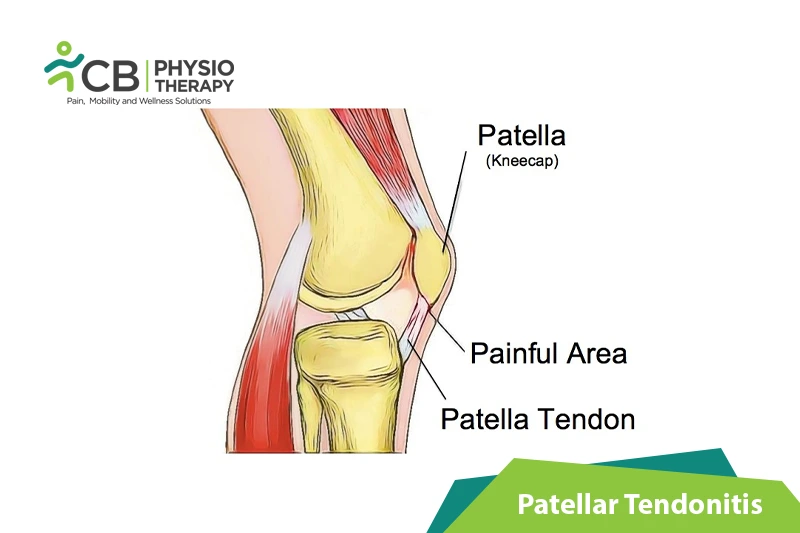
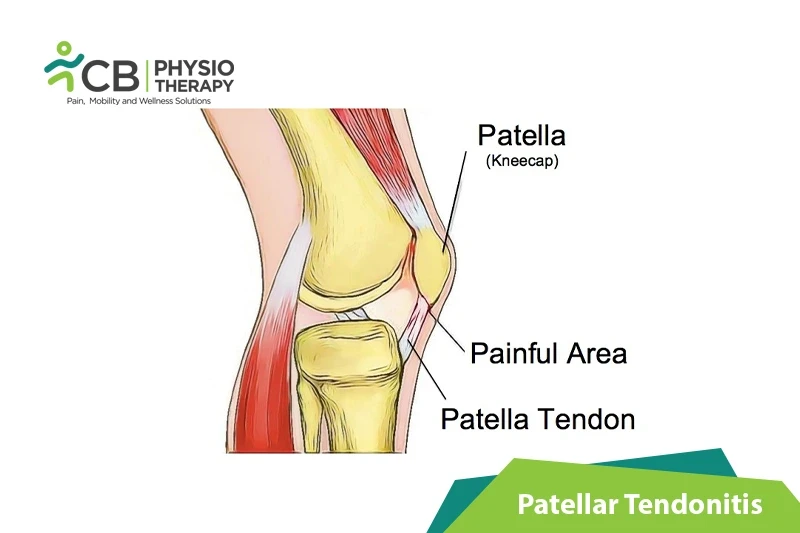
Understanding Patellar Tendonitis
Patellar Tendonitis is one of the conditions our physiotherapists treat most often — and one of the most treatable when the actual driver is found. Two people with Patellar Tendonitis rarely share the same underlying cause, which is why one-size-fits-all treatment so often disappoints.
What matters clinically is the pattern: how it started, what makes it better or worse, and how it behaves through the day. That pattern — mapped in a structured assessment — tells us which structures are involved and which treatment will actually move the needle.
Causes & risk factors of Patellar Tendonitis
What commonly drives it — your assessment pins down which of these apply to you.
Joint stiffness and age-related change
Joints that move less start to hurt more; age-related wear is normal, but painful stiffness is not something to simply accept.
Weakness and deconditioning
When supporting muscles lose strength, load shifts to structures that were never meant to carry it.
Old injuries and compensations
A previous injury that never fully rehabilitated often leaves a movement pattern that overloads something else.
Sudden spikes in activity
A new sport, a new gym program, a long trek — tissue adapts to gradual change and protests when change is sudden.
Muscle strain and overload
A sudden lift, an awkward movement or simply more load than the tissues were prepared for — the most common trigger.
When physiotherapy is the right call
If any of these sound like you, an assessment is the right first step.
- ✓ Movement feels restricted, weak or guarded compared to before
- ✓ You want to return to sport or work with a plan, not by trial and error
- ✓ Patellar Tendonitis that keeps returning or hasn't settled within two weeks
- ✓ Pain or stiffness that limits work, sleep or daily activities
- ✓ You want to avoid long-term painkillers — or surgery has been mentioned
Your treatment journey
Step by step — from your first assessment to a tracked recovery plan.
A detailed first assessment
History, movement testing and strength checks — a focused session to find what is actually driving your Patellar Tendonitis.
A diagnosis you understand
Your physiotherapist explains the findings in plain language — what is affected, why it happened and what that means for you.
Active, tracked treatment
Hands-on therapy, the right modalities and graded exercise — progressed session by session and tracked on Fizo IQ™.
Prevention, built in
The final phase rebuilds strength and habits so the same problem does not come back — with a home plan you keep.
What recovery looks like
- ✓ Lower chance of recurrence, with a prevention plan
- ✓ Care without long-term medicines — at a clinic near you or at home
- ✓ Relief that comes from treating the cause, not masking it
- ✓ A clear diagnosis and a timeline you can plan around
- ✓ Strength and movement rebuilt, not just pain reduced
When to see a doctor — red flags
How CB Physiotherapy treats Patellar Tendonitis
We treat Patellar Tendonitis the way we treat everything: assessment first, plan second, treatment third. It sounds obvious, but it is the difference between sessions that fill a slot and sessions that move you towards a goal. Care is delivered by certified physiotherapists at a clinic near you or at home.
Your whole journey is tracked on Fizo IQ™ — the diagnosis, the root cause, the milestones and the goals — so progress is measured, not guessed, and the plan adapts the moment your response calls for it.
Exercises that help with Patellar Tendonitis
Make these exercises yours — a CB physio personalizes, doses and tracks your plan week by week.
Get my personalized planGeneral guidance only — stop if an exercise increases your pain, and check with your physio before starting a new routine.
Get Patellar Tendonitis treatment near you
Certified physiotherapists at a clinic near you or at home — same-day slots, assessment-led care.
Request received!
We'll call you within 10 minutes to confirm your home visit.We'll call you within 10 minutes to confirm your slot.
Chat with us on WhatsAppPatellar Tendonitis, answered
Patellar tendonitis or jumper's knee is an injury that occurs to the patellar tendon which connects the patella to the shinbone. The patellar tendon works with the muscles at the front of the thigh to extend the knee, while kicking, running, and jumping, without it, we cannot straighten the knee or jump. The patellar tendon is actually a ligament as tendons connect a muscle to a bone and ligaments connect two muscles. The patellar tendon provides stability and holds the bones together.
Patellar tendonitis occurs when the patellar tendon tissue becomes swollen or irritated. Certain factors that can cause patellar tendonitis are:
- Above 40 years of age,
- Activities that put a lot of stress on the muscles and tendons,
- Activities that require abrupt movements at fast speeds, a lot of jumping, sprinting,
- Overuse and repeated movements over a long time gradually weaken the patellar tendon,
- Landing from a jump or sudden change in the direction while running,
- Commonly affects Athletes, professional basketball, volleyball players,
- Uneven leg muscle strength,
- Playing on hard surfaces,
- Tight leg muscles, quadriceps, and hamstrings, can increase strain on the patellar tendon,
- Muscular imbalance of the legs, feet, or ankles, the stronger muscles could pull harder on the patellar tendon. This uneven pull could cause tendinitis,
- Some illnesses disrupt blood flow to the knee, which weakens the tendon, e.g. autoimmune diseases like rheumatoid arthritis or lupus, metabolic diseases like diabetes, kidney failure, etc.
Patellar tendonitis may cause minor to severe pain which worsens over time. The condition becomes debilitating if left untreated. Symptoms of patellar tendinitis include:
- Dull aching pain at the top of the shinbone, under the kneecap,
- Stiffness, that makes it hard to extend the knee,
- Swelling and tenderness present in the area between the kneecap and the shin,
- Intense movements aggravate pain, such as squatting, running, jumping, or walking down the stairs,
- Over some time, the pain worsens and starts to interfere with playing sports,
- Pain by daily movements such as climbing stairs or rising from a chair,
If patellar tendonitis is not treated, a person may have a risk of tendon tear. A large tear of the patella tendon is a serious injury, and a complete tear separates the tendon from the kneecap. The person may hear a tearing or popping sound with significant pain.
Pathology
Patellar tendinitis is an overload lesion. Its pathology reveals focal degeneration and micro-tearing at areas near the insertion of the quadriceps or patellar tendon.
Physical examination:
Physical examination includes evaluation of the symptoms. Palpation of the patellar tendon knee to check where it hurts. In case of patellar tendonitis, pain occurs on the front part of the knee, just below the kneecap. Pressure is applied to the parts of the knee to determine where it hurts. To evaluate the range of motion patient is asked to gently move the knee in different directions, and the results are recorded.
X-ray:
X-ray is used to rule out the other causes of pain around the kneecap. It can help to exclude other bone problems that can cause knee pain.
Ultrasound:
This test uses sound waves to create an image of the knee, revealing tears in the patellar tendon. It can be used to observe structural damage to the patellar tendon.
Magnetic resonance imaging (MRI):
Magnetic resonance imaging (MRI) uses a magnetic field and radio waves that create detailed images of the subtle changes in the patellar tendon.
Medication: NSAIDs, corticosteroids, pain relievers such as ibuprofen or naproxen sodium, etc.
Note: Medication should not be taken without a doctor's prescription.
SURGICAL AND OTHER PROCEDURES
If conservative treatments don't relieve symptoms, then other therapies are required, such as:
Corticosteroid injection: It is an ultrasound-guided corticosteroid injection aimed into the sheath around the patellar tendon, which may help to relieve pain. But this can also weaken tendons and make the tendon more prone to rupture.
Platelet-rich plasma injection: This type of injection can be done in people with chronic patellar tendon problems. These injections might promote new tissue formation and also help to heal tendon damage.
Oscillating needle procedure: This procedure is performed using local anesthesia. Doctors use ultrasound imaging to guide a small oscillating needle that cuts away the damaged area.
Surgery: In case other treatments fail, surgical debridement of the patellar tendon procedures can be done, through small incisions around the knee.
Rest:
Rest is recommended as it gives the body time to heal.
Cryotherapy helps to decrease swelling around the knee, Ice is applied on the area for 15 minutes, a few times a day.
Knee brace:
A knee brace is recommended to support the knee, these devices help to relieve the pain.
Patellar tendon strap:
This strap applies pressure to the patellar tendon that helps to distribute force away from the tendon and directs it through the strap and thus helps relieve pain.
Therapeutic ultrasound:
Therapeutic ultrasound accelerates tendon healing, augments tendon repair, and modulates tendon cell activity.
Transcutaneous electrical stimulation (TENS):
Transcutaneous electrical stimulation (TENS) is an effective electrical modality that helps to decrease pain and inflammation.
Laser therapy can help to accelerate tissue repair and cell growth causes faster-wound healing, reduces fibrous tissue formation, and increases repair and regeneration. It also helps to decrease inflammation and pain.
Shock wave therapy uses sound waves to heal the tendon and thus enhance the healing process.
Iontophoresis:
Iontophoresis involves spreading a corticosteroid medicine on the skin and then using a device that delivers a low electrical charge to push the medication through the skin.
Stretching exercises:
Stretching exercises can help reduce muscle spasms and lengthen the muscle-tendon unit. While performing the stretching exercises patient should not do a bouncing movement. These movements slowly increase the strength and flexibility of injured tendon tissues. More elastic tissue is less likely to tear thus stretching should be done regularly to make the muscles and tendons more elastic. E.g. Seated hamstring stretch, quad stretch, squats, supine leg lifts, etc.
Strengthening exercises are done for weak thigh muscles which contribute to the strain on the patellar tendon. Exercises involve lowering the leg very slowly after extending it, this exercise can be helpful, as they strengthen all the leg muscles in combination, such as a leg press.
Balance and proprioception exercises:
Balance and proprioception exercises are important in case the patient feels instability while walking. This can be achieved by recommending exercises to improve proprioception and stability.
A proper warm-up should be done to give muscles time to wake up, which makes injury less likely. The patient should not do wrong exercises, as doing too much too soon, can cause further damage. Proper technique in takeoff and landing in sport should be used. The patient should be careful while doing gentle exercises and progress slowly. Activities or movements that trigger the symptoms should be avoided and further pushing through pain may cause more damage to tendon tissues.
Don't let Patellar Tendonitis decide your day.
Get assessed today — find the cause, get a plan, and know when you'll feel better.