
Tendinitis — Symptoms, Causes & Treatment
Also known as Tendinitis. Causes, symptoms and how physiotherapy treats Tendinitis — without surgery or medicines.
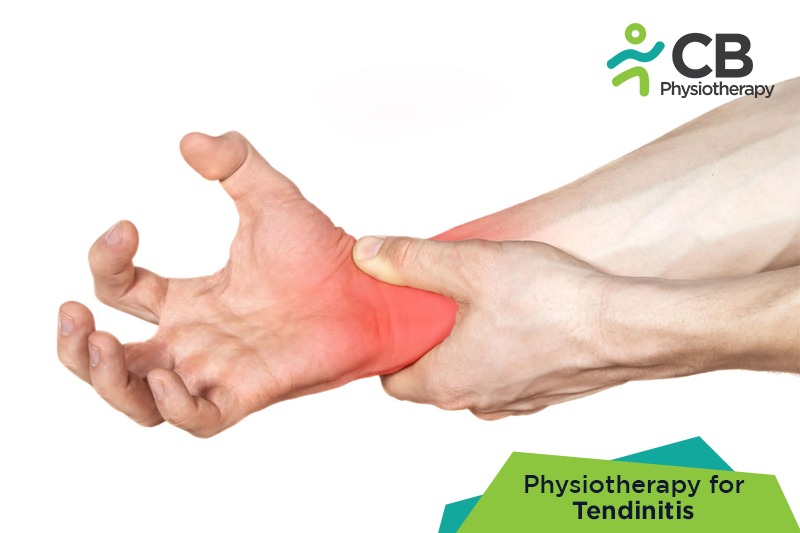
Understanding Tendinitis
Living with Tendinitis usually means negotiating with it daily — adjusting how you sit, move, sleep and work around it. It is common; that never makes it something you simply have to live with.
In most cases the problem behaves mechanically: particular movements or positions load the affected structures more than they can currently tolerate. A physiotherapy assessment identifies that mechanism, and treatment targets it directly — most mechanical cases respond well to conservative care, without medicines or surgery.
Causes & risk factors of Tendinitis
What commonly drives it — your assessment pins down which of these apply to you.
Joint stiffness and age-related change
Joints that move less start to hurt more; age-related wear is normal, but painful stiffness is not something to simply accept.
Weakness and deconditioning
When supporting muscles lose strength, load shifts to structures that were never meant to carry it.
Old injuries and compensations
A previous injury that never fully rehabilitated often leaves a movement pattern that overloads something else.
Sudden spikes in activity
A new sport, a new gym program, a long trek — tissue adapts to gradual change and protests when change is sudden.
Muscle strain and overload
A sudden lift, an awkward movement or simply more load than the tissues were prepared for — the most common trigger.
When physiotherapy is the right call
If any of these sound like you, an assessment is the right first step.
- ✓ You want to return to sport or work with a plan, not by trial and error
- ✓ Tendinitis that keeps returning or hasn't settled within two weeks
- ✓ Pain or stiffness that limits work, sleep or daily activities
- ✓ You want to avoid long-term painkillers — or surgery has been mentioned
- ✓ You've been diagnosed with Tendinitis and told to "rest and see"
Your treatment journey
Step by step — from your first assessment to a tracked recovery plan.
A detailed first assessment
History, movement testing and strength checks — a focused session to find what is actually driving your Tendinitis.
A diagnosis you understand
Your physiotherapist explains the findings in plain language — what is affected, why it happened and what that means for you.
Active, tracked treatment
Hands-on therapy, the right modalities and graded exercise — progressed session by session and tracked on Fizo IQ™.
Prevention, built in
The final phase rebuilds strength and habits so the same problem does not come back — with a home plan you keep.
What recovery looks like
- ✓ Care without long-term medicines — at a clinic near you or at home
- ✓ Relief that comes from treating the cause, not masking it
- ✓ A clear diagnosis and a timeline you can plan around
- ✓ Strength and movement rebuilt, not just pain reduced
- ✓ Lower chance of recurrence, with a prevention plan
When to see a doctor — red flags
How CB Physiotherapy treats Tendinitis
At CB Physiotherapy, treatment for Tendinitis starts with finding its cause: a structured, physiotherapist-led assessment before anything is prescribed. Your plan then combines hands-on therapy, targeted exercise and the right modalities — delivered at a clinic near you or at home, and coordinated with your doctor where medical care is involved.
Every case runs on Fizo IQ™, our recovery engine: diagnosis, root cause, plan, milestones and goals, tracked session by session. You always know where you are in your recovery — and what comes next.
Exercises that help with Tendinitis
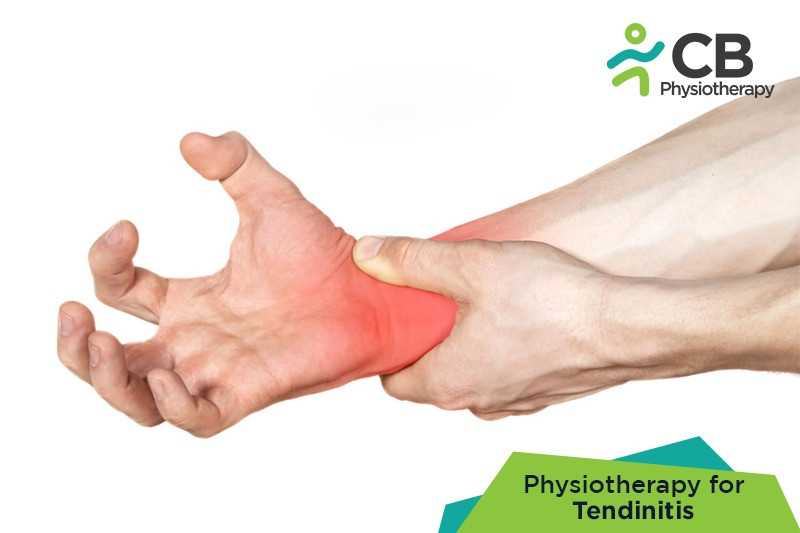
Make these exercises yours — a CB physio personalizes, doses and tracks your plan week by week.
Get my personalized planGeneral guidance only — stop if an exercise increases your pain, and check with your physio before starting a new routine.
Get Tendinitis treatment near you
Certified physiotherapists at a clinic near you or at home — same-day slots, assessment-led care.
Request received!
We'll call you within 10 minutes to confirm your home visit.We'll call you within 10 minutes to confirm your slot.
Chat with us on WhatsAppTendinitis, answered
Tendinitis or tendonitis is the inflammation of a tendon, which is a fibrous band of tissue that connects the bones to muscles. Tendonitis is a condition in which the tendon becomes inflamed or suffers a tear, causing acute pain, tenderness, and inflammation making it difficult to move the affected joint. The most commonly affected parts of the body are the elbow, wrist, finger, thigh, and ankle, etc. Tendinitis can occur more commonly among adults who play a lot of sports and occurs in any age group. Though older people are more susceptible because the tendons tend to become weaker with age. Some of the common Tendinitis that commonly occur in our body are:
Achilles tendinitis: Achilles tendon lies between the heel and the calf muscle. Occurs most commonly in sports players. Usually caused due to improper footwear. It is mostly seen among patients with rheumatoid arthritis.
Peroneal Tendonitis: Peroneal tendonitis affects the two tendons, one tendon attaches to the little toe, while the other runs along the sole and attaches to the inner side of the arch. If they can rub against the bone and overuse and load, symptoms are caused like pain and instability.
Posterior Tibial Tendonitis: Posterior Tibial Tendonitis affects the tendon that attaches the back of the shinbone to the foot. When it becomes inflamed, over time, this can result in flatfoot.
Supraspinatus tendinitis: Tendon around the shoulder joint becomes inflamed, causing supraspinatus tendinitis, which causes pain, especially during upward movement and becomes more painful while lying on the affected shoulder at night.
Tennis or golfer’s elbow: Lateral epicondylitis also known as tennis elbow, the patient feels pain on the outer side of the elbow radiating down towards the wrist. Whereas in Golfer’s elbow or medial epicondylitis pain is on the inner side of the elbow, commonly occurring among Golfers. Pain is more acute when the patient tries to lift against a force, radiating down to the wrist.
De Quervain’s tenosynovitis: It is the inflammation of the sheath that surrounds the thumb and lies between the thumb and wrist. It becomes painful to move the thumb due to the thickening of the sheath and swelling in the area.
Trigger finger or thumb: The tendon sheath in the palm is thickened and inflamed thus becomes fixed in a bent position and does not allow the tendon to move smoothly. Even sometimes a nodule forms along the tendon. The finger or thumb clicks when straightened.
Tendinitis of the wrist: Occurs most commonly in players like badminton players, tennis players, and workers, due to repeated use of the wrist.
Jumper's knee: It is a form of knee tendonitis, involving either the quadriceps tendon at the upper edge of the kneecap or the patellar tendon at the lower edge of the kneecap. Occurs especially in basketball players and distance runners due to overuse.
Most commonly the patients suffering from tendinitis have the following symptoms in the tissues surrounding the joint. These symptoms worsen after overuse:
- Pain
- Weakness
- Swelling
- Redness
- Warm
- Rash, fever, or discharge from the vagina or penis (gonorrhea),
Patients suffering from the following Tendinitis suffer from pain in the specific regions correspondingly:
- Rotator cuff tendonitis : Dull, aching pain, radiating into the upper arm toward the chest. The pain often worsens at night and may interfere with sleep.
- Tennis elbow : Pain in the outer side of the elbow, radiating down to the forearm and wrist
- Golfer's elbow : Pain in the inner side of the elbow.
- Jumper's knee : Pain below or above the kneecap.
- De Quervain's disease : Pain is behind the wrist, near the base of the thumb
- Achilles tendonitis : Pain is behind the heel or 2 to 4 inches above the heel
- Peroneal Tendonitis: Pain is behind the ankle (felt most when standing or when pushing off through your foot) and ankle instability.
- Posterior Tibial Tendonitis : It causes pain due to pushing off through the foot and the inability to stand on tiptoes.
Repetitive action is the most common cause of tendonitis. Due to the increased frequency of the same motion while working or playing sport. Tendinitis can also result from:
- Aging
- Injury
- Physical exertion
- Repeated overhead lifting, motions, or tasks
- Diseases, such as rheumatoid arthritis, diabetes, etc.
- Antibiotics (quinolones such as Levaquin)
- Sportspersons such as basketball players, tennis players, and golf players are at a higher risk of tendinitis.
For the diagnosis the physician does the physical examination, while moving the tendon, a creaky sound may be heard, due to inflammation and thickening of the tendon. Tenderness at one specific point in the tendon, indicates tendinitis.
X-ray
X-ray can show the calcium deposits around the tendon thus help to confirm tendinitis.
Magnetic resonance imaging ( MRI):
Magnetic resonance imaging (MRI): may reveal swelling of the tendon sheath thus helps in the diagnosis.
Medications: Pain relievers, Corticosteroids etc
Note: Duly Prescribed by the Practitioner.
Ultrasonic treatment. It is a minimally invasive procedure that uses a small incision to insert a device to remove the tendon scar tissue with ultrasonic sound waves.
Surgery. Surgical repair may be needed, depending on the severity of the tendon injury especially if the tendon has torn away from the bone.
Physical therapy:
The therapist first recommends Rest, Ice Packs, compression, and elevation, followed by the use of modalities and different techniques in reducing irritation to the tendon.
Dry Needling is also one of the treatment methods which helps reduce muscle tightness around the involved tendons.
Cryotherapy reduces inflammation and swelling causing a decrease in pain, around the tendon. It also reduces nerve activity (temporarily), which can also relieve pain.
Thermotherapy is used to promote vasodilatation, accelerates healing, decreases spasm, resulting in a decrease in pain, and promotes relaxation.
Ultrasound therapy helps in treating tendinitis by promoting tendon healing.
Shock-wave therapy is commonly used for the management of tendinitis. It stimulates metabolic activity by promoting tissue healing and also affects the nociceptors thus decreases pain.
Massage:
Massage can help promote healing when used in combination with exercises.
Exercises programs:
Stretching exercises can reduce muscle spasm and helps lengthen the tendon. Eccentric exercises are very effective for tendinitis, stimulating the tendon’s internal repair system, and also helps restore strength and flexibility.
Education about appropriate activities:
Education is an important part of treatment. Education of the patient to correct body mechanics and posture help reduce the strain on a tendon under stress due to repetitive activities.
Don't let Tendinitis decide your day.
Get assessed today — find the cause, get a plan, and know when you'll feel better.