
Dry Needling Therapy — How It Works & What It Treats
Also known as Dry Needling Therapy. What Dry Needling Therapy is, how it works and what it treats — explained by CB Physiotherapy's clinical team.
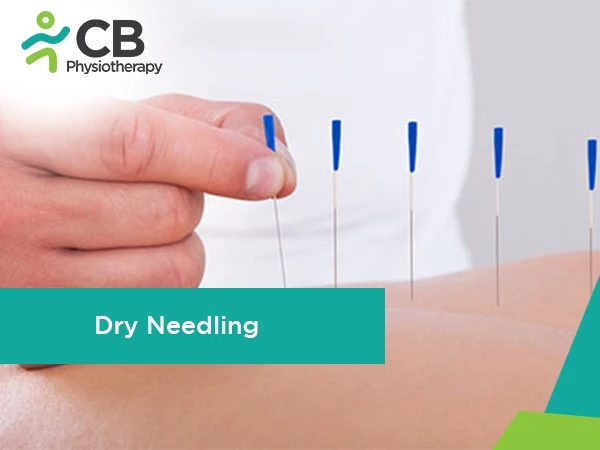
How Dry Needling Therapy works
Dry Needling Therapy earns its place in a recovery plan when the assessment says it fits — that is the honest answer to "does it work?", because the same treatment helps one diagnosis and does little for another.
Used on the right case, at the right dose, alongside exercise and hands-on care, Dry Needling Therapy supports pain relief and recovery without medicines. Your physiotherapist will tell you plainly whether your case is one it helps.
Dry Needling Therapy — techniques & equipment
What the treatment actually involves — your plan combines the pieces your assessment calls for.
Assessment before application
Your physiotherapist first confirms Dry Needling Therapy suits your diagnosis — and screens for anything that rules it out.
Targeted application
The treatment is applied to the specific structures your assessment identified, at a dose set for your case.
Paired with active rehab
Exercise and movement retraining run alongside, so the gains each session makes are kept.
Reviewed and progressed
Your response is checked every session; the plan is adjusted rather than repeated on autopilot.
Conditions Dry Needling Therapy treats
Where it fits best — your assessment confirms whether it belongs in your plan.
- ✓ Frozen Shoulder →
- ✓ Arthritis →
- ✓ Knee Bursitis →
- ✓ Ankle Sprain →
- ✓ Tennis Elbow →
- ✓ Rotator Cuff Injury →
- ✓ Pain or stiffness that has not settled with rest
- ✓ As part of a wider, assessment-led recovery plan
- ✓ When your assessment identifies the specific problem Dry Needling Therapy addresses
What a Dry Needling Therapy session looks like
Step by step — from screening to treatment to what comes next.
Screening and consent
A quick reassessment and safety screen — you will know what the session involves and why before it starts.
The treatment itself
Dry Needling Therapy applied to the targeted area — most patients find sessions comfortable, and you can speak up at any point.
Active follow-through
Exercise or movement work right after, while the treatment effect is fresh.
Response check
What changed and for how long — the answer shapes your next session and the plan.
Benefits of Dry Needling Therapy
- ✓ Always combined with active rehab, for results that last
- ✓ Available at CB clinics near you — and at home where equipment allows
- ✓ Drug-free support for pain relief and recovery
- ✓ Delivered by certified physiotherapists, never unsupervised
- ✓ Dosed to your case after a proper assessment
Safety & contraindications
How CB Physiotherapy delivers Dry Needling Therapy
You will not walk into CB Physiotherapy and simply receive Dry Needling Therapy — you will receive an assessment, and Dry Needling Therapy if your case calls for it. That order matters: it is how we make sure every session moves you towards a goal rather than just filling a slot.
Your plan runs on Fizo IQ™ — diagnosis, root cause, milestones, goals — and Dry Needling Therapy is combined with hands-on care and exercise as indicated, at a clinic near you or at home where the equipment allows.
Real published prices from our physiotherapists for Dry Needling Therapy in India — your exact quote is confirmed after assessment, before you commit. Packages save 10%.
Get Dry Needling Therapy near you
Certified physiotherapists at a clinic near you or at home — same-day slots, assessment-led care.
Request received!
We'll call you within 10 minutes to confirm your home visit.We'll call you within 10 minutes to confirm your slot.
Chat with us on WhatsAppDry Needling Therapy, answered
Dry Needling Therapy is also known as Trigger Point Dry Needling or Myofascial Trigger Point Dry Needling. It is a process in which thin needles are inserted into the trigger points or tight muscles of the body. It is usually done to treat myofascial pain (Myo means Muscle and Fascia means Tissue that connects muscles). The main purpose is to improve Tissue Healing and Restore Muscle Function. Muscles in our Body sometimes develop knotted areas called Trigger points which are quite sensitive and can be painful when touched. A physiotherapist pushes thin solid needles through the skin into trigger points. These Needles are used to stimulate the tissue and not to inject the medication.
The patient may experience different sensations, muscle soreness, aching, a muscle twitch, etc. when being needled which is considered to be a good sign. The needles may be placed deeply or superficially, for shorter or longer periods depending upon the type of pain being treated.
- Procedural-education :
- DN requires during the procedure:
- The patient is asked and encouraged to provide feedback and communicate with the clinician during treatment.
- The patient is asked to remain still during the procedure.
- In the case of trigger points (TrPts)-DN, the patient should be made aware of the local twitch response (LTR) which may be perceived as similar to an electric shock or other sensation. The patient should be made aware that reproduction of the LTR is the aim of TrPts-DN.
Positions may include supine, prone, side-lying, or a combination of these positions. The patient must be comfortable and relaxed. Pillows or rolls etc can be used for positioning.
Palpation:
- Skilled palpation is the key element for identifying TrPts and for the application of safe DN. The therapist should have excellent knowledge of practical anatomy including muscle attachments, bony landmarks, muscle fiber directions, muscle layers.
- The therapist should be careful about the anatomical structures that need to be avoided including neurovascular structures, lungs, nerves, blood vessels, bones, joints, internal organs, etc., and should at all times aim to avoid needling into these structures.
- The TrPts are identified by skilled palpation and the muscle is positioned to allow optimal tension for palpation and treatment. Ensure that the patient and muscle are relaxed before starting the DN procedure.
There are various DN techniques that therapists may use as a combination, during clinical practice. Equipment required includes needles, gloves, hand sanitizer, alcohol wipes, needle disposal box, cotton swabs for bleeds, and a waste disposal bag or can. General guidelines for the technique are as follows:
Single-use, sterile, suitable monofilament needles are employed. Needle length and thickness are chosen based on patient size, muscle to be needled, and expected depth of penetration. The size of the needles can vary from 0.5 inches to 2.5 inches from 0.16mm to 0.3mm in diameter depending on the depth of penetration. No of the needles inserted maybe 5- 10 needles. Dry needling is often described as a painless technique due to it’s blunt tip, even though it is very tiny. When choosing needle length, the therapist should bear in mind that needles should not be inserted into the handle.
A hygiene protocol is carried out and gloves are worn on at least the palpating hand or, if so preferred or required, on both hands.
The muscle being needled is identified and a flat or pincer grip technique is employed by the palpating hand.
The needle is inserted across the skin using the guide tube. The guide tube is then removed. The needle shaft should not be touched to prevent contamination.
For Superficial Dry Needling, the needle is inserted to the depth for superficial needling or to a depth to engage the TrPts in TrPts-DN.
TrPts-DN involves a relatively slow but deliberate steady lancing motion in and out of the muscle, which is considered a dynamic needling technique. The needle is brought out to the edge of the myofascial into the sub-dermal tissue and moved back into the muscle. The main aim of this treatment is to elicit LTRs.
The sharp pain of a stinging, burning or electrical nature should be immediately avoided as this may signal penetration of a nerve or blood vessel.
DN techniques such as SDN or TrPts-DN may involve static needle techniques, where the needle is left in the fascia for some time. In this case, the needle may be rotated to induce mechanical stress on the fascia or myofascial. When static needling is employed, the therapist should ensure the needle is safe at rest and not in the close vicinity of vulnerable anatomical structures. Patients should be informed to stay still and not to move. They should be able to alert the therapist as needed either vocally or by the use of a call bell.
It may be acceptable that an individual needle may be withdrawn and reinserted across the skin of the same patient at the same treatment session. Again, touching the needle shaft should be avoided to prevent contamination of the needle and if this occurs the needle should be disposed of and a new needle used. Needles may become blunt from piercing soft tissue and contacting bone and in this case, a new needle should be employed. Of course, a used needle should never be stored or reused.
The therapist should actively communicate with the patient during DN and limit treatment to the patient’s tolerance. The patient should be reassured throughout the procedure.
This is most important for the initial treatment for a new ‘needle naïve’ patient
DN technique should suit the tolerance and ability of the patient. Considerations for technique include SDN vs. TrPt’s-DN, the number of lancing motions, intensity and speed of the lancing motion, stimulation, and quantity of local twitch responses, the length of time of active needling, static needling technique, the number of needle insertions per muscle, and the number of muscles treated in one session, etc. The patient’s characteristics will determine much of the approach and the patient’s previous experience and the response should be taken into account. The patient’s perceived experience of medical treatment is related to the intensity of the pain and the pain experience within the last 3 minutes of the procedure, therefore the treatment session should not be terminated with painful procedures.
When needles are withdrawn, they should be immediately disposed of in a suitable certified ‘sharps container’.
Dry Needling is usually used as a part of an overall plan. It is used to increase the range of motion that may be restricted due to muscle tightness or scar tissue. It may also help to treat:
- Low back pain
- Neck pain
- Elbow pain
- Spinal Dysfunction
- Migraines
- Joint Dysfunction
- Sciatica
- Disc Problems
- Tendinitis
- Jaw and Mouth Problems (such as Temporomandibular Joint Disorders or TMJ)
- Repetitive Motion Disorders (Like carpal tunnel syndrome)
- Pelvic Pains
- Night Cramps
- Post-Herpetic Neuralgia
- Acute inflammation
- Infected sites
- Varicose veins
- Cysts
- Tumors
- Skin lesions
- Abnormal Bleeding Tendency
- Compromised Immune System
- Vascular Disease
- Diabetes
- Pregnancy
- Children
- Patients with Epilepsy
- Psychological status.
- The muscle and treatment area needed should be compressed immediately following needle withdrawal for hemostasis for up to 30 seconds or until any bleeding has stopped. A cotton swab may be used and should be discarded as appropriate.
- The patient should be educated on aftercare which may include limbering exercises, gentle stretching, the use of hot packs or cold packs, activity modifications, and motor retraining, as deemed necessary.
Ready to start your recovery?
Get assessed today — find the cause, get a plan, and know when you'll feel better.