
Knee Osteoarthritis — Symptoms, Causes & Treatment
Also known as Knee Osteoarthritis. Causes, symptoms and how physiotherapy treats Knee Osteoarthritis — without surgery or medicines.
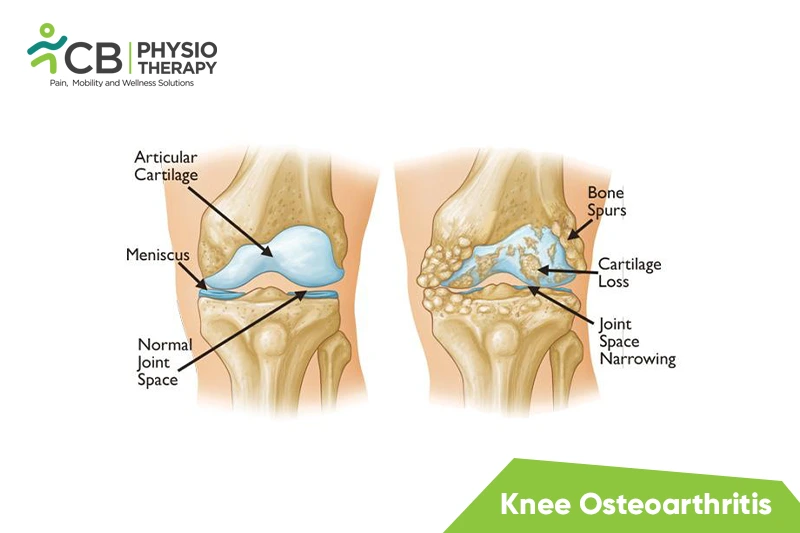
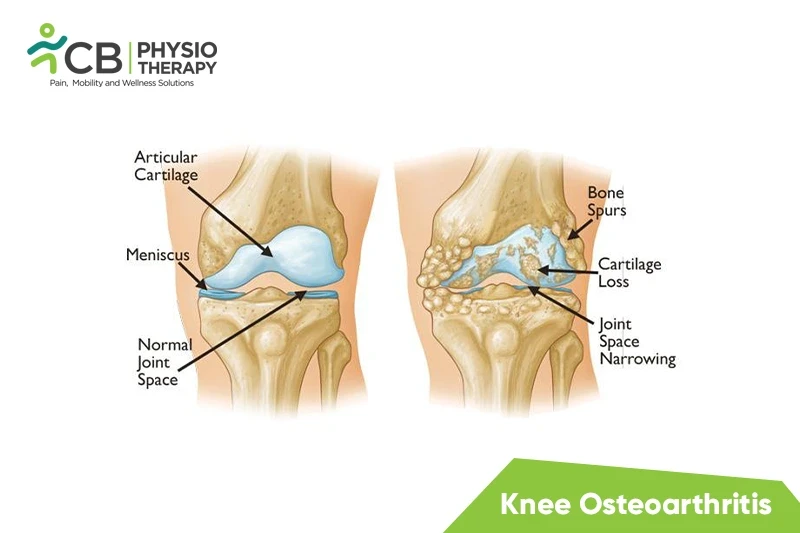
Understanding Knee Osteoarthritis
Knee osteoarthritis is the gradual change of the knee's cartilage and underlying bone — the joint's shock-absorbing surface thinning, sometimes with swelling, stiffness and that deep ache on stairs and after rest. It is the most common joint condition in the world, and the most commonly mismanaged: treated as pure "wear and tear" to be rested, when the strongest evidence says the opposite.
Exercise therapy is the first-line treatment for knee osteoarthritis in every major international guideline — ahead of injections, ahead of surgery. Strong thighs and hips measurably reduce pain and improve function, because muscle absorbs the load that would otherwise reach a sensitised joint. Osteoarthritis is real; so is the joint's capacity to feel dramatically better with the right loading.
Causes & risk factors of Knee Osteoarthritis
What commonly drives it — your assessment pins down which of these apply to you.
Cartilage thinning with time
The joint surface wears gradually — common after 50, and only loosely related to how much it hurts.
Previous knee injuries
Old meniscus or ligament injuries change joint mechanics for decades — the strongest single risk factor.
Muscle weakness
Weak quadriceps leave the joint unshielded; strength is the most changeable risk factor on this list.
Body weight
Each kilogram multiplies through the knee on stairs; modest loss produces outsized relief.
Family history and gender
Genetics and being female both raise risk — context for prevention, not causes for despair.
Inactivity
Cartilage is nourished by movement; the resting knee stiffens, weakens and hurts more, not less.
When physiotherapy is the right call
If any of these sound like you, an assessment is the right first step.
- ✓ Knee pain on stairs, on standing up or after rest
- ✓ Morning stiffness that eases within half an hour of moving
- ✓ Swelling or warmth after busier days
- ✓ An X-ray report of osteoarthritis and no plan beyond painkillers
- ✓ You've been offered surgery and want to try first-line care first
- ✓ You want to stay active — walks, travel, sport — with arthritis
Your treatment journey
Step by step — from your first assessment to a tracked recovery plan.
Function and strength baseline
Pain map, range, thigh and hip strength, stairs and sit-to-stand tests — the numbers your progress is measured against.
An honest picture
What your arthritis does and does not mean for activity, injections and surgery timing — evidence, minus the fear.
Load the joint right
A progressive strengthening program dosed to your irritability, with hands-on care and modalities to keep it comfortable.
Keep what you build
Activity pacing, weight strategy where relevant and a maintenance plan — arthritis care is a habit, not a course.
What recovery looks like
- ✓ Less pain with better function — the guideline-backed outcome
- ✓ Surgery delayed or avoided in many cases
- ✓ Stairs, travel and morning routines made ordinary again
- ✓ Strength gains you can see measured, visit by visit
- ✓ Confidence that activity is protecting, not "wearing out", the knee
When to see a doctor — red flags
How CB Physiotherapy treats Knee Osteoarthritis
CB Physiotherapy treats knee osteoarthritis the way the guidelines say it should be treated and the way clinics too rarely do: exercise therapy as the backbone, dosed and progressed by a physiotherapist, with hands-on care and modalities in support — and honest counsel about injections and surgery timing when asked.
Your strength and function are measured on Fizo IQ™ from day one, so you can watch the numbers that predict how your knee will feel in five years. Clinic or home sessions, whichever keeps you consistent.
Exercises that help with Knee Osteoarthritis
 Top 5 Exercises For Knee Osteoarthritis
Steps & precautions →
Top 5 Exercises For Knee Osteoarthritis
Steps & precautions →
 Top 5 Exercises For Joint Pain
Steps & precautions →
Top 5 Exercises For Joint Pain
Steps & precautions →
Make these exercises yours — a CB physio personalizes, doses and tracks your plan week by week.
Get my personalized planGeneral guidance only — stop if an exercise increases your pain, and check with your physio before starting a new routine.
Get Knee Osteoarthritis treatment near you
Certified physiotherapists at a clinic near you or at home — same-day slots, assessment-led care.
Request received!
We'll call you within 10 minutes to confirm your home visit.We'll call you within 10 minutes to confirm your slot.
Chat with us on WhatsAppKnee Osteoarthritis, answered
Osteoarthritis of the knee occurs when the cartilage in the knee joint breaks down, causing the bones to rub together. The friction makes the knees hurt, become stiff, and sometimes swell. While osteoarthritis in the knee can't be cured, there are many treatments to slow its progress and ease the symptoms.
Women are more prone to osteoarthritis than men and usually occurs after the age of 40. Other causes of knee osteoarthritis are:
- Wear and tear of the knee cartilage.
- Overweight.
- BMI more than 30 or more.
- Injury to the knee.
- Frequent stress on the knee.
- Due to playing sports.
- Inheritance.
- Knocked knees, etc.
The symptoms of this condition vary from patient to patient, the common symptoms may be:
- Pain In the knee.
- Pain even while sitting still.
- Pain while moving.
- Knee stiffness.
- Swollen or puffy knees.
- Cracking or grinding noise while moving the knee.
- Feeling of buckling or giving out.
- Sudden lock up, or feeling of getting stuck.
Pathology:
Osteoarthritis is the degradation of the cartilage and thickening of the synovium, the subchondral bone begins to remodel forming lytic lesions.
Physical examination:
The examiner does the physical examination and asks about the medical history. The physical examination includes the knee joint area, pain, tenderness, range of motion, joint stability, and the pattern of walking
X-rays:
X-ray creates detailed images of bones. In an X-ray, an arthritic joint may show changes in the bone like narrowing of the joint space, and the formation of osteophytes.
Magnetic resonance imaging (MRI):
Magnetic resonance imaging (MRI) is used to check damage to soft tissues.
Bone scan:
A bone scan helps to find and locate the condition of the bone and soft tissues of the knee.
Medications: Non-steroidal anti-inflammatory drugs (NSAIDs), painkillers, corticosteroids, viscosupplementation, etc.
Note: Medication should not be taken without the doctor's prescription.
Surgery:
Surgery is done in case the symptoms are not relieved by conservative treatment.
Surgical treatments include:
- Cartilage grafting.
- Knee osteotomy.
- Partial knee replacement.
- Total knee replacement.
Cryotherapy or cold therapy reduces knee pain, stiffness, and swelling.
Thermotherapy or heat therapy improves blood flow, removes toxic substances, and decreases pain. It also improves flexibility and range of motion.
Knee brace:
A knee brace or adding shock-absorbing inserts in the shoes can reduce pressure on the knees.
Orthotics:
Using orthotics such as insoles or special footwear can also be helpful.
Therapeutic ultrasound helps to decrease inflammation and joint stiffness.
Transcutaneous electrical stimulation (TENS):
Transcutaneous electrical stimulations (TENS) send electric stimulations, through pads placed on the skin, to relieve pain.
Interferential current therapy (IFT):
Interferential current therapy (IFT), is another electrical modality used to decrease pain and increase mobility.
Hydrotherapy:
Hydrotherapy is given by immersing the body for 15 to 20 minutes in water which causes the weight-bearing muscles to relax, by alternatively doing simple flexion-extension exercises range of motion is increased.
Manual therapy consists of several techniques like myofascial release, manipulation, and mobilization that increase the quality and range of movement of the knee.
Range of motion Exercises:
Range of motion exercises are started with PROM (passive range of motion) exercises of the knee and slowly progressed to active exercises.
Strengthening Exercises:
Strengthening exercises are taught to restore strength, endurance, and agility. These include the use of weight cuffs, resistance bands, and cardio exercise equipment such as treadmills or stationary bicycles.
Stretching Exercises:
Physiotherapists use stretching techniques to gently move the joint and stretch the soft tissue. Daily stretching increases the range of motion and mobility.
Aerobic Exercises:
Aerobic exercises like a stationary bike, speed walking, vigorous swimming, etc can also be done without stressing the knee joint.
Though the effects of knee osteoarthritis can't be reversed. But treatment and self-care can help relieve the symptoms and slow the progress of the condition. The patient is advised to maintain a healthy weight, take plenty of rest, and add light strength training to the fitness routine. Jogging or running should be done on grass or soft surfaces.
Don't let Knee Osteoarthritis decide your day.
Get assessed today — find the cause, get a plan, and know when you'll feel better.