
Systemic Lupus Erythematosus (sle) — Symptoms, Causes & Treatment
Also known as Lupus. Causes, symptoms and how physiotherapy treats Systemic Lupus Erythematosus (sle) — without surgery or medicines.
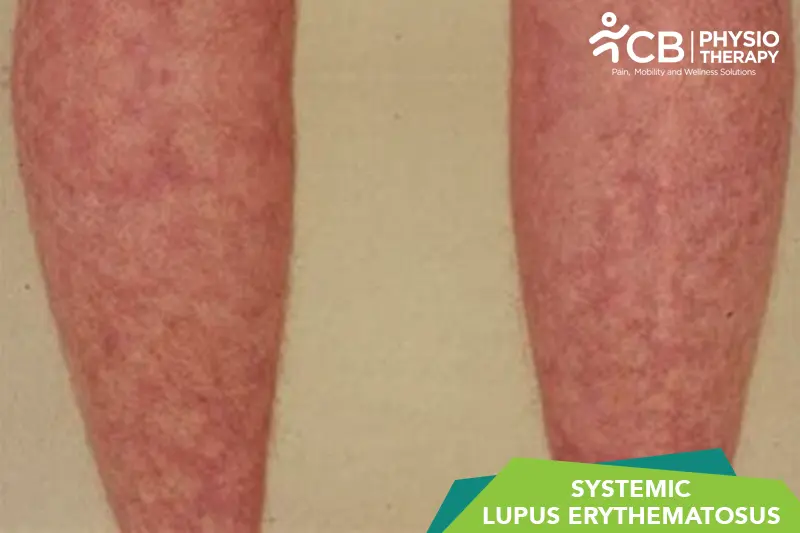
Understanding Systemic Lupus Erythematosus (sle)
Systemic Lupus Erythematosus (sle) (also called Lupus) is an inflammatory condition, so flare-ups and calmer phases tend to alternate. Medical management from your doctor controls the disease process; physiotherapy protects what it threatens — joint mobility, muscle strength and your capacity to stay active.
Graded, well-dosed exercise is one of the best-evidenced ways to reduce pain and stiffness in inflammatory conditions. The art is in the dosing: enough to build capacity, never enough to provoke a flare — which is exactly what a physiotherapist-led plan manages.
Causes & risk factors of Systemic Lupus Erythematosus (sle)
What commonly drives it — your assessment pins down which of these apply to you.
An overactive immune response
The inflammation is driven by the immune system, not by injury — which is why your doctor's medical management leads the treatment.
Flare and rest cycles
Resting too much in calm phases weakens muscles and stiffens joints — making the next flare feel worse than it needs to.
Stiffness that follows inflammation
Inflamed joints lose range quietly; keeping them moving within tolerance is protective, not risky.
Deconditioning
Pain makes activity shrink; lost fitness then makes every activity cost more — graded exercise reverses the slide.
When physiotherapy is the right call
If any of these sound like you, an assessment is the right first step.
- ✓ You want to return to sport or work with a plan, not by trial and error
- ✓ Systemic Lupus Erythematosus (sle) that keeps returning or hasn't settled within two weeks
- ✓ Pain or stiffness that limits work, sleep or daily activities
- ✓ You want to avoid long-term painkillers — or surgery has been mentioned
- ✓ You've been diagnosed with Systemic Lupus Erythematosus (sle) and told to "rest and see"
Your treatment journey
Step by step — from your first assessment to a tracked recovery plan.
A detailed first assessment
History, movement testing and strength checks — a focused session to find what is actually driving your Systemic Lupus Erythematosus (sle).
A diagnosis you understand
Your physiotherapist explains the findings in plain language — what is affected, why it happened and what that means for you.
Active, tracked treatment
Hands-on therapy, the right modalities and graded exercise — progressed session by session and tracked on Fizo IQ™.
Prevention, built in
The final phase rebuilds strength and habits so the same problem does not come back — with a home plan you keep.
What recovery looks like
- ✓ Relief that comes from treating the cause, not masking it
- ✓ A clear diagnosis and a timeline you can plan around
- ✓ Strength and movement rebuilt, not just pain reduced
- ✓ Lower chance of recurrence, with a prevention plan
- ✓ Care without long-term medicines — at a clinic near you or at home
When to see a doctor — red flags
How CB Physiotherapy treats Systemic Lupus Erythematosus (sle)
At CB Physiotherapy, treatment for Systemic Lupus Erythematosus (sle) starts with finding its cause: a structured, physiotherapist-led assessment before anything is prescribed. Your plan then combines hands-on therapy, targeted exercise and the right modalities — delivered at a clinic near you or at home, and coordinated with your doctor where medical care is involved.
Every case runs on Fizo IQ™, our recovery engine: diagnosis, root cause, plan, milestones and goals, tracked session by session. You always know where you are in your recovery — and what comes next.
Get Systemic Lupus Erythematosus (sle) treatment near you
Certified physiotherapists at a clinic near you or at home — same-day slots, assessment-led care.
Request received!
We'll call you within 10 minutes to confirm your home visit.We'll call you within 10 minutes to confirm your slot.
Chat with us on WhatsAppSystemic Lupus Erythematosus (sle), answered
1: General Symptoms
Fatigue: Persistent tiredness even after rest.
Fever: Low-grade, unexplained fever.
Weight Changes: Unintentional weight loss or gain.
2: Skin and Hair
Butterfly Rash: Red, butterfly-shaped rash across the cheeks and nose.
Skin Rashes: Other rashes that may appear after sun exposure (photosensitivity).
Hair Loss: Thinning hair or bald spots (alopecia).
Mouth or Nose Sores: Painless ulcers in the mouth or nose.
3: Musculoskeletal
Joint Pain and Stiffness: Swollen, tender joints (arthritis-like symptoms), often worse in the morning.
Muscle Pain: Generalized discomfort or weakness.
4: Cardiovascular
Chest Pain: Caused by inflammation of the lining of the heart (pericarditis) or lungs (pleuritis).
Irregular Heartbeat: Inflammation affecting the heart.
5: Renal (Kidneys)
Swelling in Legs or Feet: Due to lupus nephritis (kidney inflammation).
Foamy Urine: Indicating protein in urine.
6: Neurological
Headaches: Chronic or severe headaches.
Memory Problems: Difficulty concentrating or remembering (sometimes called "lupus fog").
Seizures: Resulting from central nervous system involvement.
Mood Disorders: Anxiety or depression.
7: Gastrointestinal
Abdominal Pain: Often caused by inflammation or medication side effects.
Nausea and Vomiting: Medication-related or linked to the disease.
8: Respiratory
Shortness of Breath: Inflammation of the lungs (pleuritis) or other respiratory issues.
9: Hematologic
Anaemia: Low red blood cell count.
Bleeding or Clotting Disorders: Due to abnormalities in platelets or blood clotting.
Low White Blood Cell Count: Increasing susceptibility to infections.
10: Eyes
Dry Eyes: Caused by secondary Sjögren's syndrome.
Vision Problems: Due to inflammation of the retina or optic nerve.
1. Genetic Factors
Family History: People with a close relative who have lupus or another autoimmune condition are at higher risk.
Genetic Variations: Certain genes that affect immune system function, such as those involved in immune regulation, may predispose individuals to lupus.
2. Environmental Triggers
Ultraviolet (UV) Light: Exposure to sunlight can trigger lupus symptoms or flares.
Infections: Certain infections, like Epstein-Barr virus (EBV), may initiate or worsen lupus in genetically predisposed individuals.
Medications: Some drugs, such as hydralazine, procainamide, and isoniazid, can cause a lupus-like condition (drug-induced lupus), though symptoms usually resolve after discontinuation of the medication.
Toxins: Exposure to environmental chemicals may contribute to disease development.
3. Hormonal Factors
Gender and Hormones:
Lupus is more common in women, particularly during reproductive years, suggesting a role for estrogen. Hormonal fluctuations, such as those during pregnancy or menstrual cycles, may exacerbate symptoms.
4. Immune System Dysfunction
Lupus is an autoimmune disease, meaning the immune system mistakenly attacks the body’s healthy tissues. Autoantibodies, such as anti-nuclear antibodies (ANA), are produced and lead to inflammation and tissue damage.
5. Genetic-Environmental Interactions
Individuals with a genetic predisposition may develop lupus after being exposed to specific environmental triggers (e.g., UV light or infections).
6: Pathology of Lupus SLE
Systemic Lupus Erythematosus (SLE) is a chronic autoimmune disease characterized by systemic inflammation and damage to multiple organ systems. The hallmark of the disease is the production of autoantibodies, which target the body’s tissues and cause widespread inflammation and tissue injury.
History and Symptoms:
Fatigue, joint pain, skin rashes, photosensitivity, unexplained fever, and organ-specific symptoms.
Physical Examination:
Skin changes (e.g., butterfly rash), swollen joints, mouth ulcers, and hair loss.
Signs of organ involvement, such as hypertension (kidneys) or neurological deficits.
2. Laboratory Tests
Laboratory tests like autoantibody tests, antinuclear antibody (ANA) tests, complete blood count (CBC), erythrocyte sedimentation rate (ESR), and C-reactive protein tests are usually used for the diagnosis.
3. Urinalysis:
To detect proteinuria or hematuria, indicating kidney involvement (lupus nephritis).
4. Kidney Function Tests:
Elevated creatinine or blood urea nitrogen (BUN) suggests kidney damage.
5. Chest X-Ray:
To assess for pleuritis or pneumonia.
6. Echocardiogram:
To evaluate for pericarditis or Libman-Sacks endocarditis.
7. MRI/CT Scan:
For central nervous system symptoms such as seizures or cognitive dysfunction.
8. Biopsy
Kidney Biopsy:
Essential for diagnosing and classifying lupus nephritis, it helps guide treatment based on histological findings.
Skin Biopsy:
To confirm lupus-specific rashes or cutaneous lupus.
(Note: Medication should not be taken without the patient’s prescription.)
Thermotherapy or Heat Therapy reduces muscle tension and joint stiffness.
Cryotherapy:
Cryotherapy or Cold Therapy decreases acute inflammation and swelling.
Transcutaneous Electrical Nerve Stimulation (TENS)
It provides pain relief by stimulating sensory nerves and blocking pain signals to the brain and may increase the release of endorphins.
Ultrasound Therapy
Promotes soft tissue healing, reduces localized pain, and decreases joint stiffness by improving blood flow.
Interferential Current Therapy (IFC)
It provides deeper pain relief than TENS by using medium-frequency currents that penetrate deeper tissues.
Neuromuscular Electrical Stimulation (NMES)
It improves muscle strength and prevents muscle atrophy, especially during prolonged immobility.
Low-Level Laser Therapy (LLLT)
This modality reduces pain and inflammation by modulating cellular activity.
Electrical Muscle Stimulation (EMS)
It helps to maintain muscle mass and improve circulation.
Pulsed Electromagnetic Field Therapy (PEMF)
PEMF reduces inflammation and promotes tissue healing by using electromagnetic fields.
Manual Therapy:
Soft tissue mobilization and joint mobilization techniques help to alleviate stiffness and improve joint mechanics.
Exercise Therapy
Exercise is crucial but must be tailored to the individual's tolerance to avoid overexertion.
a. Aerobic Exercise:
Aerobic Exercise like walking, cycling, and swimming, improves cardiovascular health and reduces fatigue, and enhances overall stamina.
b. Strength Training:
Strength Training like light resistance exercises using bands or weights, maintains or improves muscle strength, especially in muscles affected by inflammation or corticosteroid use.
c. Flexibility Exercises:
Flexibility exercises like stretching exercises help maintain joint mobility and reduce stiffness.
d. Balance and Proprioception Training:
Helps improve coordination and stability, especially in patients with joint instability.
e. Low-Impact Exercises:
Activities like water-based exercises (hydrotherapy) reduce stress on joints while improving fitness.
5. Postural Training
Postural training helps to correct postural abnormalities caused by joint deformities or muscular weakness by core strengthening exercises.
6. Joint Protection Techniques
Joint protection techniques help the use of assistive devices, such as braces or splints, to reduce joint stress.
Don't let Systemic Lupus Erythematosus (sle) decide your day.
Get assessed today — find the cause, get a plan, and know when you'll feel better.