Open today · 8 AM–8 PM · Same-day slots
CB Physiotherapy
Same-day appointments

Temporomandibular Joint (tmj) Treatment Doctors in Jammu And Kashmir

Whether it's a dull ache, a sharp catch, or pain that keeps coming back — we find the root cause of your Temporomandibular Joint (tmj) and fix it, at a clinic near you or at home.

Precision Care, Proven Recovery
ACCURATE DIAGNOSIS
ROOT CAUSE ASSESSMENT
COMPREHENSIVE RECOVERY PLAN
MILESTONE TRACKING
GOALS ACHIEVED
STAYING ACTIVE
See how it works ↓
Move pain-free Avoid drugs & surgery
5.0 / 5 · 23 Google reviews Verified on Google

Request received!

We'll call you within 10 minutes to confirm your home visit.We'll call you within 10 minutes to confirm your slot.

Chat with us on WhatsApp

Book in 30 seconds

Visit your nearest CB clinic. Tell us your concern and a preferred time — we'll confirm your slot by call within 10 minutes.

Same-day booking by default. We'll confirm your exact slot by call.
+91
No spam · Your number is safe with us
Prefer to talk now? Call +08082666216
Understanding your temporomandibular joint (tmj)

Does this sound like you?

Common triggers include muscle strain, joint stiffness, poor posture and long desk hours. If two or more of these fit, a physiotherapy assessment can identify exactly what's driving it.

  • A dull ache or sharp, burning temporomandibular joint (tmj) that keeps returning
  • Discomfort that worsens with movement, lifting or long sitting hours
  • Morning stiffness that eases as you move
  • Pain that limits work, sport or everyday activities
  • Recurring episodes that keep coming back

Most temporomandibular joint (tmj) improves without surgery or long-term medication — the key is finding the cause first.

⚠ When to seek urgent medical care

Temporomandibular Joint (tmj) rarely signals something serious, but see a doctor immediately if it comes with:

  • Fever, unexplained weight loss, or a history of cancer
  • Numbness or weakness that keeps getting worse
  • Loss of bladder or bowel control
  • Pain after a major fall or accident

Our physios screen for these red flags at every first assessment and refer you to the right doctor if needed.

Assessment-led treatment

How we treat temporomandibular joint (tmj)

We start with an AI-based assessment to find the root cause — then follow a clear, four-phase plan.

Phase 1

Ease the pain

Hands-on therapy and advanced modalities to calm pain and inflammation fast.

Phase 2

Restore movement

Mobility work and posture correction so everyday movement feels normal again.

Phase 3

Build strength

Targeted strengthening that protects you — in-clinic or in our physio gym.

Phase 4

Return to activity

Back to work, sport and life — with a home program that prevents relapse.

Your physiotherapist, with Fizo IQ™

Every recovery, planned and proven

One patient record, stage by stage: your physiotherapist pinpoints the diagnosis, finds the root cause and builds your in-clinic plan — while Fizo IQ™, our AI decision-support engine, tracks every milestone until your goals are met and you leave with an exercise plan to stay active.

Physio Expert @CB with Fizo IQ™ — recovery engine
TRACKING
ACCURATE DIAGNOSIS
L4–L5 disc bulge · nerve-root irritation, pinpointed at the first movement assessment
ROOT CAUSE ASSESSMENT
Poor sitting posture, weak core–hip chain · quietly loading that disc
COMPREHENSIVE RECOVERY PLAN
24 clinic sessions · manual therapy + spinal decompression · guided exercise therapy, reviewed weekly
MILESTONE TRACKING
Sitting pain-free ✓ · stairs ✓ · next: the morning 5 km walk
GOALS ACHIEVED
Pain 7 → 3 in six weeks · back to daily life, moving freely
STAYING ACTIVE
A personalized exercise plan, yours to keep · so the pain doesn't come back
Example recovery journey · every plan is built around you
Move better

Exercises that help with Temporomandibular Joint (tmj)

More exercises →

Make these exercises yours

Get my personalized plan

General guidance only — stop if an exercise increases your pain, and check with your physio before starting a new routine.

Meet your care team

Licensed experts who treat hundreds like you every month

Every CB physio is a qualified BPT/MPT clinician. You don't need to choose one — our lead physiotherapist reviews your case and assigns the specialist best suited to treat it.

Dr. Shafiya, physiotherapist in Anantnag

Dr. Shafiya

Physiotherapist

5.0 (13)
Anantnag
cb physiotherapy janglat mandi
1 yrs experience
Ortho Spine Sports Physiotherapy Center
Dr. Athur Un Nisa, physiotherapist in Anantnag Verified

Dr. Athur Un Nisa

Physiotherapist

5.0 (10)
Anantnag
cb physiotherapy janglat mandi
4 yrs experience
Ortho Spine Sports Physiotherapy Center
Not sure who to see? You don't have to decide. Our lead physiotherapist reviews every case and assigns the physio best suited to it — based on your condition and availability.
Patient stories

Temporomandibular Joint (tmj) recoveries, verified on Google

Rated 5.0 / 5 across 23 verified patient reviews in Jammu And Kashmir.

Verified

“Received treatment at Cb Anantnag clinic where Dr. Athar treated me she was highly skilled and professional. Her treatment approach is effective, and I noticed significant improvement in my knee pain within a short time. I highly recommend her for quality physiotherapy care. in Anantnag”

KZ
Khan Zainab Verified patient · Treated at CB · 7 months ago
Verified

“Excellent physiotherapist, Dr. Athar! Her expertise and customized care assisted me in recovering swiftly. from back issue, I strongly recommend her..”

SJ
Saima Jan Verified patient · Treated at CB · 7 months ago
Verified

“I had an excellent experience with Dr. Shafiya. My back pain recovery was made easier and less stressful thanks to her knowledge and kind attitude. Thank you for your incredible care. Doctor Shafiya.”

SB
Saima Bhat Verified patient · Treated at CB · 7 months ago
Verified

“Dr. Shafiya is an excellent physiotherapist! Her expertise, concern, and dedication enabled me to heal fast and painlessly. I definitely recommend her to anyone looking for efficient physiotherapy treatment.”

RJ
Rumaisa Jaan Verified patient · Treated at CB · 7 months ago
Verified

“Dr. Athar un Nisa is a wonderful physical therapist who honestly cares about her patients. She devised a treatment regimen that helped me restore mobility and strength following my injury. Her treatment sessions were quite successful and motivational. I am incredibly appreciative for her effort and support.”

RB
Rafia Bhat Verified patient · Treated at CB · 7 months ago
Verified

“Dr. Athar un Nisa is a wonderful physical therapist who honestly cares about her patients. She devised a treatment regimen that helped me restore mobility and strength following my injury. Her treatment sessions were quite successful and motivational. I am incredibly appreciative for her effort and support.”

RB
Rafia Bhat Verified patient · Treated at CB · 7 months ago
Good to know

Temporomandibular Joint (tmj), answered

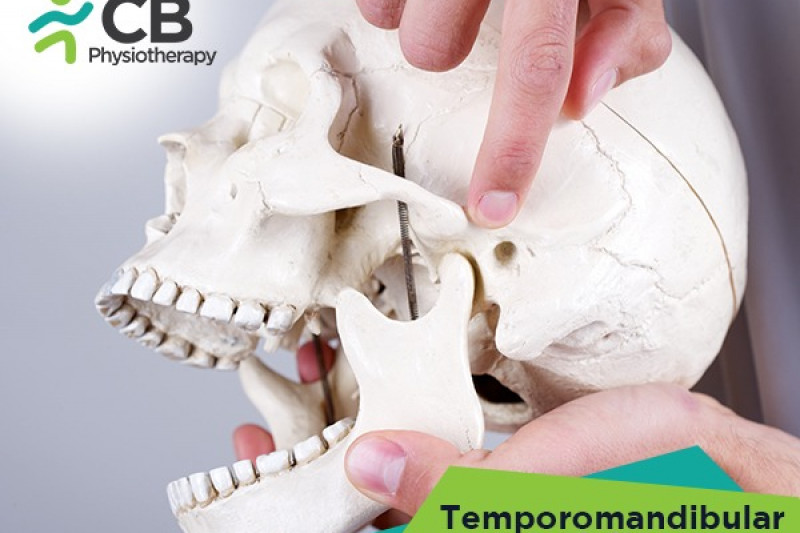
The jaw is also known as TMJ or Temporomandibular joint. These are the most frequently used joints in our body. Without these joints we would be severely hindered, when talking, eating, yawning, kissing, or sucking. It is a synovial joint that connects your jaw to your skull, it is made up of the lower jaw i.e mandible and the socket i.e the temporal bone. There are two temporomandibular joints, one on each side of the jaw. Between the socket and mandible is a disc or menisci.

Sliding, translation or gliding movement occurs in the upper cavity of the Temporomandibular joint, whereas hinge movement or rotation takes place in the lower jaw cavity.

Involvement of this joint results in an inability to open the mouth fully ( approximately 2 inches) with normal side to side gliding and protrusion.

· Pain and tenderness of the masticatory muscles.

· Limited or altered mandibular function (i.e hypermobility, a tendency to protrude the mandible in the initial opening phase).

· Disturbed yawning, eating, biting, shouting, chewing patterns.

· Headaches

· Pain in the temporal area.

· Crepitation or clicking.

· Locking of the jaw.

· Muscle spasm.

· Old injures or trauma.

· Postural dysfunction with a forward head posture.

· Dental problems, malocclusion, decreased vertical dimension of the bite.

· Hindered joint mechanics, dislocation of the condylar head, subluxation of the menisci (disc), or inflammation, asymmetric joint forces, immobilization after jaw fracture or any surgery, for years with eventual adaptation failure, maybe the reason for the present complaint of TMD.

· Mouth breathers in which the jaw position and the posture is affected indirectly.

· Inflammation or muscle spasm in fascial muscles, emotional tension, postural stress syndrome, faulty joint mechanics.

· Excessive stresses such a biting or chewing on large pieces of hard food may also traumatize the joints.

· Osteoarthritis , skeletal limitations and reduced vertical dimensions.

The effective management of Temporomandibular disorders requires first of all a diagnosis based on a complete history and thorough physical examination.

The following tests can aid in determining the intracapsular pathological conditions:

· Dynamic loading of one joint:

Ask the patient to forcefully bite the cotton roll or a tongue blade on one side. This procedure loads the contralateral temporomandibular joint and thus elicits pain.

· Posterior compression or loading of both the Temporomandibular joints :

Hold the mandible with both the hands placing the thumb on the distal molars with the fingers beneath the mandible. The mandible is then tipped down and back to compress the joints. The mandible will also be moved forward or backward to localize tenderness in the posterior or inferior parts of the joint.

· Unloading (distraction) or caudal traction:

Using the same hand positioning as mentioned above, the distraction of both the joints is performed at the same time or caudal traction of each joint is performed. The incisors are not aligned, with the mandible being deviated to one side. To check the relation of this deformity to the patient's symptoms, the therapist passively attempts to correct the deformity. If the deviation is a protective deformity, then the test will increase the pain.

· Plain Film Radiography

On the anteroposterior view, the examiner should look for condylar shape and normal contours. On the lateral view, the examiner should look for the condylar shape and contours, the position of condylar heads in the opened and closed positions, amount of the condylar movement (closed versus open) and the relation of temporomandibular joint to other bony structures of the skull and cervical spine.

· Magnetic Resonance Imaging

This technique is used to differentiate the soft tissue of the joint, the disc from the structures.

· Roentgenography and electromyography ,

Electromyography can reveal how a muscle acts at any point during mandibular movements and procedures. Some researchers believe that electromyography is more reliable diagnostic tool than roentgenography for temporomandibular joints.
The management depends on the cause of the syndrome. In cases in which joint dysfunction, muscle imbalance, or posture are the sources of the problem, intervention with therapeutic exercise can directly address the problems but in other cases, we might need dental or psychological support.

A complete evaluation is necessary before initiating any treatment.

Medication:

Anti – Inflammatory drug, Analgesics to relieve pain, Muscle relaxants, Sedatives

NOTE : Medication not to be taken without the prescription of the doctor.

Cryotherapy on the area of pain for 15 – 20 minutes to reduce inflammation

Thermotherapy for 15 – 20 minutes to increase the blood circulation and to relax the involved muscles

TENS Therapy are electrical stimulations using electric current at different frequencies for the management of pain by sending signals to the brain and offering short term relief.

Ultrasound circulation therapy provides deep heat into the muscles and joints hence increasing the, causing relaxation in the muscles hence reducing pain.

Soft tissue techniques :

· Friction massage to the capsule of the joint.

· Kneading or stroking techniques interiorly to inhibit pain (to the insertion of the temporalis and medial and lateral pterygoid musculature).

· Deep pressure massage.

· Connective tissue massage.

· Myofascial release .

· Muscle energy or post isometric relation techniques.

· Stretching techniques.

For Facial muscles, Tongue proprioception and Tongue control:

· Place the tip of the tongue on the hard palate behind infront teeth and draw circles or letters on the palate.

· Place the tip of the tongue on the hard palate and blow air out to vibrate the tongue making rrrr sound.

· Fill the cheeks with air, mouth closed, then let the air out in a puff.

· Make a clicking sound with the tongue on the roof of the mouth. When doing so, the jaw drops open quickly and returns with the teeth slightly apart usually, the tongue rests on the hard palate behind the front teeth. This is the resting position of the jaw and is also the first step in teaching relaxation exercises.

Jaw muscles

· Starting with the resting position. The lips are closed, the teeth slightly apart, usually the tongue rests on the hard palate behind the front teeth. The patient should breathe in and out slowly through the nose, using diaphragmatic breathing.

· Opening and closing the jaw through the first half of the ROM. With the tongue on the roof of the mouth, the patient opens the mouth, trying to keep the chin in the midline (in front of the mirror). The patient is also taught to lightly palpate the lateral pole of each condyle of the mandible bilaterally and to attempt to maintain symmetry between movement of the two sides when opening and closing the mouth.

· Gold fish exercises half mouth:

Keep to the tongue on the hard palate of the mouth. Place one finger on each joint. Place the other index finger on your chin and then let the mandible (lower jaw) partially drop down and back with help of the index finger.

· Gold fish exercises full mouth:

Keep to the tongue on the hard palate of the mouth. Place one finger on each joint.

let the mandible ( lower jaw) fully drop down and back to bring the chin to the throat.

· Chin tucks

Make a double chin by bringing your chin straight back, keep the head straight up without any bending forward or behind.

Tongue blades can be used for home treatment both as a static stretch and for a briefer period soft active and passive stretch. However, tongue blades must be used with great caution since the too vigorous application may cause injury. Even a tapered cork, which is approx. 15 mm at its narrow end and 30 mm at its widest end, is gradually put into the patient's mouth( small end first) until the jaw separates’. Once the jaw begins to relax, the cork can be placed farther into the mouth, thus opening the jaw wider and wider. This technique can be used for 30 seconds every 2 hours. Yawning is also recommended as a home program.

Most important step is to educate the patient regarding the functioning of the joints, the reason for their symptoms and the means of removing those symptoms. Patient should be advised about the wide opening, excessive mouth yawning, biting off large mouthfuls of hard food instead eat soft food and cut the food into small pieces, habitual protrusion, diurnal clenching should be explained. The methods to achieve muscle relaxation and abolish well-established patterns of inappropriate muscular activity and methods to acquire new ones are important means of eliminating symptoms

Ready when you are

Don't let the pain decide your day.

Get assessed today — find the cause, get a plan, and know when you'll feel better.

📞 Call 💬 WhatsApp Book now