
Lymphedema — Symptoms, Causes & Treatment
Also known as Lymphoedema. Causes, symptoms and how physiotherapy treats Lymphedema — without surgery or medicines.
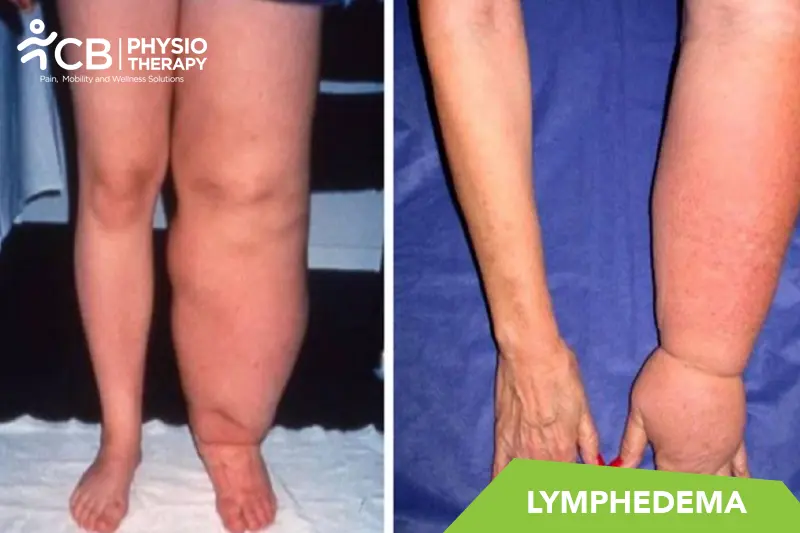
Understanding Lymphedema
Lymphedema (also called Lymphoedema) affects people differently, and the right care starts with understanding how it affects you. Its day-to-day impact — on movement, strength, energy and confidence — is where physiotherapy does its work.
Our role in Lymphedema is practical: protect and rebuild movement and daily function with a plan set after a careful assessment, in coordination with your doctor wherever medical management is involved. No two plans look the same, because no two cases behave the same.
Causes & risk factors of Lymphedema
What commonly drives it — your assessment pins down which of these apply to you.
More than one possible driver
Lymphedema can have several contributing factors — a careful history and physical assessment separate them rather than guessing.
Reduced movement and deconditioning
Whatever the trigger, less movement quickly adds weakness and stiffness of its own — usually the most reversible part.
Daily-life load and habits
Work posture, repeated tasks, sleep and stress all shape how a condition behaves day to day.
General health and history
Overall health, previous injuries and existing conditions influence both the picture and the plan — the assessment takes all of it in.
When physiotherapy is the right call
If any of these sound like you, an assessment is the right first step.
- ✓ A new diagnosis of Lymphedema and you want a clear rehabilitation start point
- ✓ Daily tasks, walking or stairs are getting harder than they used to be
- ✓ Strength, stamina or balance has visibly dropped
- ✓ You want a structured clinic + home program with measurable milestones
- ✓ Family members need guidance to support you safely
Your treatment journey
Step by step — from your first assessment to a tracked recovery plan.
A detailed first assessment
History, movement testing and strength checks — a focused session to find what is actually driving your Lymphedema.
A diagnosis you understand
Your physiotherapist explains the findings in plain language — what is affected, why it happened and what that means for you.
Active, tracked treatment
Hands-on therapy, the right modalities and graded exercise — progressed session by session and tracked on Fizo IQ™.
Prevention, built in
The final phase rebuilds strength and habits so the same problem does not come back — with a home plan you keep.
What recovery looks like
- ✓ More independence in daily tasks
- ✓ Better strength, balance and stamina
- ✓ Fewer setbacks, with red flags monitored
- ✓ A program your family understands and can support
- ✓ Progress measured milestone by milestone on Fizo IQ™
When to see a doctor — red flags
How CB Physiotherapy treats Lymphedema
We treat Lymphedema the way we treat everything: assessment first, plan second, treatment third. It sounds obvious, but it is the difference between sessions that fill a slot and sessions that move you towards a goal. Care is delivered by certified physiotherapists at a clinic near you or at home.
Your whole journey is tracked on Fizo IQ™ — the diagnosis, the root cause, the milestones and the goals — so progress is measured, not guessed, and the plan adapts the moment your response calls for it.
Get Lymphedema treatment near you
Certified physiotherapists at a clinic near you or at home — same-day slots, assessment-led care.
Request received!
We'll call you within 10 minutes to confirm your home visit.We'll call you within 10 minutes to confirm your slot.
Chat with us on WhatsAppLymphedema, answered
1: Swelling,
2: Heaviness,
3: Pitting edema,
4: Tightness in the affected limb,
5: Decreased flexibility,
6: Recurring infections,
7: Thickening or hardening of the skin.
8: Stemmer's sign positive.
1: Surgery: Lymphedema commonly occurs as a result of surgical procedures that involve the removal of lymph nodes, particularly in cancer treatment.
2: Radiation therapy: Radiation therapy aimed at cancerous tumors can sometimes damage nearby lymph nodes or lymphatic vessels, disrupting the flow of lymph fluid and causing lymphedema.
3: Cancer: In addition to surgery and radiation therapy, cancer itself can obstruct lymphatic vessels or lymph nodes, leading to lymphedema.
4: Infection: Infections such as cellulitis or filariasis can cause inflammation and damage to the lymphatic system, resulting in lymphedema.
5: Trauma or injury: Severe trauma or injury, such as burns or deep cuts, can damage lymphatic vessels or nodes, impairing the normal drainage of lymph fluid.
6: Congenital conditions: Some individuals are born with abnormalities in their lymphatic system, which can predispose them to developing lymphedema later in life.
7: Obesity: Excess weight can put pressure on the lymphatic system, leading to decreased lymphatic drainage and an increased risk of developing lymphedema.
8: Inflammatory conditions: Certain inflammatory diseases, such as rheumatoid arthritis or systemic lupus erythematosus (SLE), can cause inflammation and damage to the lymphatic system, contributing to the development of lymphedema.
Pathology
Lymphedema results from damage or obstruction to the lymphatic vessels, leading to impaired drainage of lymph fluid. This causes fluid accumulation, tissue inflammation, fibrosis, and compromised immune function. Over time, it can lead to secondary complications like infections and skin changes.
1: Clinical evaluation: A thorough medical history and physical examination by a healthcare professional can often provide valuable clues suggestive of lymphedema, including signs of swelling, changes in skin texture, and any relevant medical history such as surgery or radiation therapy.
2: Lymphoscintigraphy: This imaging test involves injecting a radioactive tracer into the skin and using a gamma camera to track the movement of the tracer through the lymphatic vessels. Lymphoscintigraphy can help visualize lymphatic flow patterns and identify areas of obstruction or dysfunction.
3: Lymphedema measurement: Various measurement techniques, such as circumferential measurements using a tape measure or water displacement volumetry, can be used to quantify the extent of swelling and monitor changes over time.
4: Bioimpedance spectroscopy: This non-invasive technique measures tissue impedance to assess extracellular fluid volume, providing quantitative information about fluid accumulation in the affected limb(s).
5: Imaging studies: Ultrasound, magnetic resonance imaging (MRI), or computed tomography (CT) scans may be used to evaluate the anatomy of the lymphatic system, identify abnormalities, and assess for potential causes of lymphedema, such as tumors or lymph node enlargement.
6: Lymphangiography: Although less commonly performed today, lymphangiography involves injecting a contrast dye into the lymphatic vessels and using X-ray imaging to visualize the lymphatic system's anatomy and identify areas of blockage or leakage.
7: Blood tests: Blood tests may be performed to rule out other potential causes of swelling, such as kidney or liver dysfunction.
8: Stemmer's sign: This clinical maneuver involves attempting to pinch a fold of skin at the base of the second toe or finger. A positive Stemmer's sign (inability to pinch the skin) suggests lymphedema.
Note: Medication should not be taken without the doctor’s prescription.
Skin Care: Proper skin care is essential for individuals with lymphedema to prevent infections and skin complications. Physiotherapists educate patients on techniques for cleansing, moisturizing, and protecting the skin, as well as strategies to minimize the risk of injury and infection.
Electrical Muscle Stimulation (EMS): EMS involves the use of electrical impulses to stimulate muscle contractions. In the context of lymphedema management, EMS may be used to promote lymphatic drainage by enhancing muscle pumping action and facilitating the movement of lymphatic fluid.
Transcutaneous Electrical Nerve Stimulation (TENS): TENS delivers low-voltage electrical stimulation through electrodes placed on the skin, targeting nerves to alleviate pain and discomfort associated with lymphedema. TENS may help reduce pain, improve circulation, and enhance tissue healing.
Interferential Current (IFC) Therapy: IFC therapy uses medium-frequency electrical currents to penetrate deeper tissues, providing pain relief, reducing inflammation, and promoting tissue healing. In lymphedema management, IFC therapy may help alleviate pain, improve lymphatic circulation, and reduce swelling.
High-Voltage Pulsed Galvanic Stimulation (HVPGS): HVPGS delivers pulsed electrical currents at high voltage to target deep tissues. This modality may be used to promote lymphatic drainage, reduce tissue fibrosis, and improve circulation in individuals with lymphedema.
Microcurrent Therapy: Microcurrent therapy delivers low-level electrical currents similar to the body's natural bioelectricity. It may be used to stimulate lymphatic function, reduce inflammation, and promote tissue repair in lymphedema management.
Russian Stimulation: Russian stimulation involves the application of medium-frequency electrical currents to stimulate muscle contractions. In lymphedema treatment, Russian stimulation may be used to enhance lymphatic drainage and improve muscle tone in the affected limb(s).
Shockwave Therapy: Shockwave therapy, also known as extracorporeal shockwave therapy (ESWT), is a non-invasive treatment that uses acoustic waves to stimulate tissue healing and reduce pain. While there is limited research on the use of shockwave therapy specifically for lymphedema, some studies suggest that it may have potential benefits for improving tissue regeneration and reducing fibrosis, which are associated with lymphedema progression. However, further research is needed to determine its effectiveness as a standalone treatment for lymphedema.
Therapeutic Ultrasound Therapy: Therapeutic ultrasound involves the use of high-frequency sound waves to penetrate deep into tissues, promoting tissue healing, reducing inflammation, and increasing blood flow. While therapeutic ultrasound may have potential benefits for managing certain aspects of lymphedema, such as tissue fibrosis and inflammation, it is typically used as a complementary therapy alongside other primary treatments such as manual lymphatic drainage and compression therapy.
Pneumatic Compression Therapy: This therapy involves the use of pneumatic compression devices that intermittently inflate and deflate sleeves or boots worn around the affected limb. The sequential compression helps move lymphatic fluid and reduce swelling.
Manual Lymphatic Drainage (MLD): This is a gentle massage technique that encourages the flow of lymphatic fluid out of the affected limb or body part. It involves light, rhythmic strokes to stimulate the lymphatic vessels and move fluid towards healthy lymph nodes.
Myofascial Release: Myofascial release techniques focus on releasing tension and restrictions in the fascia, the connective tissue that surrounds muscles, blood vessels, and nerves. While myofascial release may help improve tissue mobility and reduce discomfort associated with lymphedema, it is usually used as a complementary therapy rather than a standalone treatment for managing lymphedema.
Lymphatic Drainage Exercises: These exercises involve specific movements and positions designed to promote lymphatic drainage. They may include deep breathing exercises, gentle stretching, and self-massage techniques.
Exercise: Controlled, low-impact exercise can help improve lymphatic circulation, muscle pumping action, and joint mobility. Physiotherapists can design personalized exercise programs tailored to the individual's abilities and limitations, focusing on activities such as walking, swimming, and resistance training.
Lifestyle Modifications: Physiotherapists may recommend lifestyle modifications to optimize lymphatic function and minimize the impact of lymphedema. This may include maintaining a healthy weight, avoiding tight clothing or jewelry that restricts lymphatic flow, practicing good posture, and avoiding activities that may exacerbate swelling.
Don't let Lymphedema decide your day.
Get assessed today — find the cause, get a plan, and know when you'll feel better.