
Supraspinatus Tendinitis — Symptoms, Causes & Treatment
Also known as Impingement Syndrome. Causes, symptoms and how physiotherapy treats Supraspinatus Tendinitis — without surgery or medicines.
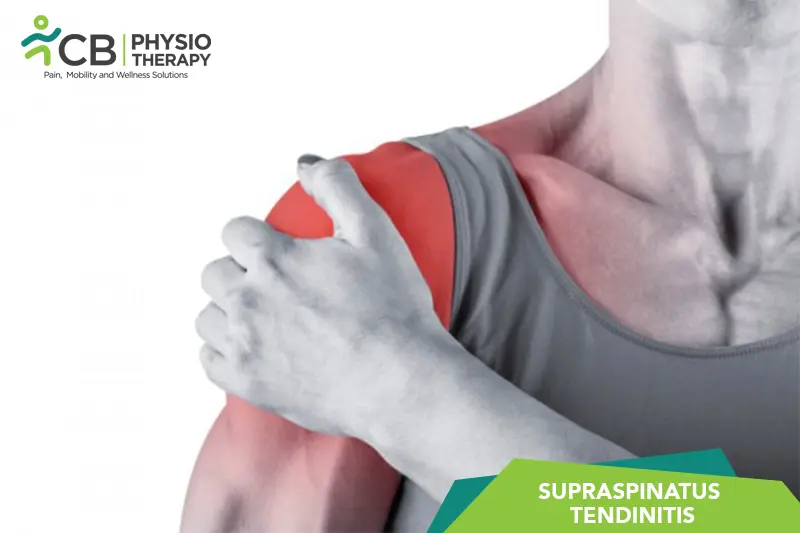
Understanding Supraspinatus Tendinitis
Supraspinatus Tendinitis (also called Impingement Syndrome) can arrive suddenly or build over months, and how much it hurts is a poor guide to how serious it is — minor strains can hurt intensely, while slow-building problems stay quiet until they start limiting you.
Physiotherapy approaches Supraspinatus Tendinitis by treating the cause rather than chasing the symptom: a detailed movement assessment first, then a plan combining hands-on treatment, targeted exercise and the habit changes that stop it returning.
Causes & risk factors of Supraspinatus Tendinitis
What commonly drives it — your assessment pins down which of these apply to you.
Weakness and deconditioning
When supporting muscles lose strength, load shifts to structures that were never meant to carry it.
Old injuries and compensations
A previous injury that never fully rehabilitated often leaves a movement pattern that overloads something else.
Sudden spikes in activity
A new sport, a new gym program, a long trek — tissue adapts to gradual change and protests when change is sudden.
Muscle strain and overload
A sudden lift, an awkward movement or simply more load than the tissues were prepared for — the most common trigger.
Posture and long static hours
Desks, driving and screens keep the same structures loaded for hours at a stretch — comfortable at first, aching later.
When physiotherapy is the right call
If any of these sound like you, an assessment is the right first step.
- ✓ You want to avoid long-term painkillers — or surgery has been mentioned
- ✓ You've been diagnosed with Supraspinatus Tendinitis and told to "rest and see"
- ✓ Movement feels restricted, weak or guarded compared to before
- ✓ You want to return to sport or work with a plan, not by trial and error
- ✓ Supraspinatus Tendinitis that keeps returning or hasn't settled within two weeks
Your treatment journey
Step by step — from your first assessment to a tracked recovery plan.
A detailed first assessment
History, movement testing and strength checks — a focused session to find what is actually driving your Supraspinatus Tendinitis.
A diagnosis you understand
Your physiotherapist explains the findings in plain language — what is affected, why it happened and what that means for you.
Active, tracked treatment
Hands-on therapy, the right modalities and graded exercise — progressed session by session and tracked on Fizo IQ™.
Prevention, built in
The final phase rebuilds strength and habits so the same problem does not come back — with a home plan you keep.
What recovery looks like
- ✓ Care without long-term medicines — at a clinic near you or at home
- ✓ Relief that comes from treating the cause, not masking it
- ✓ A clear diagnosis and a timeline you can plan around
- ✓ Strength and movement rebuilt, not just pain reduced
- ✓ Lower chance of recurrence, with a prevention plan
When to see a doctor — red flags
How CB Physiotherapy treats Supraspinatus Tendinitis
At CB Physiotherapy, treatment for Supraspinatus Tendinitis starts with finding its cause: a structured, physiotherapist-led assessment before anything is prescribed. Your plan then combines hands-on therapy, targeted exercise and the right modalities — delivered at a clinic near you or at home, and coordinated with your doctor where medical care is involved.
Every case runs on Fizo IQ™, our recovery engine: diagnosis, root cause, plan, milestones and goals, tracked session by session. You always know where you are in your recovery — and what comes next.
Get Supraspinatus Tendinitis treatment near you
Certified physiotherapists at a clinic near you or at home — same-day slots, assessment-led care.
Request received!
We'll call you within 10 minutes to confirm your home visit.We'll call you within 10 minutes to confirm your slot.
Chat with us on WhatsAppSupraspinatus Tendinitis, answered
1: Repetitive overhead activities (e.g., swimming, tennis, painting).
2: Acute injury or trauma to the shoulder.
3: Degenerative changes due to aging.
4: Poor posture or biomechanics.
5: Impingement syndrome, where surrounding structures pinch the tendon, etc
1: Pain at the top and outer side of the shoulder, especially when lifting the arm.
2: Pain that worsens at night or with overhead activities.
3: Weakness in the shoulder.
4: Reduced range of motion.
5: A feeling of stiffness in the shoulder.
6: Pain that may radiate down the arm towards the elbow.
7: Difficulty finding a comfortable sleeping position due to shoulder discomfort.
8: Tenderness to touch over the affected tendon, often felt at the front or side of the shoulder.
9: Possible swelling around the shoulder joint.
10: A feeling of clicking, popping, or catching in the shoulder during movement, which can indicate tendon impingement or inflammation.
11: Challenges performing routine tasks, such as dressing, combing hair, or reaching for objects on high shelves.
Pathology:
The pathology of supraspinatus tendinitis involves several changes in the supraspinatus tendon and the surrounding structures, leading to inflammation, degeneration, and pain.
Clinical Examination:
A detailed examination of the shoulder to assess pain, range of motion, strength, and any signs of tenderness or swelling.
Special Tests:
1: Neer Impingement Test: The arm is raised forward to 180 degrees while the scapula is stabilized. Pain suggests impingement.
2: Hawkins-Kennedy Test: The arm is flexed to 90 degrees, then forcibly internally rotated. Pain indicates possible supraspinatus tendinitis.
3: Empty Can Test (Jobe's Test): The arm is abducted to 90 degrees, then angled forward 30 degrees and internally rotated (thumb pointing down). The patient resists downward pressure. Pain or weakness suggests supraspinatus tendinitis.
4: Painful Arc Test: Pain experienced during shoulder abduction between 60 to 120 degrees.
X-ray:
X-ray is useful for ruling out other causes of shoulder pain, such as fractures or arthritis. It can help detect calcific deposits in the tendon.
Ultrasound:
Ultrasound provides real-time images of the soft tissues, including the supraspinatus tendon. It can help detect tendon inflammation, tears, and fluid accumulation.
Magnetic Resonance Imaging (MRI):
MRI offers detailed images of the shoulder’s soft tissues. It helps identify tendon inflammation, partial or full-thickness tears, and any associated bursitis or impingement.
Computed Tomography (CT) Scan:
CT scan is less commonly used but can be helpful in certain cases to provide detailed images of the bone structures and any calcifications.
Arthrogram:
Arthrogram involves injecting a contrast dye into the shoulder joint before taking X-rays or MRI. It helps in visualizing tendon tears or joint abnormalities.
Blood Tests:
The blood test is generally not used for diagnosing supraspinatus tendinitis but may be ordered to rule out other conditions such as infections or systemic inflammatory diseases. A combination of these diagnostic techniques helps to accurately diagnose supraspinatus tendinitis and formulate an effective treatment plan tailored to the patient's specific condition.
(Note: Medication should not be taken without the doctor’s prescription.)
SURGERIES FOR SUPRASPINATUS TENDINITIS:
When conservative treatments for supraspinatus tendinitis fail to provide relief, surgical intervention may be considered. Several surgical options are available depending on the severity of the condition and the specific underlying issues. Here are the common surgical procedures for supraspinatus tendinitis:
Arthroscopic Debridement:
Arthroscopic Debridement is minimally invasive surgery where small instruments and a camera (arthroscope) are inserted into the shoulder joint to remove damaged or inflamed tissue, including loose fragments and thickened bursa.
Subacromial Decompression (Acromioplasty):
Subacromial Decompression (Acromioplasty) is the removal of a small portion of the acromion bone to create more space for the supraspinatus tendon, reducing impingement and allowing the tendon to move more freely.
Rotator Cuff Repair:
Rotator Cuff Repair is a process of repairing tears in the supraspinatus tendon, which may involve stitching the torn edges back together or anchoring the tendon back to the bone using sutures or anchors.
Bursectomy:
Bursectomy is the removal of the inflamed subacromial bursa (the fluid-filled sac that reduces friction between the tendon and bone).
Tendon Transfer:
If the supraspinatus tendon is severely damaged and cannot be repaired, a tendon transfer may be performed. This involves using a nearby tendon to replace the function of the damaged supraspinatus tendon.
Shoulder Replacement (Arthroplasty):
In severe cases with extensive rotator cuff damage and shoulder arthritis, shoulder replacement surgery may be considered. This involves replacing the damaged shoulder joint with artificial components.
The patient is advised to rest and asked to avoid activities that exacerbate pain, particularly overhead movements.
Cryotherapy:
Apply cryotherapy (ice packs) to the shoulder for 15-20 minutes several times a day to reduce inflammation and pain.
Transcutaneous Electrical Nerve Stimulation (TENS):
TENS provides pain relief by delivering low-voltage electrical currents to the affected area.
It works by stimulating sensory nerves, which can help block pain signals to the brain and promote the release of endorphins, the body's natural painkillers.
Ultrasound Therapy:
Ultrasound Therapy promotes tissue healing and reduces pain and inflammation. Ultrasound uses high-frequency sound waves to generate deep heat within the tissues, enhancing blood flow and promoting the healing process.
Interferential Current Therapy (IFC):
IFT reduces pain and inflammation and improves muscle function. IFC uses medium-frequency electrical currents that intersect to create a low-frequency current that penetrates deeper into the tissues.
Electrical Muscle Stimulation (EMS):
EMS prevents muscle atrophy, improves muscle strength, and enhances blood circulation.
It delivers electrical impulses that cause muscle contractions, which can help maintain muscle tone and improve circulation.
Therapy (Low-Level Laser Therapy - LLLT):
Laser Therapy (Low-Level Laser Therapy - LLLT reduces pain and inflammation and promotes tissue healing. LLLT uses low-intensity laser light to penetrate the tissues and stimulate cellular processes, enhancing tissue repair and reducing inflammation.
Pulsed Electromagnetic Field Therapy (PEMF):
Pulsed Electromagnetic Field Therapy (PEMF) reduces pain and inflammation and promotes healing. PEMF uses electromagnetic fields to stimulate cellular repair and improve circulation.
Iontophoresis:
Iontophoresis is used to deliver anti-inflammatory medications directly to the affected area through the skin. It uses a low electrical current to drive medication (such as corticosteroids or nonsteroidal anti-inflammatory drugs) through the skin to the underlying tissues.
Gentle Range of Motion Exercises:
1: Pendulum Exercises: To keep the shoulder joint mobile without stressing the tendon.
2: Passive Range of Motion Exercises: Assisted movements to maintain flexibility.
Stretching Exercises:
1: Posterior Capsule Stretch: To improve shoulder flexibility.
2: Cross-Body Shoulder Stretch: To stretch the posterior shoulder muscles.
3: Doorway Stretch: To stretch the anterior shoulder and pectoral muscles.
Strengthening Exercises:
1: Isometric Exercises: Gentle muscle contractions without joint movement.
2: Resistance Band Exercises: Gradual introduction of resistance to strengthen the rotator cuff and surrounding muscles.
3: Scapular Stabilization Exercises: To improve shoulder blade control and function.
Manual Therapy:
1: Soft Tissue Mobilization: To reduce muscle tension and improve circulation.
2: Joint Mobilization: To enhance joint movement and decrease stiffness.
Advanced Strengthening Exercises:
1: Weight Lifting Exercises: Gradual progression with weights to build muscle strength.
2: Plyometric Exercises: For those returning to sports, to improve power and coordination.
Functional Training:
Sport-specific or activity-specific exercises to prepare for return to normal activities.
Proprioceptive Training:
Exercises to enhance shoulder stability and joint awareness, such as using balance boards or performing exercises on unstable surfaces.
Ergonomic Adjustments:
Adjusting workspaces, sports techniques, and daily activities to reduce strain on the shoulder.
Supraspinatus tendinitis is a common condition that can significantly impact daily activities and athletic performance, but with appropriate management and rehabilitation, most individuals can recover fully.
Don't let Supraspinatus Tendinitis decide your day.
Get assessed today — find the cause, get a plan, and know when you'll feel better.