
Trochanteric Bursitis — Symptoms, Causes & Treatment
Also known as Trochanteric Bursitis. Causes, symptoms and how physiotherapy treats Trochanteric Bursitis — without surgery or medicines.
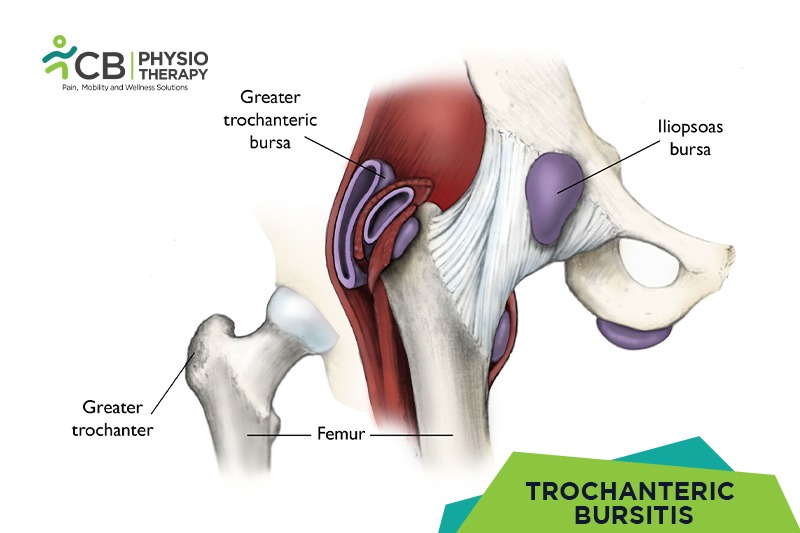
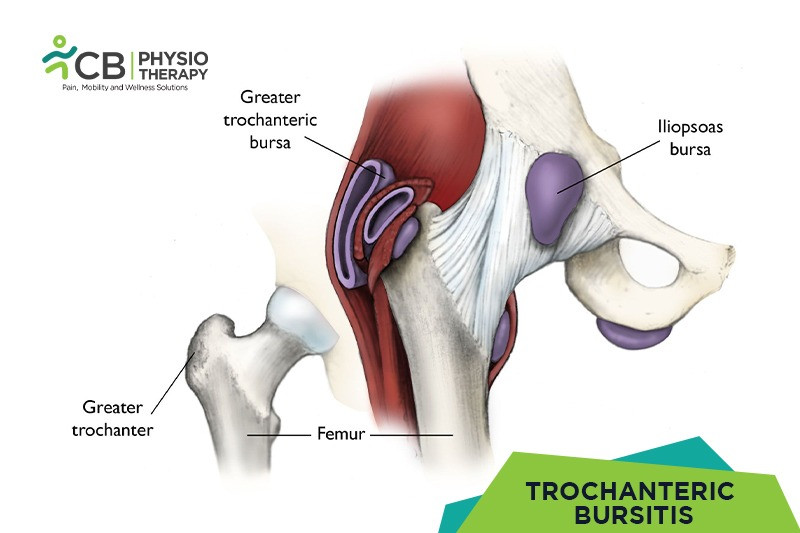
Understanding Trochanteric Bursitis
Trochanteric Bursitis can arrive suddenly or build over months, and how much it hurts is a poor guide to how serious it is — minor strains can hurt intensely, while slow-building problems stay quiet until they start limiting you.
Physiotherapy approaches Trochanteric Bursitis by treating the cause rather than chasing the symptom: a detailed movement assessment first, then a plan combining hands-on treatment, targeted exercise and the habit changes that stop it returning.
Causes & risk factors of Trochanteric Bursitis
What commonly drives it — your assessment pins down which of these apply to you.
Posture and long static hours
Desks, driving and screens keep the same structures loaded for hours at a stretch — comfortable at first, aching later.
Joint stiffness and age-related change
Joints that move less start to hurt more; age-related wear is normal, but painful stiffness is not something to simply accept.
Weakness and deconditioning
When supporting muscles lose strength, load shifts to structures that were never meant to carry it.
Old injuries and compensations
A previous injury that never fully rehabilitated often leaves a movement pattern that overloads something else.
Sudden spikes in activity
A new sport, a new gym program, a long trek — tissue adapts to gradual change and protests when change is sudden.
When physiotherapy is the right call
If any of these sound like you, an assessment is the right first step.
- ✓ You want to return to sport or work with a plan, not by trial and error
- ✓ Trochanteric Bursitis that keeps returning or hasn't settled within two weeks
- ✓ Pain or stiffness that limits work, sleep or daily activities
- ✓ You want to avoid long-term painkillers — or surgery has been mentioned
- ✓ You've been diagnosed with Trochanteric Bursitis and told to "rest and see"
Your treatment journey
Step by step — from your first assessment to a tracked recovery plan.
A detailed first assessment
History, movement testing and strength checks — a focused session to find what is actually driving your Trochanteric Bursitis.
A diagnosis you understand
Your physiotherapist explains the findings in plain language — what is affected, why it happened and what that means for you.
Active, tracked treatment
Hands-on therapy, the right modalities and graded exercise — progressed session by session and tracked on Fizo IQ™.
Prevention, built in
The final phase rebuilds strength and habits so the same problem does not come back — with a home plan you keep.
What recovery looks like
- ✓ Lower chance of recurrence, with a prevention plan
- ✓ Care without long-term medicines — at a clinic near you or at home
- ✓ Relief that comes from treating the cause, not masking it
- ✓ A clear diagnosis and a timeline you can plan around
- ✓ Strength and movement rebuilt, not just pain reduced
When to see a doctor — red flags
How CB Physiotherapy treats Trochanteric Bursitis
We treat Trochanteric Bursitis the way we treat everything: assessment first, plan second, treatment third. It sounds obvious, but it is the difference between sessions that fill a slot and sessions that move you towards a goal. Care is delivered by certified physiotherapists at a clinic near you or at home.
Your whole journey is tracked on Fizo IQ™ — the diagnosis, the root cause, the milestones and the goals — so progress is measured, not guessed, and the plan adapts the moment your response calls for it.
Exercises that help with Trochanteric Bursitis
Make these exercises yours — a CB physio personalizes, doses and tracks your plan week by week.
Get my personalized planGeneral guidance only — stop if an exercise increases your pain, and check with your physio before starting a new routine.
Get Trochanteric Bursitis treatment near you
Certified physiotherapists at a clinic near you or at home — same-day slots, assessment-led care.
Request received!
We'll call you within 10 minutes to confirm your home visit.We'll call you within 10 minutes to confirm your slot.
Chat with us on WhatsAppTrochanteric Bursitis, answered
Trochanteric bursitis is the inflammation and swelling of the greater trochanter bursa, a bursa is a fluid-filled sac that allows the tissue to slide over one another. Bursa is at the outside of the hip, ie the greater trochanter has a bursa called the trochanteric bursa.
The trochanteric bursa allows the gluteal muscles i.e. the muscles of the back and side of the hip to slide smoothly over the greater trochanter. Bursitis is normally caused by the:
- Irritation of a bursa,
- Excessive muscle tightness,
- Wear and tear to the bursa,
- Direct impact injuries,
- Overuse like running, biking, or jumping,
- Bone spurs,
- Tendon injuries like abductor tendonitis,
- Chronic diseases like rheumatoid arthritis, gout, psoriasis, thyroid disease, etc.
- Excessive pressure like poor posture,
- Obesity,
- Previous surgery like a hip replacement,
- Septic bursitis infected bursa may also lead to trochanteric bursitis.
Patient with trochanteric bursitis has pain in the hip and other symptoms like:
- Restricted range of motion,
- Pain at the hip,
- Radiating pain along the outside of the upper leg to the knee,
- Pain aggravated by activities such as walking, running, climbing the stairs, crossing the legs, and getting in and out of the car,
- Swelling and tenderness,
- Stiffness,
- Weakness,
- Numbness,
- Muscle spasm.
Pathology
Trochanteric bursitis is caused by the friction to the bursa, present between the great trochanter and the iliotibial band that runs along the external thigh.
Physical examination:
Physical examination of the hip is done to check tenderness and the areas around the bursa.
X-ray:
X-rays are done to rule out other conditions related to bone.
Magnetic resonance imaging (MRI):
Magnetic resonance imaging (MRI) helps to check the inflammation or collection of fluid in the bursa.
Medication: Non-steroidal anti-inflammatory drugs (NSAIDs), corticosteroid Injections.
Note: Medication should not be taken without the doctor's prescription.
Surgery:
Surgery is done in case conservative treatment does not relieve the symptoms. Surgeries recommended are listed below:
- Tendon repair and iliotibial band release
- Osteotomy.
- Trochanteric bursectomy.
Ice is applied to the affected area to reduce pain and inflammation.
Heat is applied to the area to increase blood circulation and remove the toxic substances.
Ultrasound therapy is used to increase blood flow, thus delivering more oxygen and nutrients to the damaged tissues and enhancing the healing process.
Kinesio-Taping is applied as compression is not possible in the hip area. Taping alleviates pain and decreases inflammation.
Transcutaneous electrical stimulation (TENS):
Transcutaneous electrical stimulation (TENS) is used to reduce and relieve hip pain.
Shock wave therapy is another modality used by physiotherapists to relieve pain and enhance the healing process.
Dry needling is done to reduce lateral hip pain and improve function in patients with greater trochanteric bursa.
Massage therapy like deep tissue massage is given to the muscles and connective tissues around the hip.
Range of motion exercises are done to increase the mobility and flexibility of the low back, hip, and knee joint, these exercises improve strength, flexibility, and core stability.
Stretching exercises:
Stretching exercises are given to decrease the tension and help restore the movement. Passive stretching is done for the muscles and connective tissues of the hip by the physiotherapist.
Manual therapy is a hand on technique given gently to move the muscles and joints, it helps to improve motion and strength.
Strengthening exercises are given to strengthen the weak muscle which might cause imbalance resulting in excessive strain at the greater trochanter. Progressive resistance exercises can be given for the core muscles and lower extremities. Strengthening exercises can be done by lying on a table or the bed or floor by lifting the leg while lying in different positions. Then advance by doing the exercises in a standing position eg, standing squats.
The patient is advised to take rest and avoid activities that aggravate the pain as it might irritate the bursa further, and possibly delay recovery. Additional padding can be done on the bed or avoid lying on the affected side while sleeping to reduce stress in the area.
Don't let Trochanteric Bursitis decide your day.
Get assessed today — find the cause, get a plan, and know when you'll feel better.