Open today · 8 AM–8 PM · Same-day slots
CB Physiotherapy
Same-day appointments

Biceps Tendonitis Treatment Doctors in Jammu And Kashmir

Whether it's a dull ache, a sharp catch, or pain that keeps coming back — we find the root cause of your Biceps Tendonitis and fix it, at a clinic near you or at home.

Precision Care, Proven Recovery
ACCURATE DIAGNOSIS
ROOT CAUSE ASSESSMENT
COMPREHENSIVE RECOVERY PLAN
MILESTONE TRACKING
GOALS ACHIEVED
STAYING ACTIVE
See how it works ↓
Move pain-free Avoid drugs & surgery
5.0 / 5 · 23 Google reviews Verified on Google

Request received!

We'll call you within 10 minutes to confirm your home visit.We'll call you within 10 minutes to confirm your slot.

Chat with us on WhatsApp

Book in 30 seconds

Visit your nearest CB clinic. Tell us your concern and a preferred time — we'll confirm your slot by call within 10 minutes.

Same-day booking by default. We'll confirm your exact slot by call.
+91
No spam · Your number is safe with us
Prefer to talk now? Call +08082666216
Understanding your biceps tendonitis

Does this sound like you?

Common triggers include muscle strain, joint stiffness, poor posture and long desk hours. If two or more of these fit, a physiotherapy assessment can identify exactly what's driving it.

  • A dull ache or sharp, burning biceps tendonitis that keeps returning
  • Discomfort that worsens with movement, lifting or long sitting hours
  • Morning stiffness that eases as you move
  • Pain that limits work, sport or everyday activities
  • Recurring episodes that keep coming back

Most biceps tendonitis improves without surgery or long-term medication — the key is finding the cause first.

⚠ When to seek urgent medical care

Biceps Tendonitis rarely signals something serious, but see a doctor immediately if it comes with:

  • Fever, unexplained weight loss, or a history of cancer
  • Numbness or weakness that keeps getting worse
  • Loss of bladder or bowel control
  • Pain after a major fall or accident

Our physios screen for these red flags at every first assessment and refer you to the right doctor if needed.

Assessment-led treatment

How we treat biceps tendonitis

We start with an AI-based assessment to find the root cause — then follow a clear, four-phase plan.

Phase 1

Ease the pain

Hands-on therapy and advanced modalities to calm pain and inflammation fast.

Phase 2

Restore movement

Mobility work and posture correction so everyday movement feels normal again.

Phase 3

Build strength

Targeted strengthening that protects you — in-clinic or in our physio gym.

Phase 4

Return to activity

Back to work, sport and life — with a home program that prevents relapse.

Your physiotherapist, with Fizo IQ™

Every recovery, planned and proven

One patient record, stage by stage: your physiotherapist pinpoints the diagnosis, finds the root cause and builds your in-clinic plan — while Fizo IQ™, our AI decision-support engine, tracks every milestone until your goals are met and you leave with an exercise plan to stay active.

Physio Expert @CB with Fizo IQ™ — recovery engine
TRACKING
ACCURATE DIAGNOSIS
L4–L5 disc bulge · nerve-root irritation, pinpointed at the first movement assessment
ROOT CAUSE ASSESSMENT
Poor sitting posture, weak core–hip chain · quietly loading that disc
COMPREHENSIVE RECOVERY PLAN
24 clinic sessions · manual therapy + spinal decompression · guided exercise therapy, reviewed weekly
MILESTONE TRACKING
Sitting pain-free ✓ · stairs ✓ · next: the morning 5 km walk
GOALS ACHIEVED
Pain 7 → 3 in six weeks · back to daily life, moving freely
STAYING ACTIVE
A personalized exercise plan, yours to keep · so the pain doesn't come back
Example recovery journey · every plan is built around you
Move better

Exercises that help with Biceps Tendonitis

More exercises →

Make these exercises yours

Get my personalized plan

General guidance only — stop if an exercise increases your pain, and check with your physio before starting a new routine.

Meet your care team

Licensed experts who treat hundreds like you every month

Every CB physio is a qualified BPT/MPT clinician. You don't need to choose one — our lead physiotherapist reviews your case and assigns the specialist best suited to treat it.

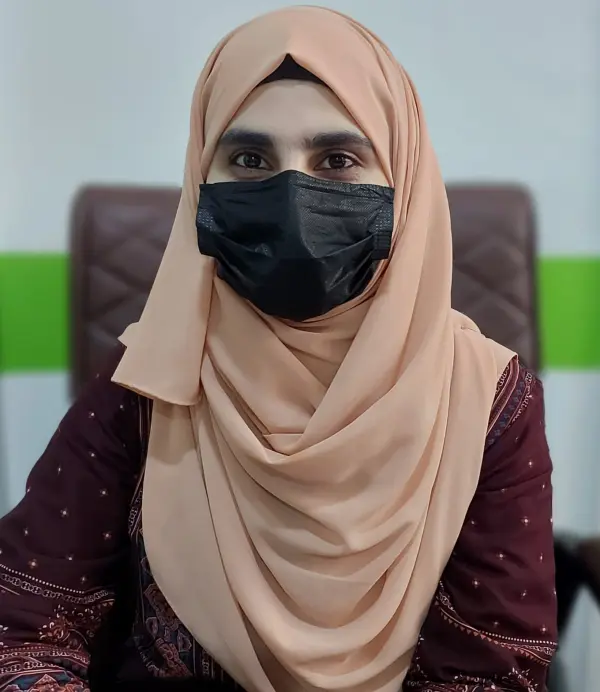
Dr. Shafiya, physiotherapist in Anantnag

Dr. Shafiya

Physiotherapist

5.0 (13)
Anantnag
cb physiotherapy janglat mandi
1 yrs experience
Ortho Spine Sports Physiotherapy Center
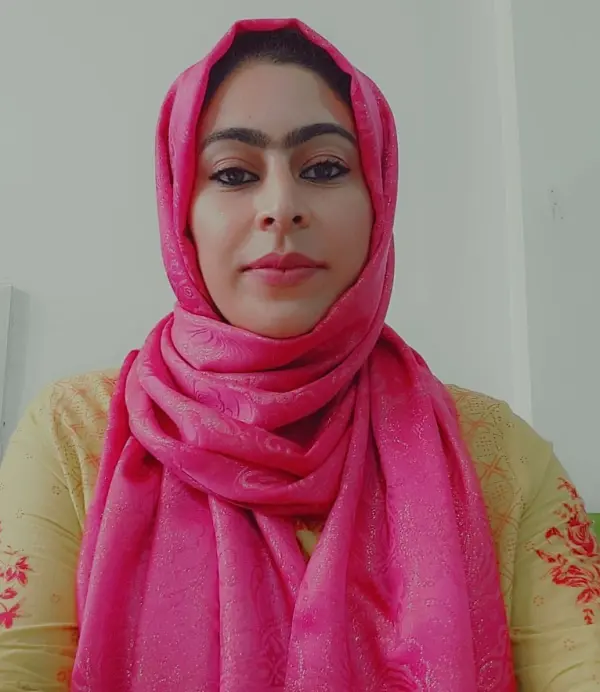
Dr. Athur Un Nisa, physiotherapist in Anantnag Verified

Dr. Athur Un Nisa

Physiotherapist

5.0 (10)
Anantnag
cb physiotherapy janglat mandi
4 yrs experience
Ortho Spine Sports Physiotherapy Center
Not sure who to see? You don't have to decide. Our lead physiotherapist reviews every case and assigns the physio best suited to it — based on your condition and availability.
Patient stories

Biceps Tendonitis recoveries, verified on Google

Rated 5.0 / 5 across 23 verified patient reviews in Jammu And Kashmir.

Verified

“Received treatment at Cb Anantnag clinic where Dr. Athar treated me she was highly skilled and professional. Her treatment approach is effective, and I noticed significant improvement in my knee pain within a short time. I highly recommend her for quality physiotherapy care. in Anantnag”

KZ
Khan Zainab Verified patient · Treated at CB · 7 months ago
Verified

“Excellent physiotherapist, Dr. Athar! Her expertise and customized care assisted me in recovering swiftly. from back issue, I strongly recommend her..”

SJ
Saima Jan Verified patient · Treated at CB · 7 months ago
Verified

“I had an excellent experience with Dr. Shafiya. My back pain recovery was made easier and less stressful thanks to her knowledge and kind attitude. Thank you for your incredible care. Doctor Shafiya.”

SB
Saima Bhat Verified patient · Treated at CB · 7 months ago
Verified

“Dr. Shafiya is an excellent physiotherapist! Her expertise, concern, and dedication enabled me to heal fast and painlessly. I definitely recommend her to anyone looking for efficient physiotherapy treatment.”

RJ
Rumaisa Jaan Verified patient · Treated at CB · 7 months ago
Verified

“Dr. Athar un Nisa is a wonderful physical therapist who honestly cares about her patients. She devised a treatment regimen that helped me restore mobility and strength following my injury. Her treatment sessions were quite successful and motivational. I am incredibly appreciative for her effort and support.”

RB
Rafia Bhat Verified patient · Treated at CB · 7 months ago
Verified

“Dr. Athar un Nisa is a wonderful physical therapist who honestly cares about her patients. She devised a treatment regimen that helped me restore mobility and strength following my injury. Her treatment sessions were quite successful and motivational. I am incredibly appreciative for her effort and support.”

RB
Rafia Bhat Verified patient · Treated at CB · 7 months ago
Good to know

Biceps Tendonitis, answered

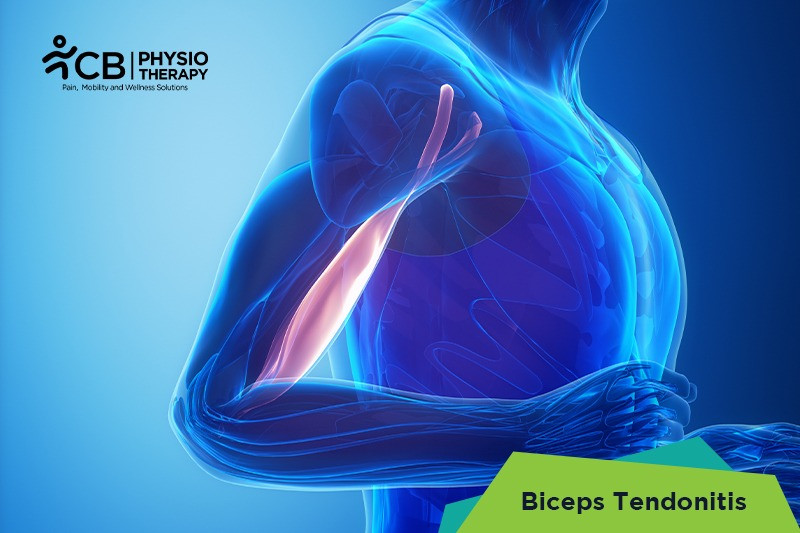
Tendonitis is the inflammation of the thick fibrous band of tissue that attaches the muscle to bone. Biceps tendonitis occurs when the upper biceps tendon i.e. the long head of the biceps tendon that connects the biceps muscle to the bones in the shoulder is inflamed or injured.

Biceps tendonitis is typically caused in older age groups, other causes may be:

  • Sudden injury to the upper biceps tendon, by lifting something too heavy or throwing a baseball or playing tennis.
  • Compression i.e. pushing, pinching or shearing, pulling.
  • Weak rotator cuff and upper back muscles.
  • Instability of shoulder joint muscles.
  • Overuse and gradual wear and tear.
  • Repetitive shoulder actions.
  • Direct injury to the shoulder.
  • Repeated overhead arm movements.
  • History of shoulder dislocation or impingement.
  • Trauma, like bumping or hitting the shoulder or upper arm against something.
  • Diabetes.
  • Diseases like gout and rheumatoid arthritis.
  • Osteoarthritis.

The patient usually feels sharp pain with grating or snapping sensation while moving the shoulder, other symptoms include:

  • Tenderness, or stiffness in the front of the shoulder.
  • Redness, inflammation, and swelling.
  • Pain radiating towards the neck and also down the arm.
  • Pain aggravating with flexion.
  • Feeling pain after activity.
  • Weakness around the shoulder.
  • Bruising from upper arm to elbow.
  • Catching or clicking sensation near top of the biceps.
  • Pain in the region of the anterior shoulder located over the bicipital groove, occasionally radiating down to the elbow.
  • Pain that gets worse while overhead movement, or pulling and lifting.
  • Pain that gets worse at night, while sleeping on the affected shoulder.
  • Decreased range of motion.
  • Lump along the tendon.

Pathology

Inflammation of the bicipital tendon in the bicipital groove due to which the tendon swells and hemorrhage occurs and thus the tendon increases in diameter making the tendon mechanically irritated in the groove.

X-ray:

X-rays is done to check whether there is any other problem in the shoulder joint.

Magnetic resonance imaging (MRI) and Ultrasound:

Magnetic resonance imaging and ultrasound are used to check any soft tissue damage like the biceps tendon.

Medication: Non-steroidal anti-inflammatory drugs (NSAIDs), such as ibuprofen or naproxen, Advil or Aleve, Corticosteroid injections.

Note : Medication should not be taken without a doctor’s prescription.

Ice therapy:

Apply ice therapy for 10-15 minutes, 3-4 times per day, only for the first 48 hours or till the swelling decreases.

Ice therapy followed by RICE protocol, rest, ice, compression, and elevation. For rest assistive device such as bracing for the arm is provided, to avoid activities that cause pain or put stress on the shoulder and upper arm.

Heat therapy:

Heat is applied to the upper arm and shoulder. There is an increase in the blood flow, brings in oxygen and nutrients, and removes toxins resulting in the decrease of inflammation, pain and improves tissue mobility.

Therapeutic ultrasound:

The therapeutic ultrasound is applied with a wand through a coupling gel for 5 to 10 minutes over the affected area. This therapy increases blood flow and cellular activity in the area.

Dry needling:

Dry needling is one way that stimulates the affected muscle by a very fine needle, resulting in alleviating the muscle pain associated with this condition.

Interferential current therapy:

Interferential current therapy produces a low-frequency (0–250 Hz) current within the tissue by the interference of two higher frequencies (4000 Hz) and acts primarily on the excitable (nerve) tissues which cause pain relief and muscle stimulation.

TENS therapy:

Transcutaneous electrical stimulation is used to help treat biceps tendonitis as it decreases pain, improves muscle function, or increases circulation. Two to four small electrodes are placed around the shoulder and upper arm, and electricity is applied through the electrodes.

Iontophoresis:

Iontophoresis uses electricity to administer medication through the skin, into the injured biceps tendon. The medication is usually a negatively charged, anti-inflammatory liquid. When a negatively charged direct current is applied to the medicine, it repels it, thus driving the drug into the tendon.

Low-level laser therapy:

Low lasers help in decreasing pain and inflammation by enhancing fibroblast activity and repairing. It helps to accelerate healing by increasing ATP production (energy's source for all cells and their metabolic activities). This therapy also stimulates the enzymes that produce ATP, which increases productivity and creates more energy which the cell uses for repair.

Kinesiology Tape:

Kinesiology taping is also known as K-tape. In this technique, flexible strips of fabric tape are applied to the upper arm or shoulder. The tape is used to decrease pain and spasm and thus facilitate proper muscle function.

Active Release Techniques (ART):

Active Release treatments are used to release the biceps tendon that can get stuck to the deltoid, this can help reverse that and lead to injury recovery.

Deep transverse friction massage:

Cross-friction and deep transverse massage are done to stimulate collagen formation around the injured tendon. This helps to decrease pain and improve localized circulation. Massage also helps to improve tissue mobility, allows the shoulder and arm to move freely.

Manual therapy:

Manual therapy helps to restore a pain-free range of motion such as activities like a passive range of motion (PROM), Active-Assisted Range of Motion (AAROM), and mobilization through manual therapy.

Range of motion exercises:

Exercises help to improve ROM, strength, and functional mobility of the arm and shoulder. These exercises improve circulation and also help facilitate healing. Shoulder ROM exercises, such as passive and active assistive or active exercises. Range-of-motion exercises help improve shoulder mobility and function.

Rotator cuff strengthening:

Rotator cuff weakness causes biceps tendinitis, therefore emphasis should be on strengthening these muscles by recommending internal and external rotation with resistance bands, or active range of motion with weights.

Scapular stabilization:

The biceps tendons, both long and short, are attached to the scapula, and if positioned improperly can cause biceps tendonitis. Therefore, neuromuscular control training should be given in the case of biceps tendinitis.

Strengthening exercises:

Strengthening exercises consist of loading the scapular stabilizers, rotator cuff, and biceps tendon.

Endurance exercise:

Exercises should be aimed to improve upper-extremity endurance. This can increase the blood flow to the shoulder and biceps tendon and also improve the way the shoulder moves and functions. A rowing machine and upper body ergometer can improve shoulder stamina.

Ready when you are

Don't let the pain decide your day.

Get assessed today — find the cause, get a plan, and know when you'll feel better.

📞 Call 💬 WhatsApp Book now