
Biceps Tendonitis — Symptoms, Causes & Treatment
Also known as Biceps Tendonitis. Causes, symptoms and how physiotherapy treats Biceps Tendonitis — without surgery or medicines.
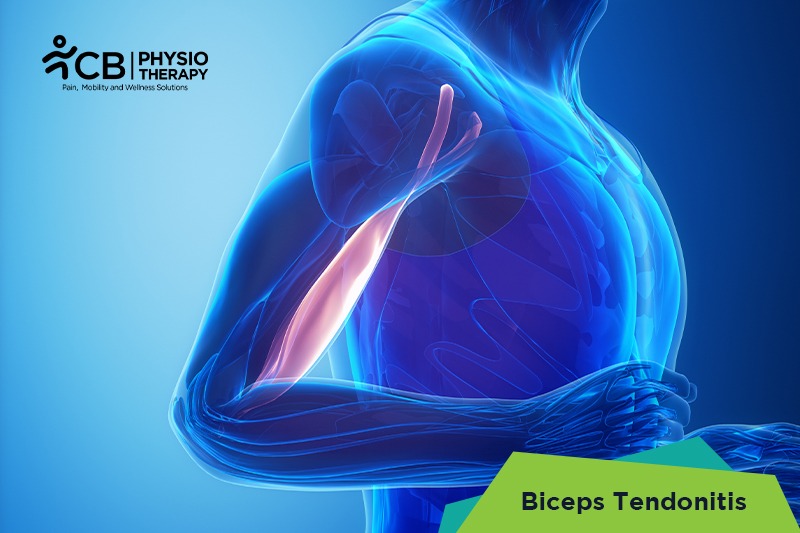
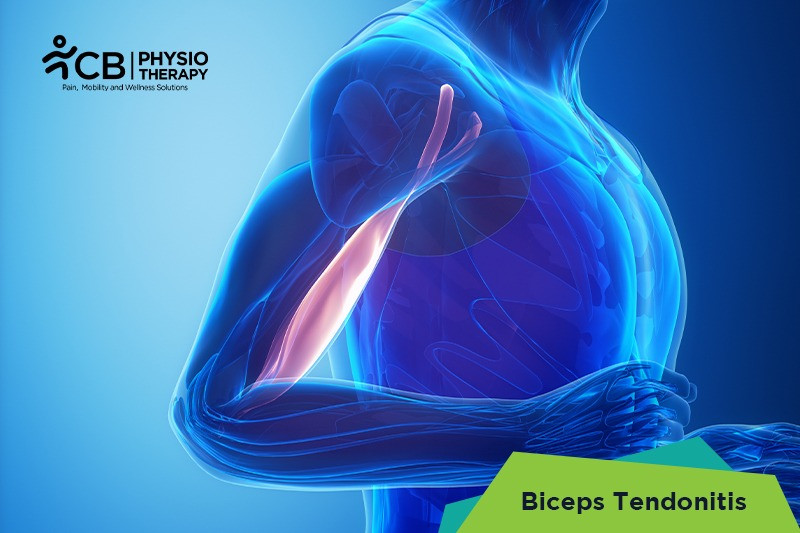
Understanding Biceps Tendonitis
Biceps Tendonitis can arrive suddenly or build over months, and how much it hurts is a poor guide to how serious it is — minor strains can hurt intensely, while slow-building problems stay quiet until they start limiting you.
Physiotherapy approaches Biceps Tendonitis by treating the cause rather than chasing the symptom: a detailed movement assessment first, then a plan combining hands-on treatment, targeted exercise and the habit changes that stop it returning.
Causes & risk factors of Biceps Tendonitis
What commonly drives it — your assessment pins down which of these apply to you.
Joint stiffness and age-related change
Joints that move less start to hurt more; age-related wear is normal, but painful stiffness is not something to simply accept.
Weakness and deconditioning
When supporting muscles lose strength, load shifts to structures that were never meant to carry it.
Old injuries and compensations
A previous injury that never fully rehabilitated often leaves a movement pattern that overloads something else.
Sudden spikes in activity
A new sport, a new gym program, a long trek — tissue adapts to gradual change and protests when change is sudden.
Muscle strain and overload
A sudden lift, an awkward movement or simply more load than the tissues were prepared for — the most common trigger.
When physiotherapy is the right call
If any of these sound like you, an assessment is the right first step.
- ✓ Biceps Tendonitis that keeps returning or hasn't settled within two weeks
- ✓ Pain or stiffness that limits work, sleep or daily activities
- ✓ You want to avoid long-term painkillers — or surgery has been mentioned
- ✓ You've been diagnosed with Biceps Tendonitis and told to "rest and see"
- ✓ Movement feels restricted, weak or guarded compared to before
Your treatment journey
Step by step — from your first assessment to a tracked recovery plan.
A detailed first assessment
History, movement testing and strength checks — a focused session to find what is actually driving your Biceps Tendonitis.
A diagnosis you understand
Your physiotherapist explains the findings in plain language — what is affected, why it happened and what that means for you.
Active, tracked treatment
Hands-on therapy, the right modalities and graded exercise — progressed session by session and tracked on Fizo IQ™.
Prevention, built in
The final phase rebuilds strength and habits so the same problem does not come back — with a home plan you keep.
What recovery looks like
- ✓ Relief that comes from treating the cause, not masking it
- ✓ A clear diagnosis and a timeline you can plan around
- ✓ Strength and movement rebuilt, not just pain reduced
- ✓ Lower chance of recurrence, with a prevention plan
- ✓ Care without long-term medicines — at a clinic near you or at home
When to see a doctor — red flags
How CB Physiotherapy treats Biceps Tendonitis
We treat Biceps Tendonitis the way we treat everything: assessment first, plan second, treatment third. It sounds obvious, but it is the difference between sessions that fill a slot and sessions that move you towards a goal. Care is delivered by certified physiotherapists at a clinic near you or at home.
Your whole journey is tracked on Fizo IQ™ — the diagnosis, the root cause, the milestones and the goals — so progress is measured, not guessed, and the plan adapts the moment your response calls for it.
Exercises that help with Biceps Tendonitis
Make these exercises yours — a CB physio personalizes, doses and tracks your plan week by week.
Get my personalized planGeneral guidance only — stop if an exercise increases your pain, and check with your physio before starting a new routine.
Get Biceps Tendonitis treatment near you
Certified physiotherapists at a clinic near you or at home — same-day slots, assessment-led care.
Request received!
We'll call you within 10 minutes to confirm your home visit.We'll call you within 10 minutes to confirm your slot.
Chat with us on WhatsAppBiceps Tendonitis, answered
Tendonitis is the inflammation of the thick fibrous band of tissue that attaches the muscle to bone. Biceps tendonitis occurs when the upper biceps tendon i.e. the long head of the biceps tendon that connects the biceps muscle to the bones in the shoulder is inflamed or injured.
Biceps tendonitis is typically caused in older age groups, other causes may be:
- Sudden injury to the upper biceps tendon, by lifting something too heavy or throwing a baseball or playing tennis.
- Compression i.e. pushing, pinching or shearing, pulling.
- Weak rotator cuff and upper back muscles.
- Instability of shoulder joint muscles.
- Overuse and gradual wear and tear.
- Repetitive shoulder actions.
- Direct injury to the shoulder.
- Repeated overhead arm movements.
- History of shoulder dislocation or impingement.
- Trauma, like bumping or hitting the shoulder or upper arm against something.
- Diabetes.
- Diseases like gout and rheumatoid arthritis.
- Osteoarthritis.
The patient usually feels sharp pain with grating or snapping sensation while moving the shoulder, other symptoms include:
- Tenderness, or stiffness in the front of the shoulder.
- Redness, inflammation, and swelling.
- Pain radiating towards the neck and also down the arm.
- Pain aggravating with flexion.
- Feeling pain after activity.
- Weakness around the shoulder.
- Bruising from upper arm to elbow.
- Catching or clicking sensation near top of the biceps.
- Pain in the region of the anterior shoulder located over the bicipital groove, occasionally radiating down to the elbow.
- Pain that gets worse while overhead movement, or pulling and lifting.
- Pain that gets worse at night, while sleeping on the affected shoulder.
- Decreased range of motion.
- Lump along the tendon.
Pathology
Inflammation of the bicipital tendon in the bicipital groove due to which the tendon swells and hemorrhage occurs and thus the tendon increases in diameter making the tendon mechanically irritated in the groove.
X-ray:
X-rays is done to check whether there is any other problem in the shoulder joint.
Magnetic resonance imaging (MRI) and Ultrasound:
Magnetic resonance imaging and ultrasound are used to check any soft tissue damage like the biceps tendon.
Medication: Non-steroidal anti-inflammatory drugs (NSAIDs), such as ibuprofen or naproxen, Advil or Aleve, Corticosteroid injections.
Note : Medication should not be taken without a doctor’s prescription.
Apply ice therapy for 10-15 minutes, 3-4 times per day, only for the first 48 hours or till the swelling decreases.
Ice therapy followed by RICE protocol, rest, ice, compression, and elevation. For rest assistive device such as bracing for the arm is provided, to avoid activities that cause pain or put stress on the shoulder and upper arm.
Heat is applied to the upper arm and shoulder. There is an increase in the blood flow, brings in oxygen and nutrients, and removes toxins resulting in the decrease of inflammation, pain and improves tissue mobility.
Therapeutic ultrasound:
The therapeutic ultrasound is applied with a wand through a coupling gel for 5 to 10 minutes over the affected area. This therapy increases blood flow and cellular activity in the area.
Dry needling is one way that stimulates the affected muscle by a very fine needle, resulting in alleviating the muscle pain associated with this condition.
Interferential current therapy:
Interferential current therapy produces a low-frequency (0–250 Hz) current within the tissue by the interference of two higher frequencies (4000 Hz) and acts primarily on the excitable (nerve) tissues which cause pain relief and muscle stimulation.
Transcutaneous electrical stimulation is used to help treat biceps tendonitis as it decreases pain, improves muscle function, or increases circulation. Two to four small electrodes are placed around the shoulder and upper arm, and electricity is applied through the electrodes.
Iontophoresis:
Iontophoresis uses electricity to administer medication through the skin, into the injured biceps tendon. The medication is usually a negatively charged, anti-inflammatory liquid. When a negatively charged direct current is applied to the medicine, it repels it, thus driving the drug into the tendon.
Low-level laser therapy:
Low lasers help in decreasing pain and inflammation by enhancing fibroblast activity and repairing. It helps to accelerate healing by increasing ATP production (energy's source for all cells and their metabolic activities). This therapy also stimulates the enzymes that produce ATP, which increases productivity and creates more energy which the cell uses for repair.
Kinesiology taping is also known as K-tape. In this technique, flexible strips of fabric tape are applied to the upper arm or shoulder. The tape is used to decrease pain and spasm and thus facilitate proper muscle function.
Active Release Techniques (ART):
Active Release treatments are used to release the biceps tendon that can get stuck to the deltoid, this can help reverse that and lead to injury recovery.
Deep transverse friction massage:
Cross-friction and deep transverse massage are done to stimulate collagen formation around the injured tendon. This helps to decrease pain and improve localized circulation. Massage also helps to improve tissue mobility, allows the shoulder and arm to move freely.
Manual therapy helps to restore a pain-free range of motion such as activities like a passive range of motion (PROM), Active-Assisted Range of Motion (AAROM), and mobilization through manual therapy.
Exercises help to improve ROM, strength, and functional mobility of the arm and shoulder. These exercises improve circulation and also help facilitate healing. Shoulder ROM exercises, such as passive and active assistive or active exercises. Range-of-motion exercises help improve shoulder mobility and function.
Rotator cuff strengthening:
Rotator cuff weakness causes biceps tendinitis, therefore emphasis should be on strengthening these muscles by recommending internal and external rotation with resistance bands, or active range of motion with weights.
Scapular stabilization:
The biceps tendons, both long and short, are attached to the scapula, and if positioned improperly can cause biceps tendonitis. Therefore, neuromuscular control training should be given in the case of biceps tendinitis.
Strengthening exercises:
Strengthening exercises consist of loading the scapular stabilizers, rotator cuff, and biceps tendon.
Endurance exercise:
Exercises should be aimed to improve upper-extremity endurance. This can increase the blood flow to the shoulder and biceps tendon and also improve the way the shoulder moves and functions. A rowing machine and upper body ergometer can improve shoulder stamina.
Don't let Biceps Tendonitis decide your day.
Get assessed today — find the cause, get a plan, and know when you'll feel better.