
Disc Bulge — Symptoms, Causes & Treatment
Also known as Annulus Fibrosus. Causes, symptoms and how physiotherapy treats Disc Bulge — without surgery or medicines.
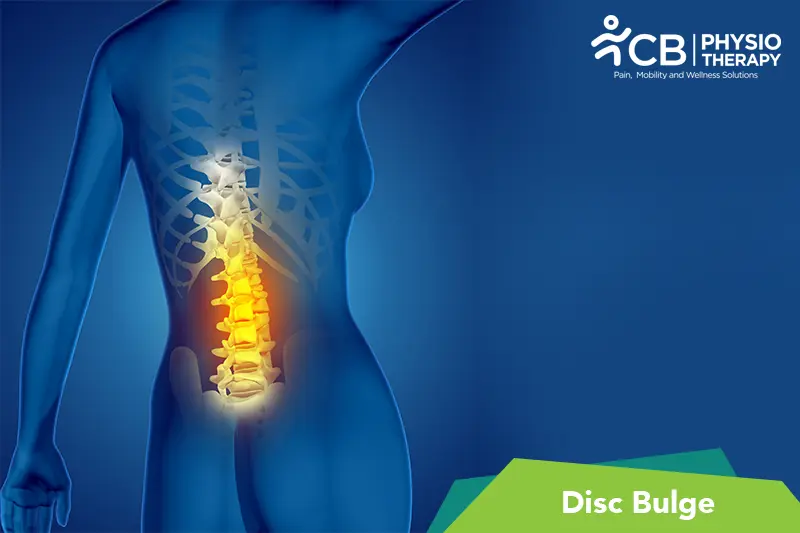
Understanding Disc Bulge
Disc Bulge (also called Annulus Fibrosus) can arrive suddenly or build over months, and how much it hurts is a poor guide to how serious it is — minor strains can hurt intensely, while slow-building problems stay quiet until they start limiting you.
Physiotherapy approaches Disc Bulge by treating the cause rather than chasing the symptom: a detailed movement assessment first, then a plan combining hands-on treatment, targeted exercise and the habit changes that stop it returning.
Causes & risk factors of Disc Bulge
What commonly drives it — your assessment pins down which of these apply to you.
Muscle strain and overload
A sudden lift, an awkward movement or simply more load than the tissues were prepared for — the most common trigger.
Posture and long static hours
Desks, driving and screens keep the same structures loaded for hours at a stretch — comfortable at first, aching later.
Joint stiffness and age-related change
Joints that move less start to hurt more; age-related wear is normal, but painful stiffness is not something to simply accept.
Weakness and deconditioning
When supporting muscles lose strength, load shifts to structures that were never meant to carry it.
Old injuries and compensations
A previous injury that never fully rehabilitated often leaves a movement pattern that overloads something else.
When physiotherapy is the right call
If any of these sound like you, an assessment is the right first step.
- ✓ You've been diagnosed with Disc Bulge and told to "rest and see"
- ✓ Movement feels restricted, weak or guarded compared to before
- ✓ You want to return to sport or work with a plan, not by trial and error
- ✓ Disc Bulge that keeps returning or hasn't settled within two weeks
- ✓ Pain or stiffness that limits work, sleep or daily activities
Your treatment journey
Step by step — from your first assessment to a tracked recovery plan.
A detailed first assessment
History, movement testing and strength checks — a focused session to find what is actually driving your Disc Bulge.
A diagnosis you understand
Your physiotherapist explains the findings in plain language — what is affected, why it happened and what that means for you.
Active, tracked treatment
Hands-on therapy, the right modalities and graded exercise — progressed session by session and tracked on Fizo IQ™.
Prevention, built in
The final phase rebuilds strength and habits so the same problem does not come back — with a home plan you keep.
What recovery looks like
- ✓ Care without long-term medicines — at a clinic near you or at home
- ✓ Relief that comes from treating the cause, not masking it
- ✓ A clear diagnosis and a timeline you can plan around
- ✓ Strength and movement rebuilt, not just pain reduced
- ✓ Lower chance of recurrence, with a prevention plan
When to see a doctor — red flags
How CB Physiotherapy treats Disc Bulge
We treat Disc Bulge the way we treat everything: assessment first, plan second, treatment third. It sounds obvious, but it is the difference between sessions that fill a slot and sessions that move you towards a goal. Care is delivered by certified physiotherapists at a clinic near you or at home.
Your whole journey is tracked on Fizo IQ™ — the diagnosis, the root cause, the milestones and the goals — so progress is measured, not guessed, and the plan adapts the moment your response calls for it.
Get Disc Bulge treatment near you
Certified physiotherapists at a clinic near you or at home — same-day slots, assessment-led care.
Request received!
We'll call you within 10 minutes to confirm your home visit.We'll call you within 10 minutes to confirm your slot.
Chat with us on WhatsAppDisc Bulge, answered
1: Back Pain: Often localized in the area of the bulging disc.
2: Radiating Pain: Pain can radiate into the arms or legs, depending on which part of the spine is affected. For example, a bulging disc in the lumbar spine can cause leg pain (sciatica), while a cervical bulging disc can lead to arm pain.
3: Numbness and Tingling: These sensations may be felt in the limbs.
4: Muscle Weakness: If nerves are compressed, it can lead to muscle weakness.
5: Changes in Reflexes: Reflexes may be altered.
1: Aging: Natural wear and tear on the discs over time can lead to weakening and bulging.
2: Trauma: Injuries, accidents, or sudden impacts can cause disc bulges.
3: Repetitive Strain: Continuous stress on the spine from activities or postures.
4: Genetics: Some people may be more predisposed to disc issues due to genetic factors.
5: Poor Posture: Incorrect body mechanics and posture can contribute to disc problems.
Pathology:
The pathology of a disc bulge involves the weakening or damage of the outer fibrous ring (annulus fibrosus). When the annulus fibrosus is compromised, it allows the inner nucleus pulposus to press against it, causing the disc to bulge or protrude. In some cases, the inner nucleus material may herniate through the annulus, leading to a more severe condition known as a herniated disc. The bulging or herniated disc can then put pressure on nearby nerves or the spinal cord, resulting in the clinical symptoms described earlier.
Physical Examination:
A physical examination will be performed to assess your range of motion, reflexes, muscle strength, and areas of tenderness.
X-rays:
X-rays may be taken to rule out other conditions and to provide a basic view of the spine's alignment.
MRI (Magnetic Resonance Imaging):
MRI is the most commonly used imaging method for diagnosing disc bulges. It provides detailed images of the spine and can clearly show the extent and location of the bulge or herniation, as well as any nerve compression.
CT (Computed Tomography) Scan:
In some cases, a CT scan may be used to provide a more detailed view of the spine and the extent of nerve compression.
Surgery:
1: Surgery is considered in cases of severe or persistent pain and neurological symptoms when conservative measures fail to provide relief. Surgical options include:
2: Discectomy: Removal of the protruding or herniated disc material to relieve pressure on the nerves.
3: Laminectomy: A procedure to remove part of the vertebral bone (lamina) to create more space for the nerves.
4: Spinal Fusion: In some cases, fusion of adjacent vertebrae may be necessary to stabilize the spine following disc removal.
Initially, rest and avoiding activities that worsen symptoms may be recommended.
Thermotherapy:
The application of heat packs can help alleviate pain and reduce inflammation.
Cryotherapy:
Cold therapy decreases inflammation, swelling, and pain.
Transcutaneous Electrical Nerve Stimulation (TENS):
TENS units deliver low-voltage electrical currents through electrodes placed on the skin. It is used to relieve pain, primarily by stimulating the nerves and altering the perception of pain signals.
Electrical Muscle Stimulation (EMS):
EMS devices deliver electrical impulses to stimulate muscle contractions. This modality is used for muscle strengthening, rehabilitation, and reducing muscle atrophy, especially after injuries or surgeries. EMS can help improve muscle function and prevent muscle weakness.
Interferential Current (IFC):
IFC involves the use of two high-frequency electrical currents that intersect and interfere with each other in the target tissue. It is often used for pain relief, particularly in chronic pain conditions, and for muscle relaxation.IFC can penetrate deeper into the tissues compared to TENS.
Ultrasound Therapy:
Ultrasound therapy uses high-frequency sound waves to produce deep heat within the body's tissues. It can help reduce pain, inflammation, and muscle spasms, while also promoting tissue healing and relaxation.
Shortwave Diathermy:
Shortwave diathermy generates high-frequency electromagnetic waves to produce deep heat in tissues. Shortwave diathermy can improve blood circulation and decrease pain.
Infrared Therapy:
Infrared therapy uses light waves in the infrared spectrum to generate heat and provide pain relief. It is used for pain management, muscle relaxation, and tissue healing. Infrared therapy can penetrate the skin and reach deeper tissues.
Galvanic Stimulation: Galvanic stimulation involves the use of direct current (DC) to stimulate the body's tissues. It can be used for pain management, muscle contraction, and reduction of edema (swelling).
Iontophoresis:
Iontophoresis is a technique that uses a low-level electrical current to drive medications (typically anti-inflammatory or pain-relieving drugs) through the skin and into the target tissues. It is used to deliver medication directly to the site of injury or inflammation.
Lifestyle Modifications:
Maintaining good posture, regular exercise, and weight management can help prevent future disc issues. Proper ergonomics at work and home can reduce the risk of disc problems.
Manual Therapy:
Manual therapy techniques, such as joint mobilization and soft tissue manipulation, can help relieve muscle tension, improve joint mobility, and reduce pain.
Therapeutic Exercise:
A customized exercise program is designed to address the specific needs and limitations of the patient.Exercises may focus on core strength, flexibility, and postural stability. Core strengthening is particularly important for providing support to the spine.
Stretching and Flexibility Exercises:
Stretching exercises can help relieve muscle tightness and improve the flexibility of the spine and surrounding structures.
McKenzie Method:
The McKenzie method is a specialized approach to the management of disc-related problems. It includes a series of exercises and movements aimed at reducing or centralizing radiating symptoms, such as leg pain.
Posture and Body Mechanics Training:
Learning how to maintain proper posture and use correct body mechanics during daily activities is crucial for preventing further stress on the spine and discs.
Gradual Return to Activities:
The physiotherapist will work with the patient to develop a gradual return to normal activities and sports, taking into account the specific demands of their lifestyle.
Lifestyle Modifications:
Maintaining good posture, regular exercise, and weight management can help prevent future disc issues. Proper ergonomics at work and home can reduce the risk of disc problems.
Don't let Disc Bulge decide your day.
Get assessed today — find the cause, get a plan, and know when you'll feel better.