Open today · 8 AM–8 PM · Same-day slots
CB Physiotherapy
Same-day appointments

Disc Bulge Treatment in Vasant Kunj, Delhi

Whether it's a dull ache, a sharp catch, or pain that keeps coming back — we find the root cause of your Disc Bulge and fix it, at a clinic near you or at home.

Precision Care, Proven Recovery
ACCURATE DIAGNOSIS
ROOT CAUSE ASSESSMENT
COMPREHENSIVE RECOVERY PLAN
MILESTONE TRACKING
GOALS ACHIEVED
STAYING ACTIVE
See how it works ↓
Move pain-free Avoid drugs & surgery
5.0 / 5 · 72 Google reviews Verified on Google

Request received!

We'll call you within 10 minutes to confirm your home visit.We'll call you within 10 minutes to confirm your slot.

Chat with us on WhatsApp

Book in 30 seconds

Visit your nearest CB clinic. Tell us your concern and a preferred time — we'll confirm your slot by call within 10 minutes.

A certified physio visits your home. Tell us what you need and a preferred time — we'll confirm your slot by call within 10 minutes.

Same-day booking by default. We'll confirm your exact slot by call.
+91
No spam · Your number is safe with us
Prefer to talk now? Call +09821966696
Understanding your disc bulge

Does this sound like you?

Common triggers include muscle strain, joint stiffness, poor posture and long desk hours. If two or more of these fit, a physiotherapy assessment can identify exactly what's driving it.

  • A dull ache or sharp, burning disc bulge that keeps returning
  • Discomfort that worsens with movement, lifting or long sitting hours
  • Morning stiffness that eases as you move
  • Pain that limits work, sport or everyday activities
  • Recurring episodes that keep coming back

Most disc bulge improves without surgery or long-term medication — the key is finding the cause first.

Assessment-led treatment

How we treat disc bulge

We start with an AI-based assessment to find the root cause — then follow a clear, four-phase plan.

Phase 1

Ease the pain

Hands-on therapy and advanced modalities to calm pain and inflammation fast.

Phase 2

Restore movement

Mobility work and posture correction so everyday movement feels normal again.

Phase 3

Build strength

Targeted strengthening that protects you — in-clinic or in our physio gym.

Phase 4

Return to activity

Back to work, sport and life — with a home program that prevents relapse.

Your physiotherapist, with Fizo IQ™

Every recovery, planned and proven

One patient record, stage by stage: your physiotherapist pinpoints the diagnosis, finds the root cause and builds your in-clinic plan — while Fizo IQ™, our AI decision-support engine, tracks every milestone until your goals are met and you leave with an exercise plan to stay active.

Physio Expert @CB with Fizo IQ™ — recovery engine
TRACKING
ACCURATE DIAGNOSIS
L4–L5 disc bulge · nerve-root irritation, pinpointed at the first movement assessment
ROOT CAUSE ASSESSMENT
Poor sitting posture, weak core–hip chain · quietly loading that disc
COMPREHENSIVE RECOVERY PLAN
24 clinic sessions · manual therapy + spinal decompression · guided exercise therapy, reviewed weekly
MILESTONE TRACKING
Sitting pain-free ✓ · stairs ✓ · next: the morning 5 km walk
GOALS ACHIEVED
Pain 7 → 3 in six weeks · back to daily life, moving freely
STAYING ACTIVE
A personalized exercise plan, yours to keep · so the pain doesn't come back
Example recovery journey · every plan is built around you
Feeling something?

Symptoms Disc Bulge addresses

These symptoms respond well to Disc Bulge — tap one to see how we treat it near you.

Meet your care team

Licensed experts who treat hundreds like you every month

Every CB physio is a qualified BPT/MPT clinician. You don't need to choose one — our lead physiotherapist reviews your case and assigns the specialist best suited to treat it.

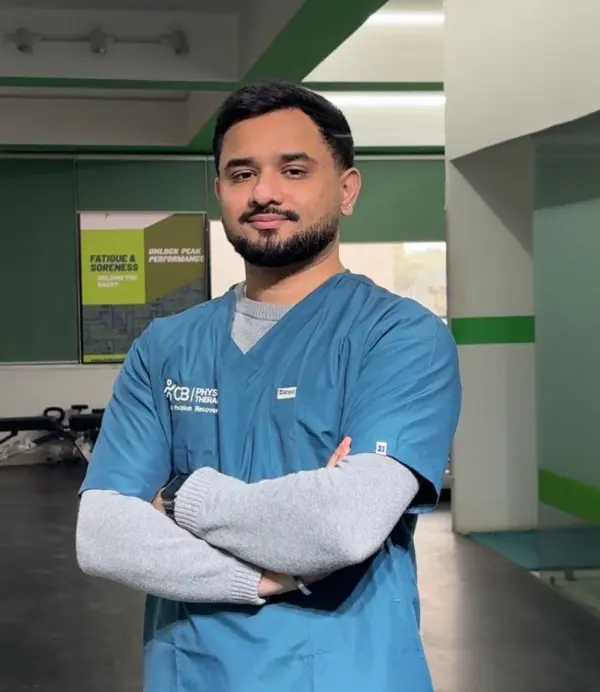
Dr. Rahul Dogra, physiotherapist in Vasant Kunj

Dr. Rahul Dogra

Head Of The Clinic

5.0 (18)
Vasant Kunj
cb physiotherapy vasant kunj
4 yrs experience
Ortho Spine Sports Physiotherapy Center
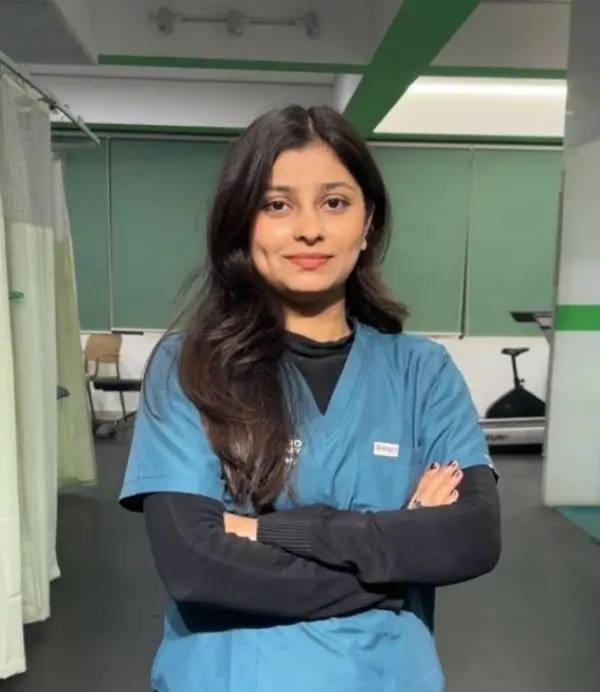
Dr. Sristi Suman, physiotherapist in Vasant Kunj

Dr. Sristi Suman

Consultant Physiotherapist · BPTh

5.0 (18)
Vasant Kunj
cb physiotherapy vasant kunj
2 yrs experience
Ortho Spine Sports Physiotherapy Center
Not sure who to see? You don't have to decide. Our lead physiotherapist reviews every case and assigns the physio best suited to it — based on your condition and availability.
Patient stories

Disc Bulge recoveries, verified on Google

Rated 5.0 / 5 across 72 verified patient reviews in Vasant Kunj, Delhi.

Verified

“Thanks Dr Srishti Suman For your treatment you treated me well my pain is reduced so much.”

SD
Savita Dahiya Verified patient · Treated at CB · 4 months ago
Verified

“Thank you Dr. sristhi for treating my low back ache which was troubling me from month and your skills are so upto mark.”

RK
Rahul Kumar Verified patient · Treated at CB · 4 months ago
Verified

“All thanks to Dr. Sristi. you really help in my recovery process . Your treatment and diagnosis is indeed really top notch. Kudos to you.”

PT
Palak Tiwari Verified patient · Treated at CB · 5 months ago
Verified

“I went for consultation for my knee pain and there I met Dr Rahul He took my consultation and sessions for 9 days and he was supr throughout the sessions and now it's so easy for me to be back in daily routine.”

SS
Sristi Suman Verified patient · Treated at CB · 5 months ago
Verified

“I had an amazing experience with Dr. Rahul also he took care of everything regarding my lower back strain also they have all the equipment which can help them to cure from the pain or injury. It was a great overall experience with the clinic staff too”

HJ
Harshit Jaiswal Verified patient · Treated at CB · 5 months ago
Verified

“Wonderful experience was suffering from lower back issue since long got treatment from dr Sristi. It was good experience and im feeling well now...”

TJ
Tehmeena Jahan Verified patient · Treated at CB · 6 months ago
Good to know

Disc Bulge, answered

A disc bulge occurs when the outer fibrous ring of an intervertebral disc, known as the annulus fibrosus, weakens or becomes damaged, causing the inner gel-like material, called the nucleus pulposus, to push out and extend beyond the normal confines of the disc. This bulging or protrusion can put pressure on surrounding spinal structures, such as nerves or the spinal cord.
The symptoms of a disc bulge can vary depending on the location of the affected disc and the extent of the bulge. Common symptoms include:

1: Back Pain: Often localized in the area of the bulging disc.
2: Radiating Pain: Pain can radiate into the arms or legs, depending on which part of the spine is affected. For example, a bulging disc in the lumbar spine can cause leg pain (sciatica), while a cervical bulging disc can lead to arm pain.
3: Numbness and Tingling: These sensations may be felt in the limbs.
4: Muscle Weakness: If nerves are compressed, it can lead to muscle weakness.
5: Changes in Reflexes: Reflexes may be altered.
Disc bulges can be caused by a variety of factors, leading to various symptoms. The causes include:

1: Aging: Natural wear and tear on the discs over time can lead to weakening and bulging.
2: Trauma: Injuries, accidents, or sudden impacts can cause disc bulges.
3: Repetitive Strain: Continuous stress on the spine from activities or postures.
4: Genetics: Some people may be more predisposed to disc issues due to genetic factors.
5: Poor Posture: Incorrect body mechanics and posture can contribute to disc problems.

Pathology:
The pathology of a disc bulge involves the weakening or damage of the outer fibrous ring (annulus fibrosus). When the annulus fibrosus is compromised, it allows the inner nucleus pulposus to press against it, causing the disc to bulge or protrude. In some cases, the inner nucleus material may herniate through the annulus, leading to a more severe condition known as a herniated disc. The bulging or herniated disc can then put pressure on nearby nerves or the spinal cord, resulting in the clinical symptoms described earlier.

Physical Examination:
A physical examination will be performed to assess your range of motion, reflexes, muscle strength, and areas of tenderness.

X-rays:
X-rays may be taken to rule out other conditions and to provide a basic view of the spine's alignment.

MRI (Magnetic Resonance Imaging):
MRI is the most commonly used imaging method for diagnosing disc bulges. It provides detailed images of the spine and can clearly show the extent and location of the bulge or herniation, as well as any nerve compression.

CT (Computed Tomography) Scan:
In some cases, a CT scan may be used to provide a more detailed view of the spine and the extent of nerve compression.

Medications: Analgesics, Muscle relaxants, Narcotics, etc.

Surgery:
1: Surgery is considered in cases of severe or persistent pain and neurological symptoms when conservative measures fail to provide relief. Surgical options include:
2: Discectomy: Removal of the protruding or herniated disc material to relieve pressure on the nerves.
3: Laminectomy: A procedure to remove part of the vertebral bone (lamina) to create more space for the nerves.
4: Spinal Fusion: In some cases, fusion of adjacent vertebrae may be necessary to stabilize the spine following disc removal.
Rest:
Initially, rest and avoiding activities that worsen symptoms may be recommended.

Thermotherapy:
The application of heat packs can help alleviate pain and reduce inflammation.

Cryotherapy:
Cold therapy decreases inflammation, swelling, and pain.

Transcutaneous Electrical Nerve Stimulation (TENS):
TENS units deliver low-voltage electrical currents through electrodes placed on the skin. It is used to relieve pain, primarily by stimulating the nerves and altering the perception of pain signals.

Electrical Muscle Stimulation (EMS):
EMS devices deliver electrical impulses to stimulate muscle contractions. This modality is used for muscle strengthening, rehabilitation, and reducing muscle atrophy, especially after injuries or surgeries. EMS can help improve muscle function and prevent muscle weakness.

Interferential Current (IFC):
IFC involves the use of two high-frequency electrical currents that intersect and interfere with each other in the target tissue. It is often used for pain relief, particularly in chronic pain conditions, and for muscle relaxation.IFC can penetrate deeper into the tissues compared to TENS.

Ultrasound Therapy:
Ultrasound therapy uses high-frequency sound waves to produce deep heat within the body's tissues. It can help reduce pain, inflammation, and muscle spasms, while also promoting tissue healing and relaxation.

Shortwave Diathermy:
Shortwave diathermy generates high-frequency electromagnetic waves to produce deep heat in tissues. Shortwave diathermy can improve blood circulation and decrease pain.

Infrared Therapy:
Infrared therapy uses light waves in the infrared spectrum to generate heat and provide pain relief. It is used for pain management, muscle relaxation, and tissue healing. Infrared therapy can penetrate the skin and reach deeper tissues.

Galvanic Stimulation: Galvanic stimulation involves the use of direct current (DC) to stimulate the body's tissues. It can be used for pain management, muscle contraction, and reduction of edema (swelling).

Iontophoresis:
Iontophoresis is a technique that uses a low-level electrical current to drive medications (typically anti-inflammatory or pain-relieving drugs) through the skin and into the target tissues. It is used to deliver medication directly to the site of injury or inflammation.

Lifestyle Modifications:
Maintaining good posture, regular exercise, and weight management can help prevent future disc issues. Proper ergonomics at work and home can reduce the risk of disc problems.

Manual Therapy:
Manual therapy techniques, such as joint mobilization and soft tissue manipulation, can help relieve muscle tension, improve joint mobility, and reduce pain.

Therapeutic Exercise:
A customized exercise program is designed to address the specific needs and limitations of the patient.Exercises may focus on core strength, flexibility, and postural stability. Core strengthening is particularly important for providing support to the spine.

Stretching and Flexibility Exercises:
Stretching exercises can help relieve muscle tightness and improve the flexibility of the spine and surrounding structures.

McKenzie Method:
The McKenzie method is a specialized approach to the management of disc-related problems. It includes a series of exercises and movements aimed at reducing or centralizing radiating symptoms, such as leg pain.

Posture and Body Mechanics Training:
Learning how to maintain proper posture and use correct body mechanics during daily activities is crucial for preventing further stress on the spine and discs.

Gradual Return to Activities:
The physiotherapist will work with the patient to develop a gradual return to normal activities and sports, taking into account the specific demands of their lifestyle.

Lifestyle Modifications:
Maintaining good posture, regular exercise, and weight management can help prevent future disc issues. Proper ergonomics at work and home can reduce the risk of disc problems.
Patients are educated about their condition, which includes understanding the nature of a disc bulge, its causes, and strategies for preventing exacerbation of symptoms. Education also covers proper posture, body mechanics, and ergonomics in daily activities to reduce strain on the spine. Patients are educated on long-term management and prevention strategies to reduce the risk of future disc issues.
Ready when you are

Don't let the pain decide your day.

Get assessed today — find the cause, get a plan, and know when you'll feel better.

📞 Call 💬 WhatsApp Book now